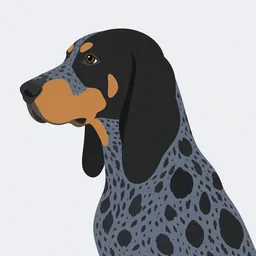
 Bluetick
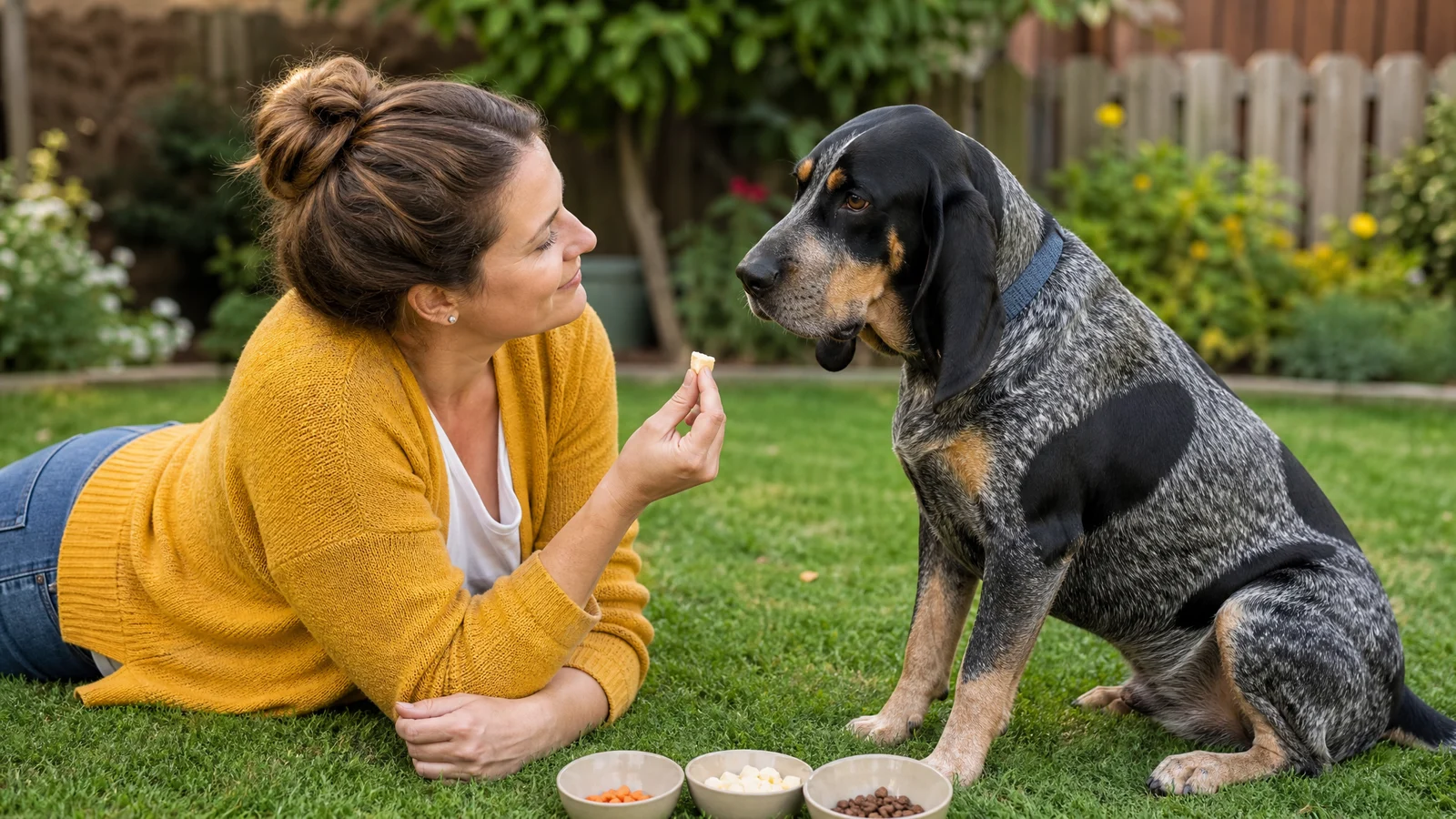
The usual dog-training plan is one treat, one cue, repeat, and it quietly assumes you decide what pays. With a Bluetick Coonhound, the nose decides. These hounds descend from dogs with a nose that could pick up a week-old trail, so your biscuit gets weighed against every smell in the yard, and a plain reward often loses.
Below, you'll find how ordinary reward advice changes for this breed, how look-alike hounds differ, what puppies and adults each need, and how to rank food, praise and play, including what to do when a scent trail competes during dog sports practice. Done well, you gain a devoted hound who chooses to work with you. Done badly, you get a dog whose nose wins every disagreement and whose voice fills the neighborhood.
Ordinary Dog Advice Versus Bluetick Coonhound Rewards
Standard reward advice is simple. Pick one treat, pair it with one cue, repeat until the cue is reliable, and add praise as a pleasant extra. It works because, for most dogs, the owner's hand is the most interesting thing around.
A Bluetick Coonhound changes that picture. Early socialization and treats are very useful aids in training a Bluetick, yet this is also a scent hound whose prey drive is described as off-the-charts. That means treat value, which is how much your dog wants a reward compared with everything else on offer at that moment, is set by the environment and not by your pocket.
A marker word closes some of that gap. It is a short, crisp sound that pinpoints the moment your hound did something right, so you can deliver the treat a beat later without blurring what earned it. It also follows the principle that teaching what to do works better than punishing what you dislike. Build it in four small steps:
- Choose one short word and say it in the same cheerful tone every time.
- Start by asking for nothing. Say the word, then give a tiny treat, and repeat this until your Bluetick looks up at you as soon as the word is spoken.
- Ask for something easy, mark the instant your dog does it, then feed at nose level close to you.
- Add a few warm words while they eat, so your praise rides along with the food.
Notice what shifted from the ordinary plan. The treat is no longer a fixed payment but a level you adjust, the marker lets you pay across a short gap, and praise is trained in beside the food. For the full progression from first cue to daily habits, see Bluetick rewards step by step.
Lookalike Hounds Versus Blueticks in Dog Sports
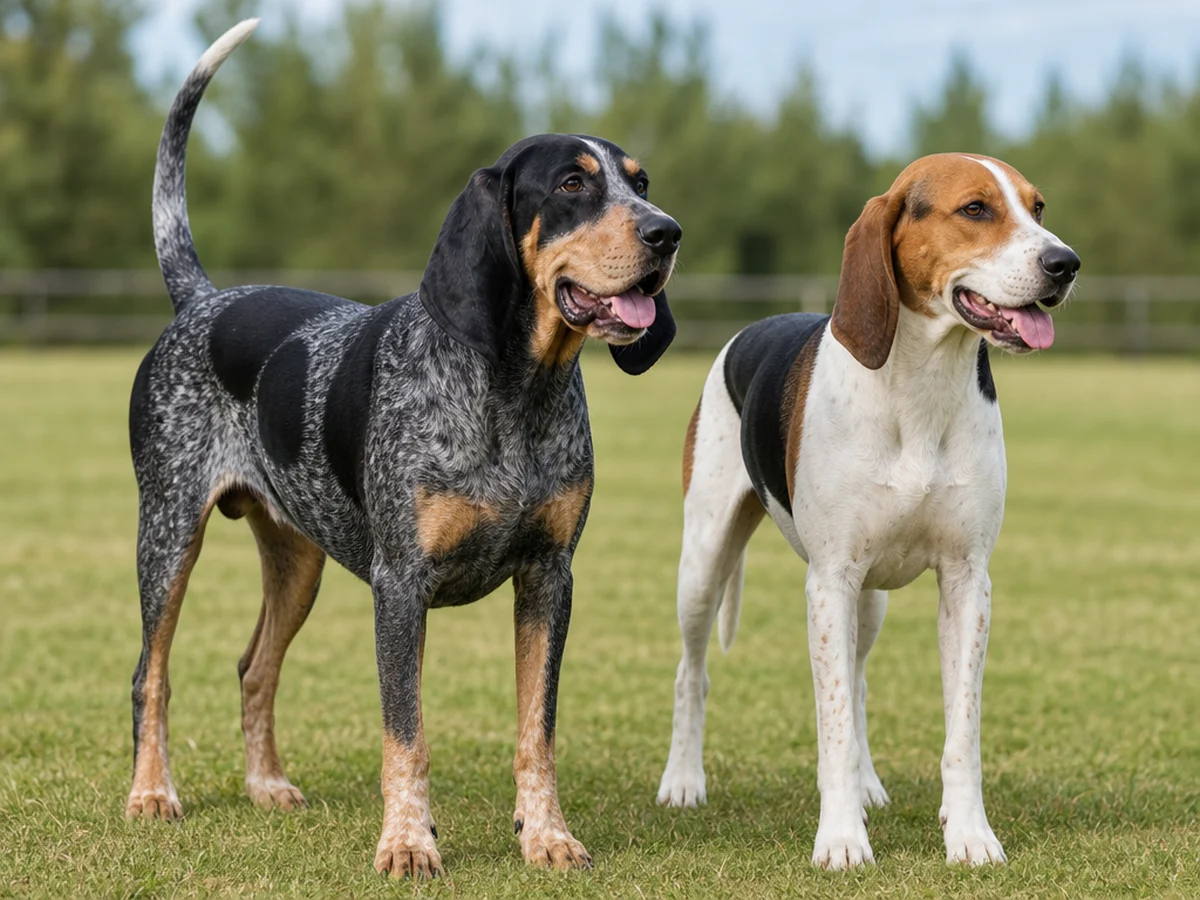
In the sport world, a Bluetick is often grouped with look-alike hounds such as the Treeing Walker, because they share a coon-hunting heritage, a tracking nose and a big voice. The shared background is real, but reward choices and sport expectations drift apart once you look closely at what makes a Bluetick distinct. Dogs vary within every breed, so treat the contrasts below as starting points to test.
Pace and Expectations
The Bluetick is described as a little slower than their hot-nosed kin, and as a determined and hardy working dog who is happiest with a job to do. For sport training, that points toward steady, patient work more than flash. Reward effort and persistence, and don't judge your hound against a faster-moving relative.
A job matters more here than a score. Scent games and similar sports give a Bluetick an outlet for hardwired impulses that can otherwise turn into loud, mournful vocalizing. Your rewards should make the work itself feel worth repeating.
Where Rewards Diverge
Blueticks crave affection and are deeply devoted to those who provide it, so praise, touch and your closeness are real rewards here. A look-alike hound who works mainly for the chase may want a different mix. Don't assume a reward plan that suited another hound will transfer, and let your own dog's response set the ranking.
Voice is the other difference to plan for. A Bluetick is meant to be a free tonguer, voicing readily on a trail, and barking is rated high for the breed, so a sport setting full of waiting dogs can set off baying. Rewarding calm waiting matters more here than it would for a quieter breed.
Puppy Treats Versus Adult Treats for Dog Sports
A puppy and an adult Bluetick want different things from a treat pouch, so what you carry should change as your dog grows. The foundation is laid early, with socialization and treats working side by side. By adulthood, sport work asks for pickier, more strongly scented rewards.
With a puppy, aim for small and frequent. Tiny pieces of an ordinary soft treat are enough, because new people, places and sounds already feel exciting. Reward positive engagement with praise, play and treats, let your puppy back away when they feel unsure, and move at their pace.
An adult is pickier. By then your Bluetick has smelled a great deal of the world, and a plain biscuit rarely beats a neighbor's cookout. Sport practice means many repetitions in a row, often near other dogs, so adults need soft, savory, strong-smelling food that is still tiny enough to swallow in a moment. The table lays out the differences side by side.
| Factor | Puppy | Adult sport dog |
|---|---|---|
| Treat size | Tiny and easy to swallow | Tiny, so many repetitions fit in a row |
| Treat type | Soft, mild everyday food | Soft, savory, strong-smelling food |
| Main goal | Confidence about new things | Focus around dogs, smells and noise |
| Variety | One or two favorites | A rotation of flavors so no treat gets stale |
For variety, rotate several flavors in one pouch and mix a few top-level pieces among everyday ones, so your dog never knows which repetition might pay best. Count every treat as part of the day's meals, since a busy training day adds up quickly, and keep regular vet visits on the calendar so changes in weight or appetite are caught early.
This is general information, not veterinary advice. Check with your veterinarian about how much your own dog should eat each day and how training treats fit into that plan.
Does Praise Outrank Food for a Bluetick Coonhound?
Praise means your voice, touch and attention used as a reward. For many dogs it ranks well below food, but Blueticks crave affection and are deeply devoted to those who provide it, so the gap is narrower in this breed. The real question is which one wins in which moment.
When Praise Wins
Praise wins in quiet rooms, on cues your hound already knows, and in the moments after a treat is swallowed. A Bluetick who leans on your legs at the end of the day will often work for a warm voice and a scratch behind the ears, one reason the breed is so workable, as we explain in how trainable Blueticks are.
Reward-based training counts praise alongside food and toys, so it is a legitimate payment and not a lesser one. It also has no calories, and you can deliver it the instant something goes right. Because attention can reinforce whatever it follows, save your warmest voice for behavior you want to see again.
When Food Wins
Food wins as soon as the nose is engaged. Once a scent grabs a Bluetick, your voice becomes background noise, and bubbly chatter can even raise excitement and bring out the hound's voice. Pair praise with food again and again so the words start to carry meaning of their own.
A useful rule of thumb follows from this. When the room is quiet and the cue is familiar, lead with praise and let a treat be the occasional bonus. When the world is loud or the cue is new, lead with food and let praise follow as your dog eats.
Calm Praise Versus Wild Play in Dog Sports
Play means a short game of tug or a chase around a securely fenced yard, and it sits at the opposite end of the energy scale from calm praise. Each has its own job. Calm praise suits focus work, and wild play suits the high-energy moments of a sport.
Calm Praise for Focus Work
Heeling, stays, waiting your turn and the first moments of a scent search all need a settled mind. Calm praise, delivered low and steady, keeps arousal down, which matters in a breed rated high for barking and prone to voicing when excited. Pair it with a tiny treat for settling, and build the basics with sit, down and stay practice.
Wild Play for High-Energy Moments
Blueticks are moderately playful, not non-stop, so a toy is not a guaranteed favorite the way food is. The test is whether your hound engages with the toy while working, not whether they play on the living room floor. When they do, play makes a fine reward at the end of a round or after a hard exercise, and it spends some of the energy this breed carries.
Keep games short and end them while your dog still wants more. Use a secure fence or a leash, since the nose can pull a Bluetick away fast, and see leash training for pullers if that is already a problem. If play turns wild and baying starts, pause the game for a moment and restart when your dog is calm. That calm interrupt is a mild consequence that keeps the reward system friendly.
Can Treats Beat a Scent Trail in Dog Sports?
Sometimes, but only on terms you set. A famous line of Blueticks was described as having a nose that could pick up a week-old trail and the endurance to run it 30 hours at a stretch, so a trail is a rival employer offering its own pay. We have trained this breed for many years, and the lesson that keeps returning is that your reward must outbid the trail through value, distance and timing.
An ordinary treat loses because it competes with the very thing these hounds were bred to love. Keep your softest, smelliest food for moments when a trail is present, and keep it out of everyday use so it stays special. In scent-style practice, feeding at the find lets the search itself pay, which tells the nose that the spot was worth it.
Practice at the Right Distance
Distance and timing do the rest. The farther your dog is from the scent, the easier it is for you to win, and a marker followed by instant food connects the reward to the right choice. Work through these steps, closing the gap only as your dog succeeds:
- Start far from the scent, where your hound can still choose you, and mark any glance your way.
- Deliver a top-value treat at nose level right away, because late food teaches nothing about the glance.
- Close the distance in small steps, only after your dog has answered correctly several times at the current spot.
- Add a release: after a good repetition, say your release word and let your dog sniff the area on a loose leash as a life reward.
- If your hound fixates and cannot hear you, back up to the last distance that worked and end on an easy win.
Be honest about the limits. Some smells will win, and that is information and not failure, so keep your hound on a leash or inside a secure fence and try again later from farther away. The strong prey drive of this breed means management does as much work as the treats do.
Pair Food, Praise, and Play for Your Bluetick Coonhound
Everything above comes down to one idea: with a Bluetick, the nose votes first, so food, praise and play cover different moments. Food buys attention near strong smells, praise supports quiet work and play spends energy. A marker word ties them together by telling your dog which instant earned the reward.
Week one is for quiet places. Work in a calm room or a secure yard with nothing strong to sniff, mark a simple behavior, feed a tiny soft treat and follow with warm, low praise. End each session early, while your hound still wants more, so the pairing becomes something they look forward to.
Week two adds play and mild distractions. Keep the marker, food and praise sequence, then add a brief game on your best repetitions and begin working near gentle distractions such as an open door or a far-off dog, using the distance steps from the last section. Move to a higher-value treat as the distractions grow, and return to an easier setting whenever your dog slips.
Use this simple checklist at the end of each practice day. It shows which rewards held their value as the setting changed.
- We counted today's treats as part of the daily meals.
- We marked each success at the instant it happened.
- We paid with food first and then added praise.
- We used play only when our dog showed real interest in the toy.
- We noted which reward beat which distraction.
- We ended the session while our dog still wanted more.
Keep the checklist near your treat pouch as your dog grows. A devoted Bluetick will work when the reward matches the moment, and a plan built around the nose keeps that effort steady in sports and at home. Schedule regular vet visits, and rerank rewards whenever a new place changes what your hound values.
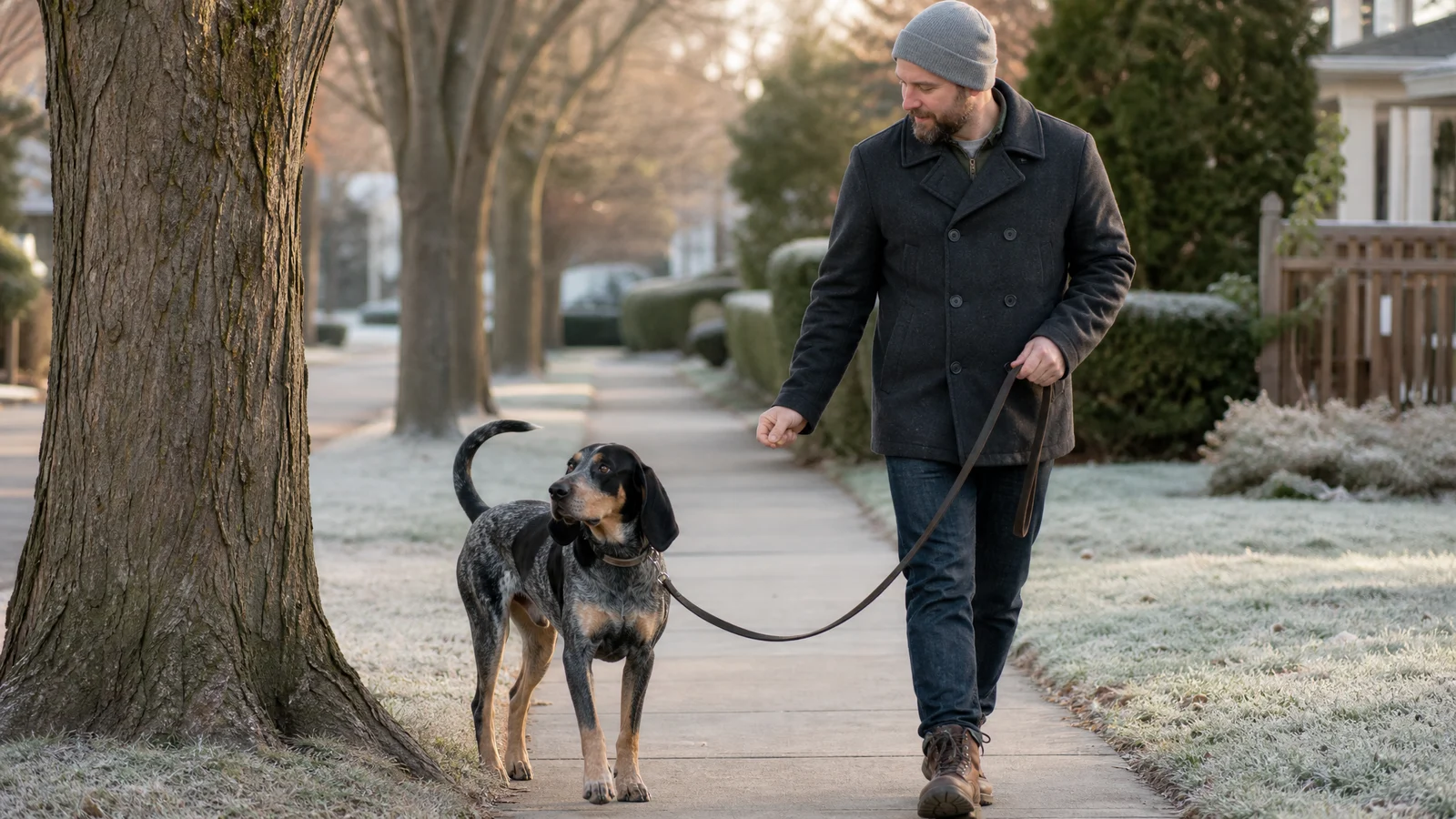 Training basicsLeave It: Managing Your Bluetick Coonhound's Off-the-Charts Prey Drive
 BehaviorCan a Bluetick Coonhound Live With Cats and Small Pets?
 BehaviorSecuring Your Yard Against a Wandering Bluetick Coonhound