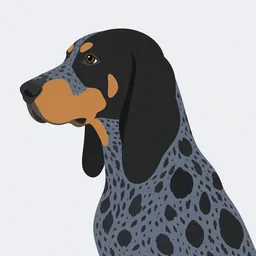
 Bluetick
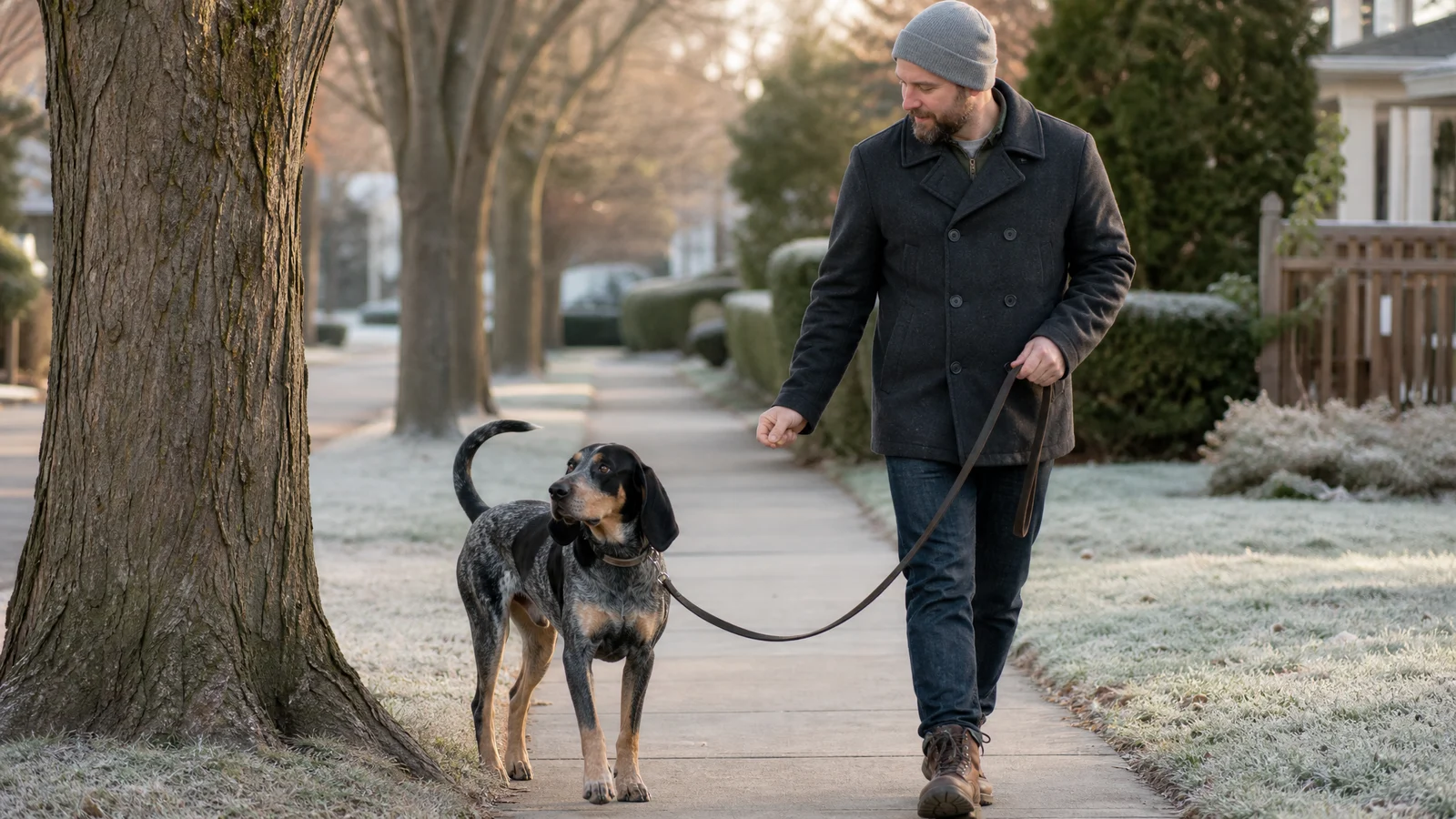
The walk is going nicely. Your Bluetick Coonhound is trotting along with their nose low, agreeable and happy to take a treat from your hand. Then a squirrel bolts across the sidewalk. The whole body locks on, the leash goes tight, and the dog who answers to their name all day acts as if you've never met.
That isn't defiance. It is the working wiring of a breed whose prey drive is described as off-the-charts and in need of channeling, switching on. In pursuit these hounds are relentless, bold and single-minded, which is wonderful on a trail and expensive near a road. Your voice loses to that wiring, so the fix is a dog who has practiced choosing you.
In this article, we'll cover the Bluetick's drive, a rewarded leave it, an offered check-in, and how both skills work around squirrels, cats and dropped food. The sequence moves from quiet practice to the distractions owners meet outside.
Bluetick Coonhound Hunting Roots
To see why a cookie loses to a squirrel, start with the original job. Blueticks were bred as hunting dogs for treeing work: pick up a scent trail, follow it for as long as it takes, and sound off until the quarry is up a tree. Nobody selected for a dog who turned around when called, because that dog went home empty. The ones who kept going became the ancestors.
The breed's reputation was built on nose and stamina. A famous line was described as a big, bell-voiced hound who could pick up a week-old trail and run it for 30 hours at a stretch. The breed standard asks for an active, ambitious, speedy dog who gives tongue freely while trailing, which is why the baying, bawling, chopping voice comes with the package.
Then there's the dog on your couch. The same Bluetick is a sweet, affectionate charmer who will snooze in the shade or at your feet, deeply devoted to whoever hands out the attention. That is the trap. Calm at home tells you nothing about what happens when a squirrel launches, because nothing in that wiring checks with you first.
So the plan has to do several things at once. Management keeps the dog from rehearsing chases, daily outlets give the nose real work, and a rewarded pause gives you a say. We have trained this breed for many years on exactly that mix, and it beats any attempt to talk the drive out of them.
How Prey Drive Develops and Shapes Training
Prey drive isn't a switch that flips one morning. It grows with the dog, and what you do while it grows decides how much of it ends up in the driver's seat. Dogs vary, so treat the stages below as a rough pattern and not a calendar.
Puppyhood Sets the Pattern
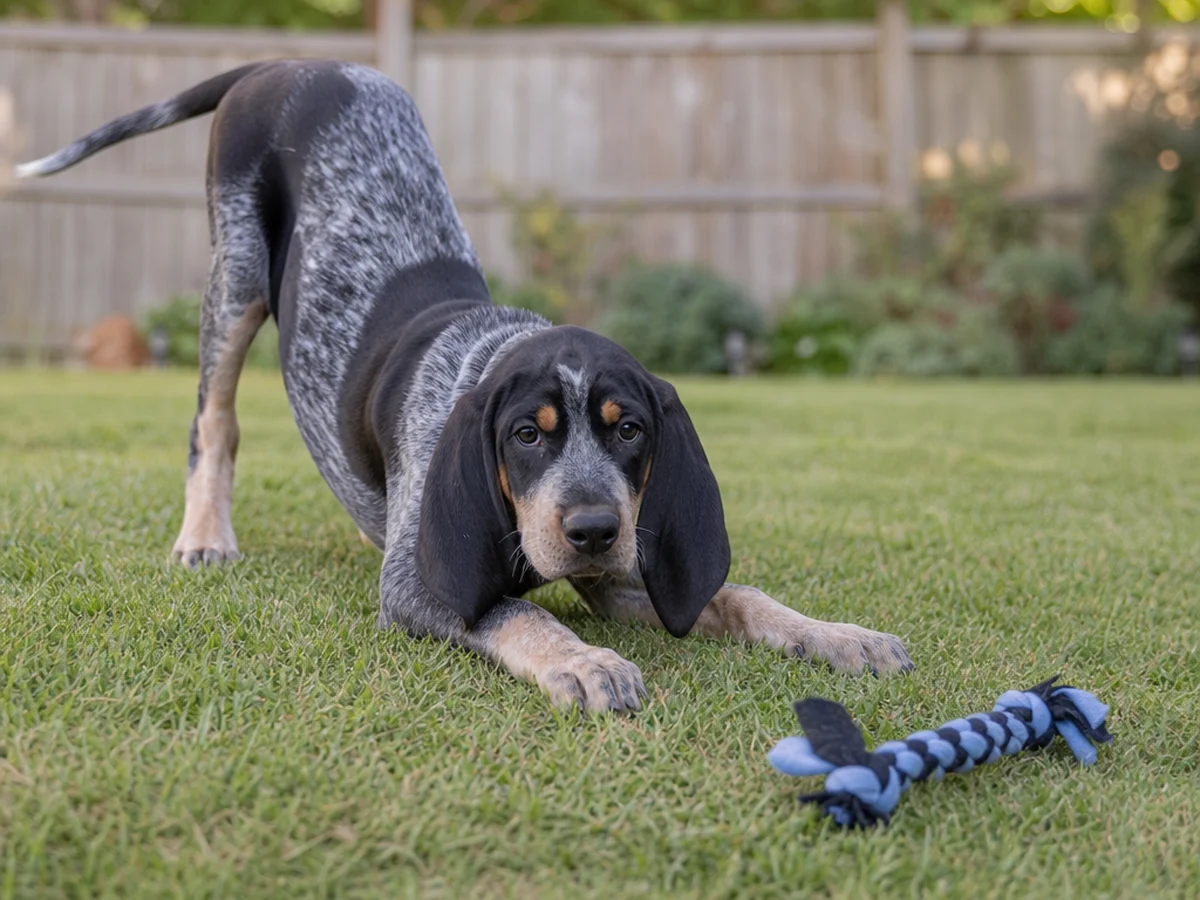
In a young puppy the drive looks harmless and a little comic. They sniff everything, stare at a rustling leaf, and trot after a beetle. It is also the cheapest time to teach, since early socialization and treats are very useful aids with this breed. Use them to make people, places and sounds ordinary, and to make looking at you the most profitable thing a puppy can do.
Pay for attention before anything exciting happens. A puppy who is paid many times for glancing up in boring places carries that habit into exciting ones. Our guide to reward-based Bluetick training basics covers the foundation skills that sit under all of this.
Adolescence Raises the Stakes
As the dog matures, the body gets bigger, the stamina grows and the nose comes fully online. The same sniff turns into a pull, and the same stare turns into a lunge. Expect a stretch when responses that were perfect in puppyhood go missing. Usually the world got more interesting while your practice stayed the same.
Common advice says to let a hound chase a few squirrels to burn the urge out of their system. Skip that. Chasing is the very thing you're trying to keep from becoming habit, every successful run makes the next one faster and more automatic, and a scent hound never gets bored of a trail.
What Timing Means for You
Begin early, practice in boring places, and raise the difficulty as the dog grows instead of waiting for trouble. You can teach leave it to an adult with a long chasing history, but it takes longer, because the squirrel has been paying that dog for years. Until the skill is solid, management carries the load: leash, fence, gate.
Leave It Training Basics
Leave it is a trade, not a prohibition. The dog gives up the thing they want and gets something better, and the skill rests entirely on the dog believing the trade is fair. Build it from small rewarded steps instead of dumping the whole thing on a dog at once. Training works best when it teaches what to do instead, and leave it fits that perfectly.
Pick Rewards That Win
Match the payment to the temptation. Everyday practice runs on small, soft, smelly treats cut tiny. Keep a better one in reserve, such as cooked chicken or cheese, and bring it out only for leave it work. Toys, a quick game and a release to sniff the exact spot you asked them to ignore all work too, and that last one suits a scent hound very well.
Don't forget praise. Blueticks crave affection, so a warm voice and a good chest scratch carry real value on easy days.
The Closed-Fist Start
Do this in a calm room with no other pets wandering through. Wear a treat pouch so rewards come from your hip and not from a pocket the dog has already mapped by smell.
- Put an ordinary treat in your closed fist and hold it near the dog's nose. Say nothing while they sniff, lick and paw at it.
- The instant the nose leaves your fist, even for a heartbeat, mark it with a word like yes, then deliver a better treat from your other hand.
- Never give the dog what's in the fist. That rule keeps the game honest.
- Repeat until the dog backs off quickly and glances at your face, then say leave it just before you present the fist.
- Gradually open your hand, first a crack, then flat, closing it if the dog dives.
Tenacity shows up immediately. A Bluetick will work at your hand with real commitment, so expect noise and be patient. Repeating the cue during the struggle only teaches them to tune you out.
Work Up to Tempting Objects
Once the fist is solid, move to treats on the floor under your hand, then uncovered on the floor. After that, try low-value objects like a paper cup or a clean sock, then things with real appeal. Stay close enough to cover the item if the dog dives for it, and adjust just one variable per session.
When a session falls apart, you moved too fast. Return to the most recent level the dog got right, upgrade the treat and let the dog win. End each round while they still want more.
Bluetick Coonhound Check-In Training
Leave it says what not to do. The check-in supplies the answer to what to do instead, and for a hound it may be the more valuable half. The goal is a dog who, on spotting something fascinating, looks back at you without being asked, like a customer who has figured out which button dispenses the snack.
Start in a quiet room and simply wait. When the dog glances at you, mark and pay. If no glance comes, make a tiny noise to draw one, pay for it, and fade the noise quickly. Then repeat at doorways, in the yard and on the sidewalk, paying in assorted currencies: food some days, a game others, a release to sniff when they've earned it.
The mechanism is plain. A reward delivered right after a behavior can turn it into a permanent new habit, and that's what you want. The look back becomes the default answer whenever the world gets interesting.
On walks, don't wait for the squirrel to test this. Practice while there's still distance between you and the trigger, at the first sign of interest like a lifted head or a slowing stride, and pay the instant they turn. If pulling is part of the picture, our guide to leash training a Bluetick who pulls pairs well with this work.
Training Around Squirrels, Cats, and Dropped Food
Each of these triggers needs its own small plan, because a dog can ace leave it on a dropped cracker and still fall apart at the base of an oak. Start easy, far from the temptation, with your best treats ready. Management is half of every plan below.
Squirrels
The squirrel is the final exam, so don't give it on day one. Begin on leash with the squirrel far enough away that the dog notices but can still think. When they look at it, wait or say leave it, pay the turn toward you, then pay again for walking away together. If the dog is still taking food, they're still thinking, and the distance is right.
A securely fenced yard and a leash on every outing are the baseline for a scent hound with this much drive. Training lowers the odds of a chase, and the fence handles whatever odds remain.
Cats
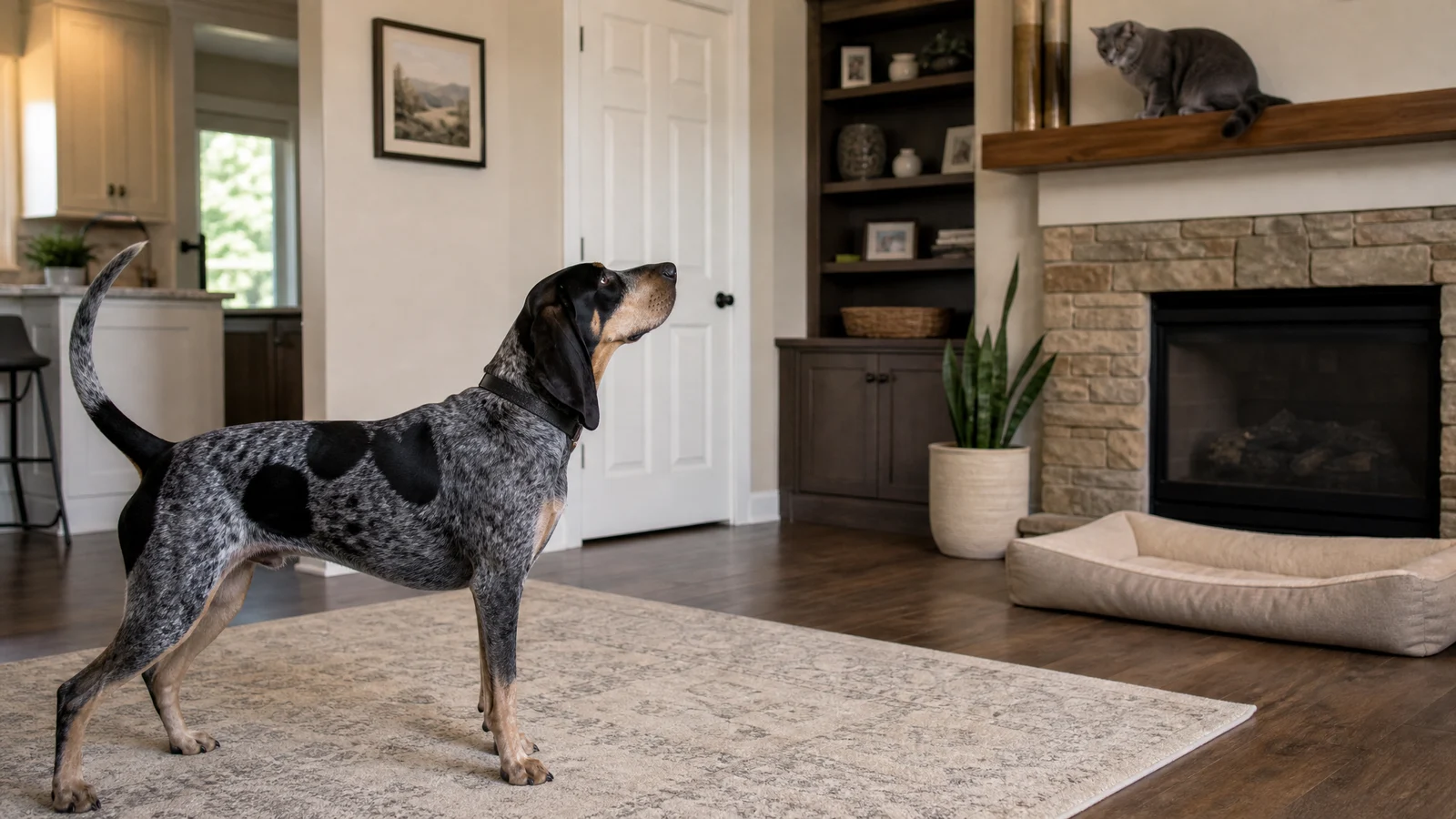
Cats raise the stakes because a chase can hurt someone. During early practice, keep the dog on leash or behind a gate, pay calm looks at you when the cat appears, and let the cat decide how close to be, always with an exit. Teaching a reward-based go away cue shows a dog they can walk off instead of feeling trapped, and the same logic works for cats.
Never leave the two alone together, however well practice looks. A crate or closed door protects both animals. For help building a space your hound actually likes, see crate training a Bluetick Coonhound.
Dropped Food
A hound's nose finds a fallen crumb before you've noticed it left the counter. Practice with a boring treat dropped from waist height while the dog is on leash, say leave it, and pay from your pouch when they look up. Cover the item with your foot if needed, and work toward better items gradually.
Plain management helps as much as the cue. Keep counters clear, put the trash behind a closed door, and tell kids and guests that anything on the floor is off limits until you say otherwise. Some things people drop can make a dog sick, which is one more reason to make this one rock solid.
Training Impulse Control for Pet Life
Frame all of this as impulse control and it stops being a squirrel trick. Every home has a daily stream of small temptations, and the habit you built with the closed fist and the check-in applies to every one of them. The table shows how the same skill shows up around the house.
| Situation | What you ask | What pays |
|---|---|---|
| Doorways | A glance at you before the door opens | A release to go through |
| Sidewalk | A check-in when a smell or movement grabs them | A sniff break on your cue |
| Guests | Paws on the floor and a look at you before greetings | Attention from the visitor |
| Kitchen | Settling away from the counter while food is out | A treat once everything is put away |
Notice that the release is a reward in its own right. A hound who learns that waiting leads to the thing they wanted gets calmer about waiting, because the nose is still being served.
Guests deserve a plan. The breed is only moderately open to strangers, devoted to family and best around young children under supervision, so ask for the check-in before greetings and give visitors treats to hand out. A solid sit helps everywhere, and our guide to teaching sit, down and stay shows how to build one.
The breed also rates well for trainability and is good with other dogs, so this isn't an uphill project. You're pointing a smart, tenacious dog at a game with clear rules, and they'll play it for as long as the pay is good.
Bluetick Coonhound Training Years Ahead
Expect the drive to stay for life. No amount of practice will switch off a nose shaped by generations of trail work. What changes is the relationship. A young dog who gets paid every time they glance back grows into an adult who does it automatically, and that adult can pass a squirrel that would once have launched them across the yard.
Plan for dips. Adolescence, a move, a new dog in the house or a stretch of skipped practice can bring the old behavior back. The answer is boring and reliable: return to an easier level, pay well and rebuild. Daily exercise and scent games matter here too, because a coonhound with too little to do and no outlet for their instincts may start vocalizing loudly and mournfully, which disturbs the neighbors.
Long-term upkeep comes down to small habits. Repeat them before a difficult walk makes the skills urgent.
- Keep paying for the glance back, with food on hard days and play or a sniff on easy ones.
- Revisit the closed-fist game now and then so the cue stays crisp.
- Keep fences checked, leashes on outside the fence, and gates between the dog and the cat.
Years of rewarded checking in won't make a Bluetick safe off leash near a road, and nobody should plan on that. They will make daily life calmer and a lot more fun. Keep up regular vet visits as your dog ages, keep the best treats for the biggest temptations, and you'll have a devoted, smart hound who can snooze in the shade without being run by their own nose.
 BehaviorCan a Bluetick Coonhound Live With Cats and Small Pets?
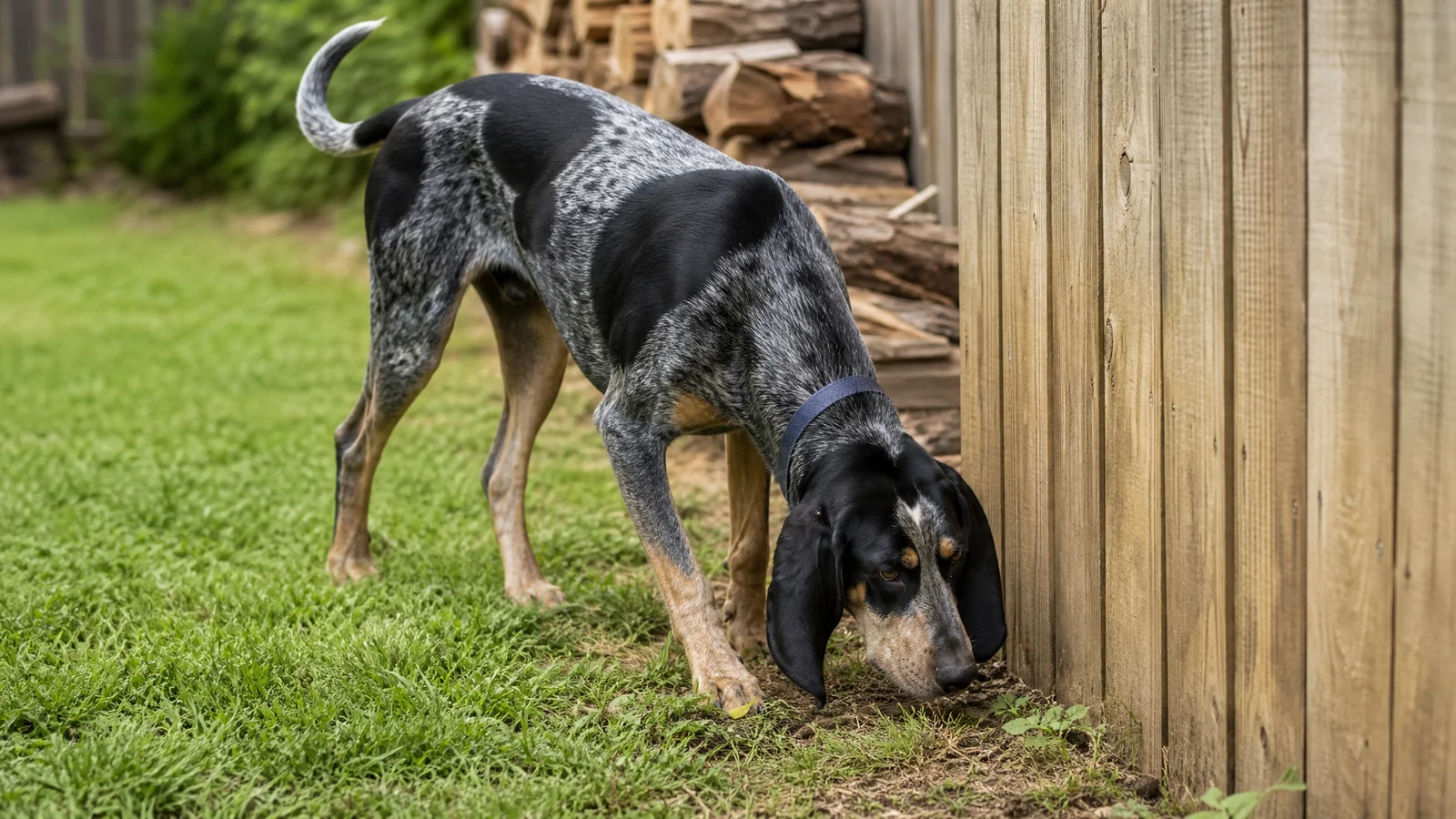 BehaviorSecuring Your Yard Against a Wandering Bluetick Coonhound
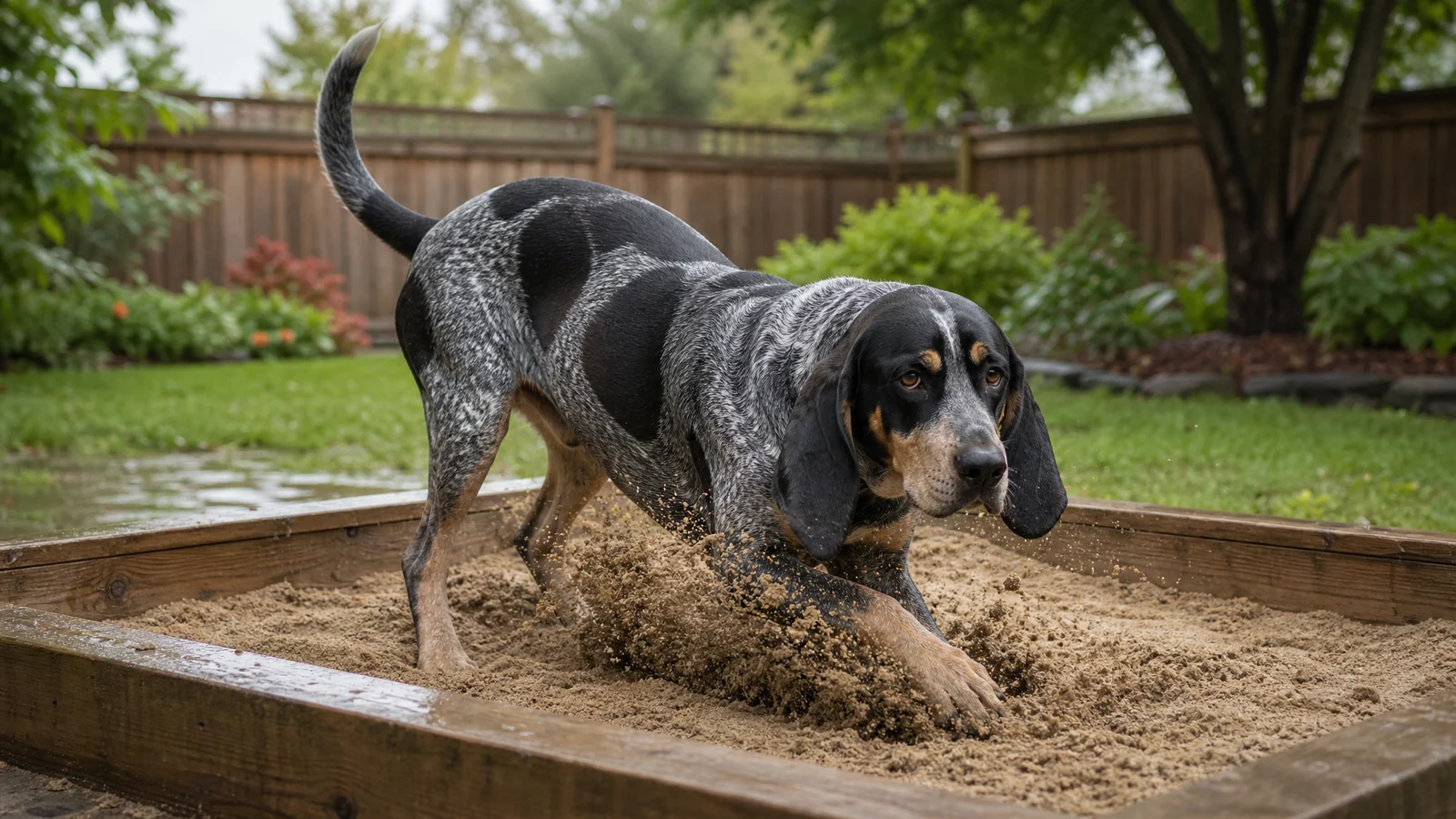 BehaviorGiving a Digging Bluetick Coonhound a Spot Better Than the Lawn