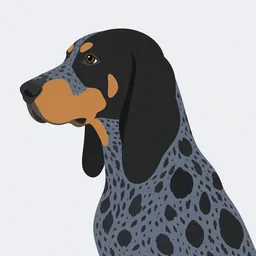
 Bluetick
How high should a fence be to keep a hound home? It is the question owners ask first, and the usual answer, a taller fence, falls short for a Bluetick Coonhound. Height stops a jumper. It does not stop a nose-led dog who digs under a soft spot, climbs the woodpile beside the panel or strolls out through any gate left open.
The stakes are real. The Bluetick's prey drive is described as off-the-charts, and one successful trip teaches a hound that the neighborhood pays better than the yard. We have trained this breed for many years, and our approach puts management first and rewards second, so the trip never gets a chance to pay off.
We'll walk you through the household habits that create openings, then the scent, time-of-day and boredom triggers, supervised yard time, fence checks, and finally the latches and family gate rules that close the last gaps.
Wandering the Neighborhood Routine
Most escapes start with a routine, not a hole in the fence. List everyone who touches the yard: adults, kids, a dog walker, whoever hauls the trash out and the delivery driver. If any of them tends to leave a door or gate ajar for a moment, the yard is only as secure as the least careful person on that list.
Then note when the openings happen. Trash day, groceries coming in, a child dashing out to a friend and a guest arriving all pull attention off the dog at the exact moment a door is open. A Bluetick is speedy on the trail, so a few seconds is enough for a loose hound. Parked on a mat or shut in another room, the same moment passes harmlessly.
The mat solves a second problem too. The usual advice for dogs who rush visitors is to stop greeting at the door, gate or boundary and to reward waiting on a mat until invited. One habit then covers most of the openings in a day. Turn it into household rules:
- Decide who is responsible for the dog each time an exterior door or gate opens, and say that person's name out loud.
- Send the dog to a mat or another room before deliveries, guests and trash runs.
- Keep a leash hanging beside every exterior door so the first step outside is always attached.
- Pick one gate as the daily entrance and keep every other gate locked.
- Tell children and visitors that the gate gets latched behind them, every time.
None of this costs much, and all of it removes chances before the dog can use them. Each change closes one more escape route.
Why Wandering the Neighborhood Happens
A Bluetick leaves the property for a reason, and the reason usually falls into scent, time of day or boredom. Work out which one you face before you choose a fix, because each calls for a different answer, and a taller fence helps with only one of them.
Scent Trails
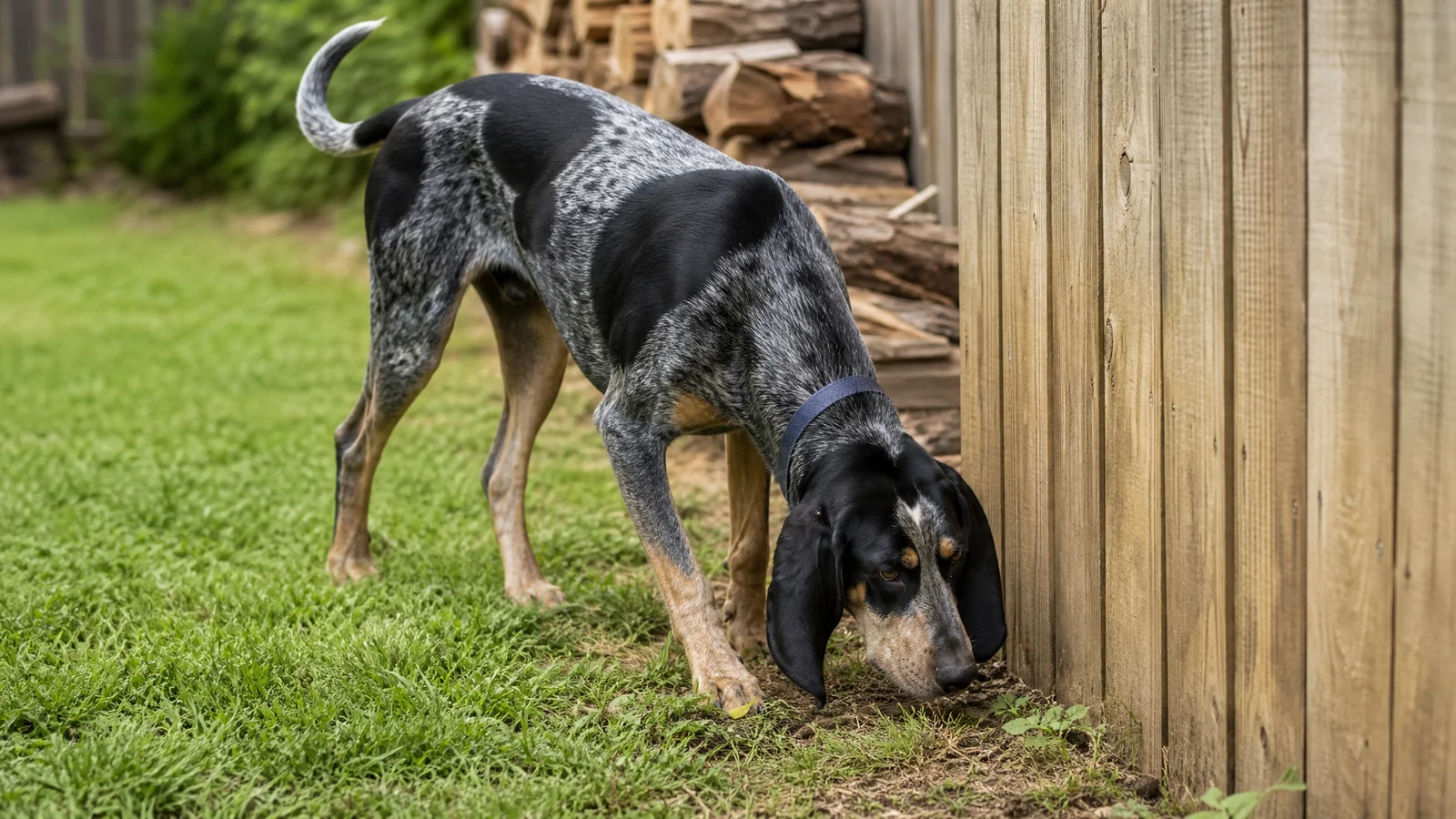
If your Bluetick keeps drifting toward one stretch of fence, ask what is on the other side before you ask what is wrong with the dog. The breed sits in the Scenthound Group, and the "cold nose" they were developed with is coon-hunter lingo for a dog who can work scent trails that are hours, even days, old. A trail you cannot smell is a vivid story to them, and your lawn may sit in the middle of it.
The author Fred Gipson described a famous line of Blueticks as big, bell-voiced hounds with a nose that could pick up a week-old trail and the endurance to run it 30 hours at a stretch. A pet Bluetick has never read that description, but the body is built the same way. A short walk leaves plenty of stamina in reserve.
Dusk and Night Hours
Time of day changes the odds. Coon hunters call the breed's baying voice the music of the night, which points to a dog built for dark hours. If your Bluetick turns restless around dusk or pushes hard to get out on the last trip of the evening, treat those windows as high risk. Go out with them, keep the leash on and check the yard first.
Boredom and Idle Time
Boredom pulls in the same direction. The breed is happiest with a job to do, and underemployed coonhounds with no outlet for their hardwired impulses can develop problem behaviors. A bored hound alone in a yard invents a job, such as working the boundary, digging or sounding off. If pacing starts, add exercise and nose work before you add more fence.
Match the fix to the cause. Scent calls for barriers, dusk calls for company and boredom calls for work.
Supervise Against Wandering the Neighborhood
Supervision covers everything the fence and latches miss. The rule is simple: if you cannot see the dog, the dog is inside. Play with you in a securely fenced yard suits this scent hound well, but a Bluetick alone out there has hours to test every board, work every soft spot and follow whatever drifts across the boundary.
When to Be Outside
If your Bluetick is new, young or still testing the boundary, you are outside on every trip, standing in the yard with your phone away. An adult with a long record of calm sessions can be watched from a door or window with a clear view of the whole fence, but only for short stretches and only after a walk has taken the edge off.
Use leashed or long-line outings for the risky windows: early mornings, dusk and any day the yard smells busy with animal traffic. A long line clipped to a harness lets a hound sniff in a wide arc while you hold the other end. A tether tied in the yard does not count as supervision, since a tied hound can still lunge at a trail and end up tangled at the edge of the property.
What to Do Together
Supervised time works best when the dog has something to do. Scatter treats in the grass near you and let them hunt with their nose, or hide a few under cups and let them sort it out. Keep the scent work close to you and away from the boundary, so the nose stays busy where you can reward it. Then add a door routine, so coming inside pays as well:
- Clip on the leash before the door opens and ask for a sit at the threshold.
- Mark the sit with a marker word the moment it holds, then release the dog to walk out with you.
- At the end of the session, call the dog to the door with a treat in hand and pay for coming inside.
- Now and then, head back outside after the treat so coming in does not always mean the fun is over.
- Repeat the same wait at every gate and entrance in your routine.
If coming in always ends the fun, a hound dodges the door and drifts to the fence. If coming in pays, the door becomes the best spot in the yard. For a dog who tunes you out once outside, our guide to recall for a scent-driven Bluetick builds the next layer, and making listening pay explains why the rewards need to be generous.
Bluetick Coonhound Fence Audit
A fence check takes an afternoon and tells you more than any guess about height. Walk the whole boundary slowly, once looking at the top and once looking at the ground, and read it as a determined nose would. The question is not whether a dog could get out in theory but where they would try first if a scent pulled them.
Height and Gaps
Add height only after you have checked what the existing fence does. If your dog can stand on their hind legs and hook their paws over the top, raise the fence or add an extension that leans inward. If they cannot, height is not your problem, and the money is better spent on the base and the gates.
Gaps matter more than most people expect. Check between boards, at corners and where the fence meets the house or a neighbor's panel. If a hound's head fits through an opening, assume the body can follow once they work at it, and close the space with solid material. A solid panel along the sidewalk also cuts down on joggers and passing dogs who stir up interest from inside.
Digging Under the Fence
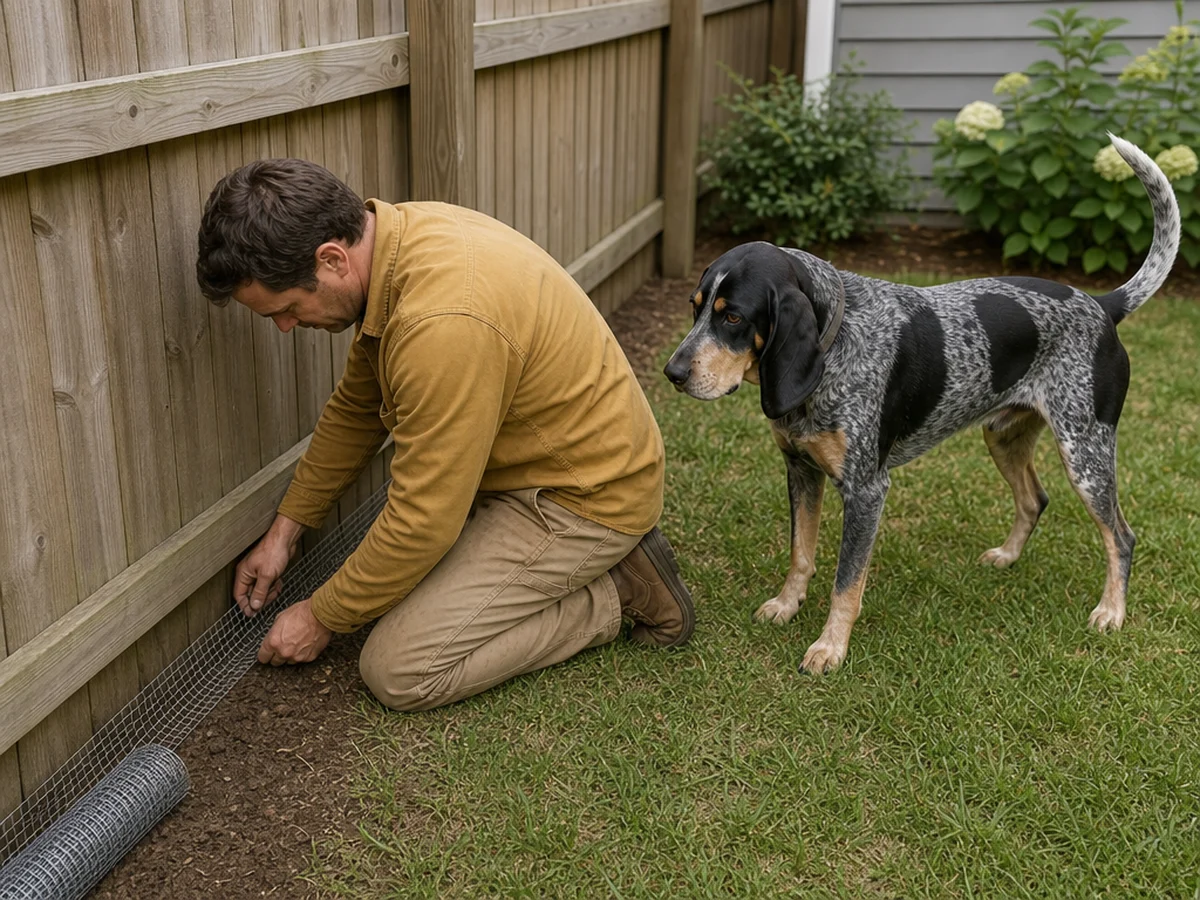
Look along the ground for dips where rain collects, bare patches and loose soil beside the uprights. A hound who smells something on the other side digs where the soil is already soft, so every low spot is a future exit. Fill the dips, then add a barrier along the base, such as buried wire mesh, landscape edging set into the soil or a row of pavers. Pay extra attention at corners, gate hardware and the ground near trees.
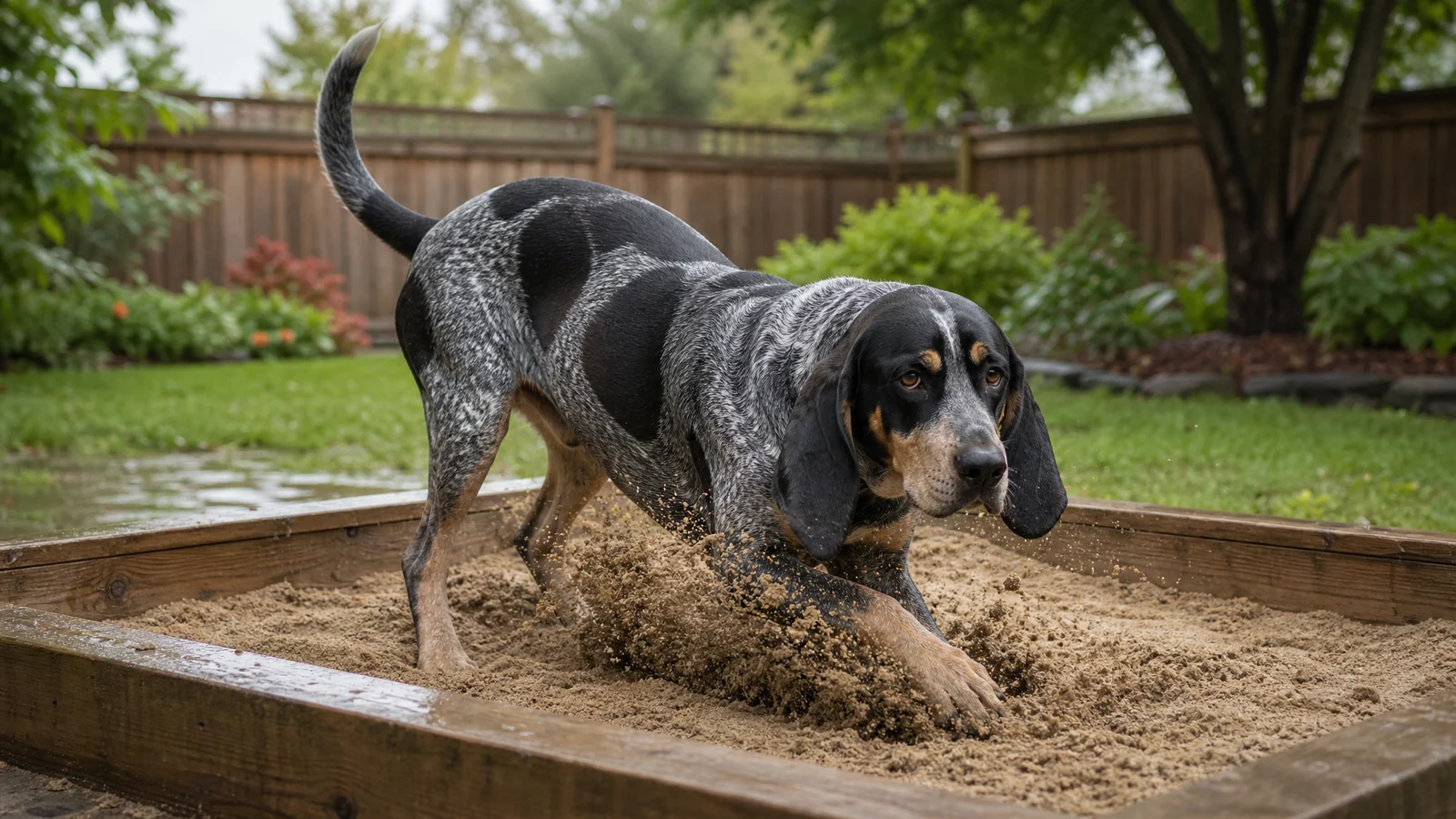
Fresh digging along one stretch tells you something scented lies beyond it, so reinforce that stretch first. Digging that spreads across the whole lawn is a different problem, and a better digging spot works better than fighting it.
Climbing Aids
A climbing aid is anything the dog can step on to reach the top: woodpiles, trash bins, doghouses, patio furniture, a low shed roof or a mound of dirt. Move them well back from the fence. Trim branches that bridge the boundary too, since a limb works as a ramp. If a dog climbs the fence face itself, a smooth panel or a roller bar along the top is more reliable than extra height.
The Afternoon Checklist
Put the pieces together in one pass. Repeat it after storms and at each change of season.
- Press on every board, panel and upright for rot, rust or loose fasteners, and mark each weak spot for repair.
- Walk the base with your eyes down and fill any dip, bare patch or washed-out stretch.
- Test every gap against the size of your dog's head, including corners and the space under gates.
- Move anything stackable away from the fence and trim branches that reach over it.
- Open and close each gate from both sides to confirm it swings shut on its own and clicks into place.
Bluetick Coonhound Gate Latches
Gates fail more often than fences, and the reason is human: a gate is the one part of the boundary that people operate every day. The breed is described as devoted and tenacious, and a dog with those traits who pushes, lifts and nudges the same spot daily will eventually find the weak point. Build every opening so that it closes by itself, takes more than a simple lift or push to open and fails safe.
Latch Types
Self-closing hinges let a gate swing shut even when someone forgets, so fit them on every gate and repair any that sag or drag. Pair them with a latch that takes a deliberate, multi-step motion, such as a lever plus a pin, or a lock-style latch mounted above the dog's reach. Plain gravity and thumb latches are the easiest for a persistent nose and paw to defeat. A padlock or snap clip on top makes a cheap backup.
Add another barrier wherever a gate opens toward a street: an inner gate, a short fenced entry or a closed porch. With barriers in a row, one forgotten latch does not become a trip around the neighborhood. Treat an exterior door that opens onto unfenced ground the same way, with a baby gate or a leash waiting beside it.
Family Gate Rules
Every opening needs one rule that everybody knows. Post a sign asking visitors and delivery drivers to close the gate, and give packages a spot outside the fence so no one has to come in. The breed standard asks for a Bluetick willing to be hospitable to people and other dogs, which is lovely in the living room, but a friendly hound will follow an open gate toward a friendly voice.
Teach the household one sequence. The dog goes to the mat or the other side of a baby gate, then the door or gate opens, then the dog is released with a treat once everyone is through and the latch is closed. Kids can handle part of it, but an adult checks the latch. When the check follows every use, a forgotten latch stops being a surprise.
Bluetick Coonhound Yard Recheck
Track the changes you can see in the yard and at each gate. These four results show that the setup and the return-to-door habit are working.
- No escapes, and no near-misses at gates or doors.
- Calm yard time, where your dog sniffs, wanders back to you and settles, the way a hound who enjoys snoozing in the shade will.
- Fence checks that keep turning up nothing new, with no fresh dips and no loosened hardware.
- A dog who trots to the door for the treat instead of dodging it.
Some patterns point past fencing. Repeated escapes after you repaired the exact spot your dog used mean there is a second weakness or a motive you have not met. Frantic fence work is the clearest red flag: relentless pacing, climbing or digging at one point, or a fixation so strong the dog cannot take a treat or hear their name.
Howling that exercise and scent games do not ease belongs on that list too, and why they bay is worth reading first. In each case, bring in a trainer who uses rewards. A sudden change in a previously calm dog calls for a prompt vet visit, and routine vet exams are worth keeping up either way.
Everything above comes back to what these dogs were made for. A Bluetick is sweet and devoted at your feet and relentless once a trail appears, so the home that works puts the trail out of reach and makes the yard worth staying in. Secure the gates, check the fence each season, stay outside with them and pay generously for every return to the door. Do that, and the same hound who could follow a scent for hours is content to stay home.
 BehaviorGiving a Digging Bluetick Coonhound a Spot Better Than the Lawn
 CareMaking Long Bluetick Coonhound Ears Easy to Check and Clean
 BehaviorHow to Stop Bluetick Coonhound Reactivity With Distance Work