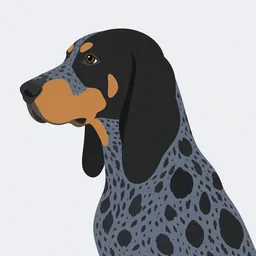
 Bluetick
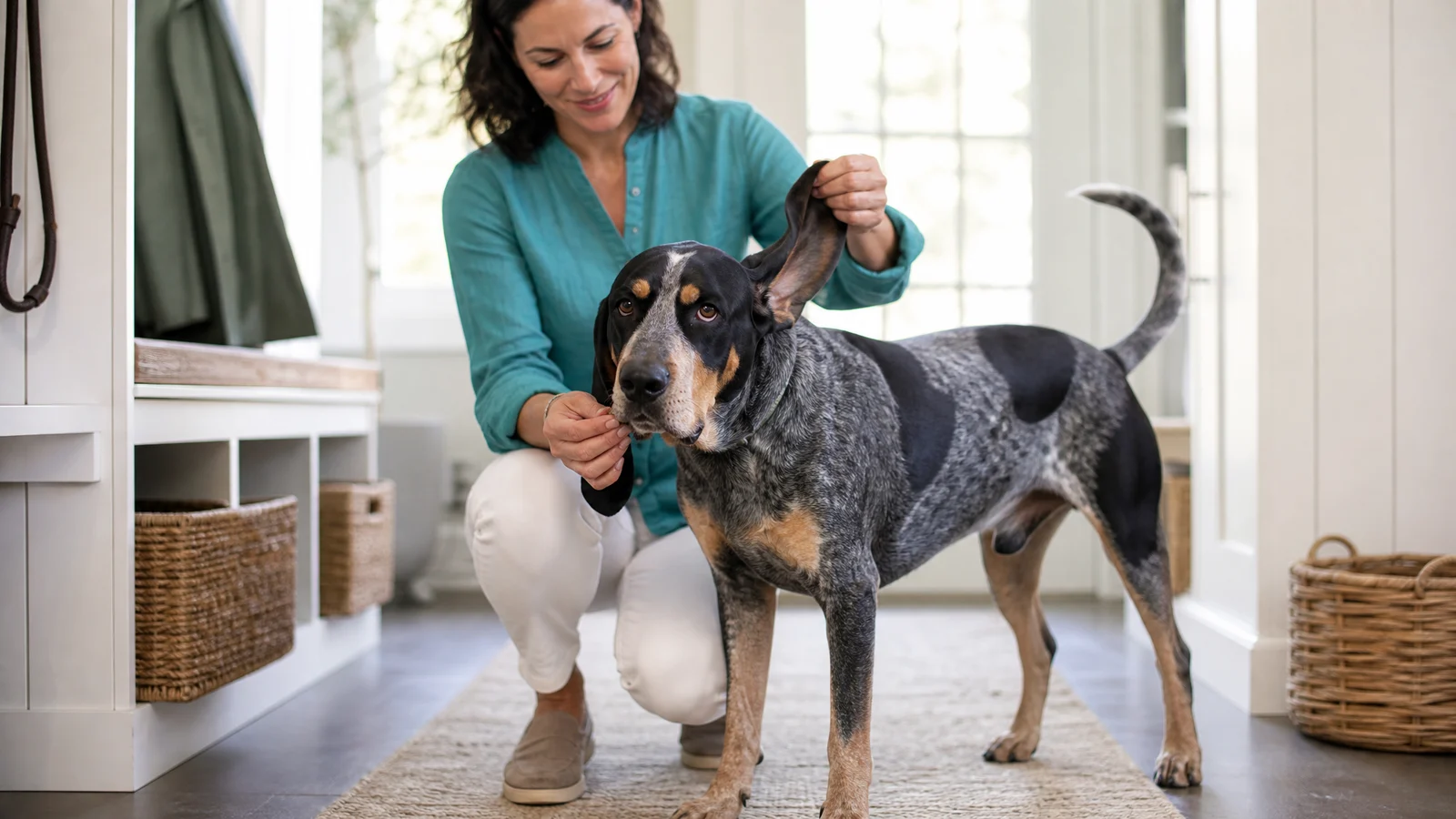
To make Bluetick Coonhound ear checks easy, pair a gentle touch with a treat in short daily sessions until a lifted flap predicts something good. The breed's long, heavy flaps trap warmth and moisture over the canal, and a hound who was never taught to accept handling will pull away just when you need a clear look.
Taught early, the habit gives you a calm weekly check that catches small problems while they are still small. Our team focuses on Bluetick behavior and training, and a food-motivated hound usually picks this up faster than owners expect.
Below, we test common ear-care assumptions about constant cleaning, starting with supplies, using treats, weekly checks and what the visible ear actually needs. Each answer leads to one practical habit.
Bluetick Coonhound Ear Handling and Cleaning Myths
With the household in place, the next step is the dog. A Bluetick's flaps hang long and heavy, covering the opening of the canal, which is the tube that leads inward from the visible part of the ear.
Think of the flap as a thick curtain over a window. The curtain does no harm, but air moves less freely behind it, and anything that slips behind it stays longer. That is why a regular look is worth the few minutes it takes.
Trail Work and Wet Ears
The breed's work adds to the problem. Bluetick Coonhounds are scent hounds with a strong prey drive, and they do best with long leashed walks or play in a securely fenced yard.
A nose-down hound on a damp day drags those flaps through wet leaves, mud, dewy grass and brush. Seeds, burrs and dirt can lodge in the folds, and a swim in a creek or pond leaves water behind.
After any wet or rough outing, lift the flap, glance inside and pat the ear dry. The weight of the flap also shapes how the dog feels about handling.
Lifting a heavy flap tugs gently at the base of the ear, and your hand comes in over the head, which many dogs find uncomfortable until they have learned it is safe.
A hound who is single-minded on a scent trail will also ignore a treat and resent a touch, so wait until the nose is off duty. Teach the lift gradually and the hound learns that the hand is good news.
Do Weekly Checks Require Ear Handling and Cleaning?
Once the lifted flap feels like a game, cleaning is a small extension of it. Treat it as one more rewarded task with a clear beginning and end. The calmest cleanings come from hounds who learned the handling first and met the cleaner second.
What to Use
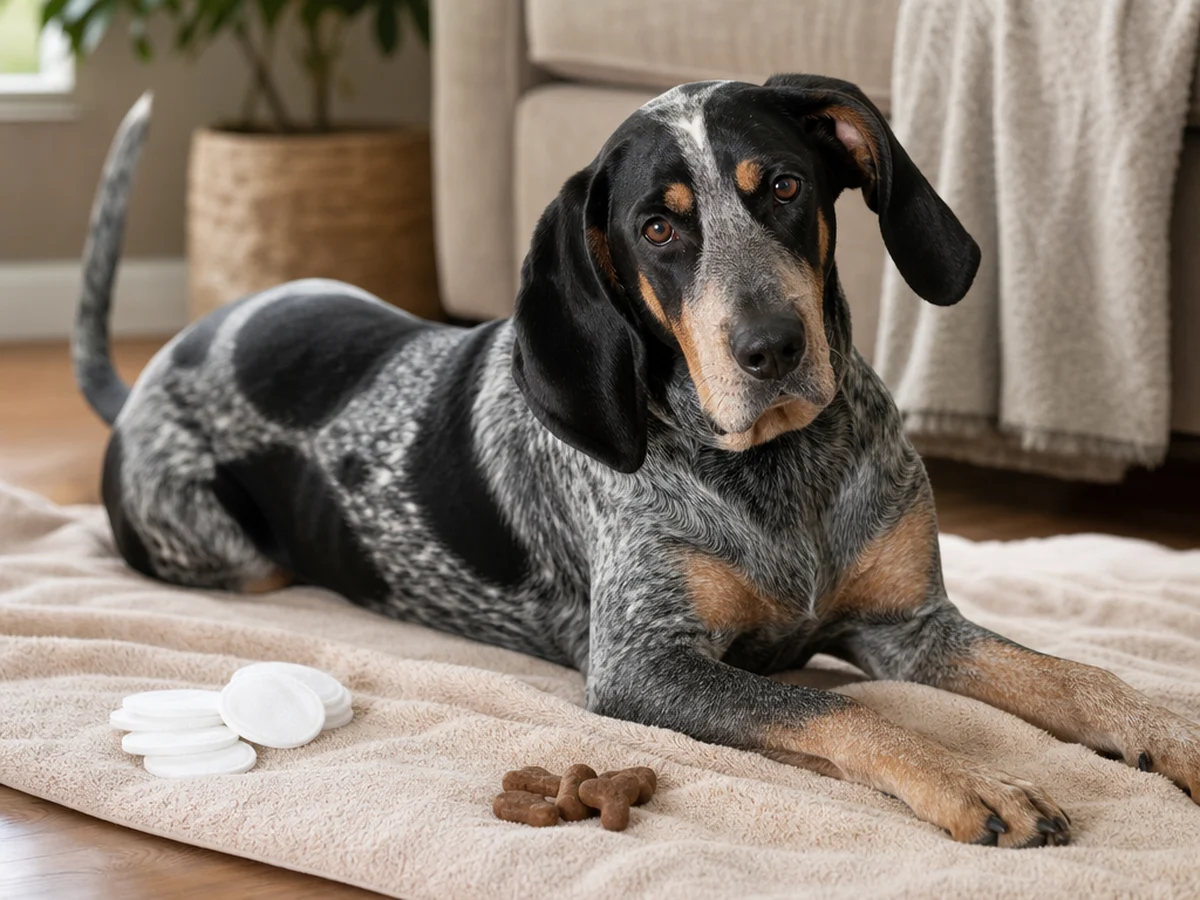
Use an ear cleaner your veterinarian has approved for your dog, plus cotton balls or gauze and a towel. Let the dog sniff the bottle and earn a treat for it before you begin, since the sound and smell of a new product can unsettle a sensitive hound.
Ask your vet how often to clean. Many healthy dogs need only a regular look and an occasional wipe, so the weekly session is mostly a check.
Wiping Technique
Settle the dog in the usual spot and open with a few easy touches they already know, so the session starts with success. Lift the flap and apply the cleaner exactly as your vet or the label directs.
Massage the base of the ear lightly to loosen debris, then let the dog shake. Dry the head and neck with the towel, and wipe only the folds and opening you can see, using cotton or gauze.
Reward steadily all the way through, not just at the end. Finish on a high note: one last treat, a bit of praise, then release the hound to something fun.
What to Skip
Skip swabs and anything else pushed down into the canal. The visible part of the ear is the part you clean at home, and anything deeper belongs to your vet.
Skip cleaning an ear that looks sore, red or smelly, and skip leftover medication from an earlier problem. A flap that hurts needs an exam first, and a hound in pain will remember the experience the next time you reach for the basket.
This is general information, not medical advice. Ask your veterinarian which ear cleaner suits your dog and how often to use it, and do not put any product in an ear that looks sore or infected until your vet has examined it.
Do Treats Distract a Bluetick Coonhound?
This is the part that makes everything else possible. The goal is a hound who sees a hand near the ear as the start of something good.
Trainers call this a positive association: every touch is followed by a reward until the touch itself feels pleasant. Early positive experiences matter, since some dogs develop a vet phobia when handling is rushed.
Pick a brief marker word, for example "yes," and speak it the moment the dog does what you want. The word becomes a promise that food is coming, and it lets you reward a calm moment precisely, even when your hands are busy.
First Touches
Do not begin at the ear. Start with the shoulder, chest and back, rewarding calm contact until the dog leans into your hand.
Lifting and holding ears comes after the dog accepts touch all over, and the same ladder later covers lips, paws and tail. Working in that order keeps you from asking for trust the dog has not yet given.
Treats and early socialization are both useful aids with this breed, and the same patience carries over to brushing, which our guide to Bluetick grooming time as training covers.
Lifting the Flap
Once body touch is easy, climb toward the ear in small steps. Move up only when the hound looks relaxed at the current step.
- Rest a hand on top of the head, say "yes," and feed a treat.
- Touch the base of the ear lightly, mark, and feed.
- Slide your fingers along the outside of the flap, mark, and feed.
- Hold the flap for a moment, mark, feed, then release.
- Fold the flap back so the inside shows, hold briefly, mark, and feed.
- Look inside with your flashlight, feed again, and release.
Spend as many days on a step as the dog needs. If the hound turns their head, shakes loose or stops eating, the last step was too big.
Drop back one rung and finish on something they enjoy. Upgrade the treat on harder steps too, since a scent hound will often ignore plain kibble when the room smells interesting. Warm chicken or soft cheese cut small usually wins.
Adding a Cotton Pad
When the dog accepts the folded-back flap and a quick look, introduce the pad. Let the hound sniff a dry cotton ball and earn a treat for doing so.
Next, touch the pad to the outside of the flap, then to the inside edge, rewarding each time. Only then make one soft pass over the visible skin.
Because the pad stays dry at this stage, the dog learns the motion before the cleaner joins the picture. Several tiny wins in a day do more than one long session.
Inside Bluetick Coonhound Ears
Knowing what normal looks like is the best tool you have. You are not diagnosing anything.
You are learning your own dog's baseline so that a change stands out. Check each ear in the same light and the same order, and compare left against right every time.
A healthy ear generally looks clean and dry, with pale skin and only a little wax. The smell is faint and neutral, nothing sharp or sweet.
The skin looks smooth, without swelling, crusts or scabs. Regular vet visits should include a look at the ears, and your vet can show you what normal looks like on your particular dog.
A short note after each check, with the date, how the ears looked and smelled, and how the dog behaved, reveals patterns such as dirtier ears after swims. Some signs mean the ear needs a professional, because ear trouble can turn painful quickly. Call your veterinarian if you notice any of the following:
- Redness or swelling inside the flap or at the canal opening, especially if one ear looks different from the other.
- A strong sour or sweet smell that was not there at the last check.
- Discharge that is dark, waxy, yellow or bloody, or an unusual amount of debris.
- Frequent head shaking, scratching at the ear, or rubbing the side of the head on furniture or the floor.
- Pulling away, crying out or snapping when you touch an ear the dog normally tolerates.
- A head held tilted to one side, or loss of balance.
Do not treat these signs at home. A hound who has practiced handling makes the exam easier for everyone, including the dog, and the habit you built is what lets you notice trouble early.
Ear Handling and Cleaning Setup
Ear care sticks when it fits into the day you already live, so decide in advance where and when it happens. A routine that needs planning gets skipped, while one tied to a particular spot and moment becomes automatic. The Bluetick makes this easy, because the breed pairs plenty of energy with a real talent for settling down afterward.
Choosing the Time
Blueticks are bred as hunting dogs and benefit from plenty of exercise, yet they also enjoy snoozing at their owner's feet. Use that rhythm.
The quiet stretch after a walk or play session, often the evening, is when a tired hound leans against your leg and welcomes a hand. A session before the walk is harder, because a dog who is thinking about the trail is not thinking about your fingers.
If children are around, give them a job such as handing over treats one at a time, and keep the actual ear contact with an adult. The breed does best with young children under supervision, and one grabbed flap can undo a lot of good feelings.
Choosing the Spot and Light
Pick a place where the dog already relaxes, such as a rug, a bed or one end of the couch, and use it every time. A familiar spot tells the hound what is coming before you say anything.
Good light matters too, because the folds of a long flap are shaded and hard to read in a dim room. If you share the home with other dogs, give them a chew in another room so nobody crowds the treat hand.
Supplies to Have Ready
Keep everything in one small basket so a session can start the moment the dog is calm, with no hunt for gear while their interest fades. A starter kit covers it:
- Small, soft treats that can be swallowed in a second, so each reward ends quickly and does not become a long chew.
- An ear cleaner your veterinarian has approved for your dog, chosen with them rather than grabbed off a shelf.
- Cotton balls or gauze squares for wiping the parts of the ear you can see.
- A dry towel for the head and neck, because a hound who shakes will fling cleaner across the room.
- A small flashlight, such as the one on your phone, to light the folds of the flap.
End every session early, while the treats still hold the dog's interest. A basket, a spot and a settled dog are most of the work.
Bluetick Coonhound Ear Check Myths
The Bluetick is devoted, smart and happy to work for a reward, so the habit you need is well within reach. Long ears cannot be changed, but how your dog feels about having them handled is something you shape with a pocketful of treats and a calm moment.
The weekly look, the gentle wipe and the early spotting of trouble all rest on one easy lift, repeated until it feels like nothing at all. So do this today: once your hound is settled, sit beside them with a handful of treats.
Touch one ear flap a single time, say "yes," and give a treat right away. Then stop. That one rewarded touch is the first rung of a calm, repeatable routine for the long ears that make this breed who they are.
 BehaviorHow to Stop Bluetick Coonhound Reactivity With Distance Work
 Puppy trainingBluetick Coonhound Puppy at 4 to 6 Months: What Changes
 Puppy trainingBluetick Coonhound Puppy at 3 to 4 Months: Teething and Mouthing