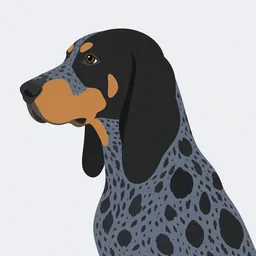
 Bluetick
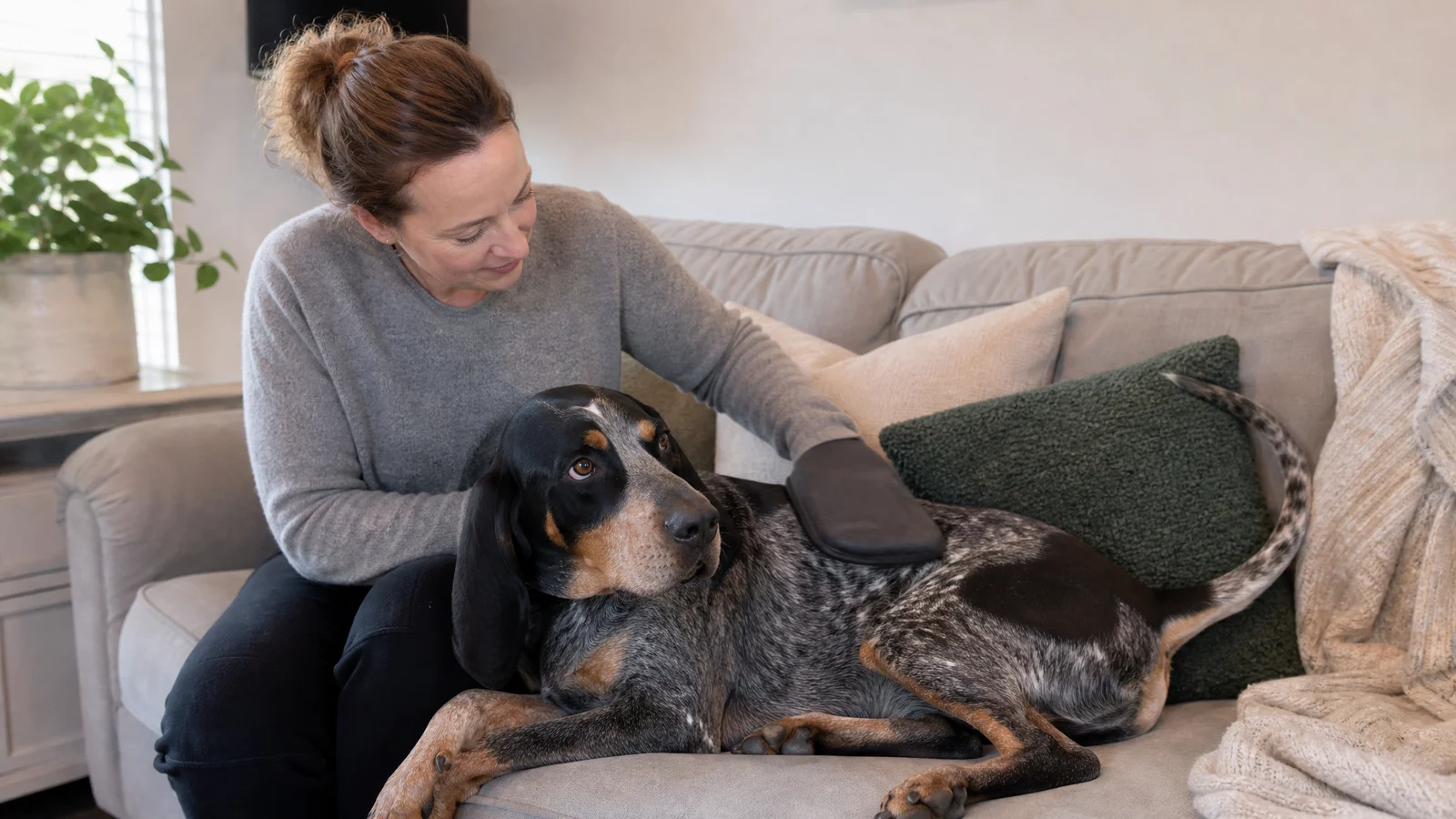
You pick up the brush, and the Bluetick Coonhound who was melted into the couch cushions quietly slides off and wanders into another room, as if they had suddenly remembered an errand. It is easy to read that exit as stubbornness, but it rarely is. Your hound is reacting to handling they have not learned to trust yet, plus the odd tug of loose hair letting go.
This guide covers grooming a shedding Bluetick Coonhound, from setting a realistic brushing rhythm and pairing the brush with treats to practicing ears, paws and nails and finishing each session while your dog is still happy. Done badly, grooming teaches a hound to dodge you. Done well, it becomes calm contact that makes vet exams and nail trims easier for the rest of their life.
Grooming Is Training in Small Doses
A Bluetick's coat asks little of you, which is exactly why grooming works so well as training. Breed ratings put shedding at 3 of 5 and coat grooming frequency at 2 of 5, on a scale where 1 means monthly and 3 means weekly. That makes your hound a moderate shedder with an easy coat, and it frees your effort for the real goal: a dog who accepts the brush, the towel and your hands without fuss.
Why Short Sessions Win
A hound who is held still for a long stretch learns that grooming is something to escape. A hound who gets a few calm strokes, a treat and a release learns that it ends quickly and pays well. Energy is rated 4 of 5 for the breed, so standing around is not their favorite activity anyway, and brief sessions fit who they are.
Introducing equipment gradually with rewards is the heart of reward-based grooming practice. Small doses tend to build willingness, while long sessions teach a dog to avoid the brush. Trainability is rated 4 of 5, so your hound learns quickly once the lesson is clear.
Keep the Setting Steady
Adaptability is a moderate 3 of 5, which is a reminder to keep the scene predictable at first. Use the same spot, the same mat or blanket and the same calm voice for the first weeks, then change one thing at a time. If you adopted an adult whose history you do not know, the same rules apply, only slower. Small doses, repeated, build more tolerance than one long afternoon ever will.
How Often Does a Bluetick Coonhound Need Grooming?
Plan on a few short brushing sessions each week, with an extra one whenever hair starts collecting on the couch and your clothes. That suits a moderate shedder with the coat described in the breed standard, a glossy coat on a neat, compact body. A glossy coat stays that way through regular, gentle attention rather than heavy effort.
Tools That Suit the Coat
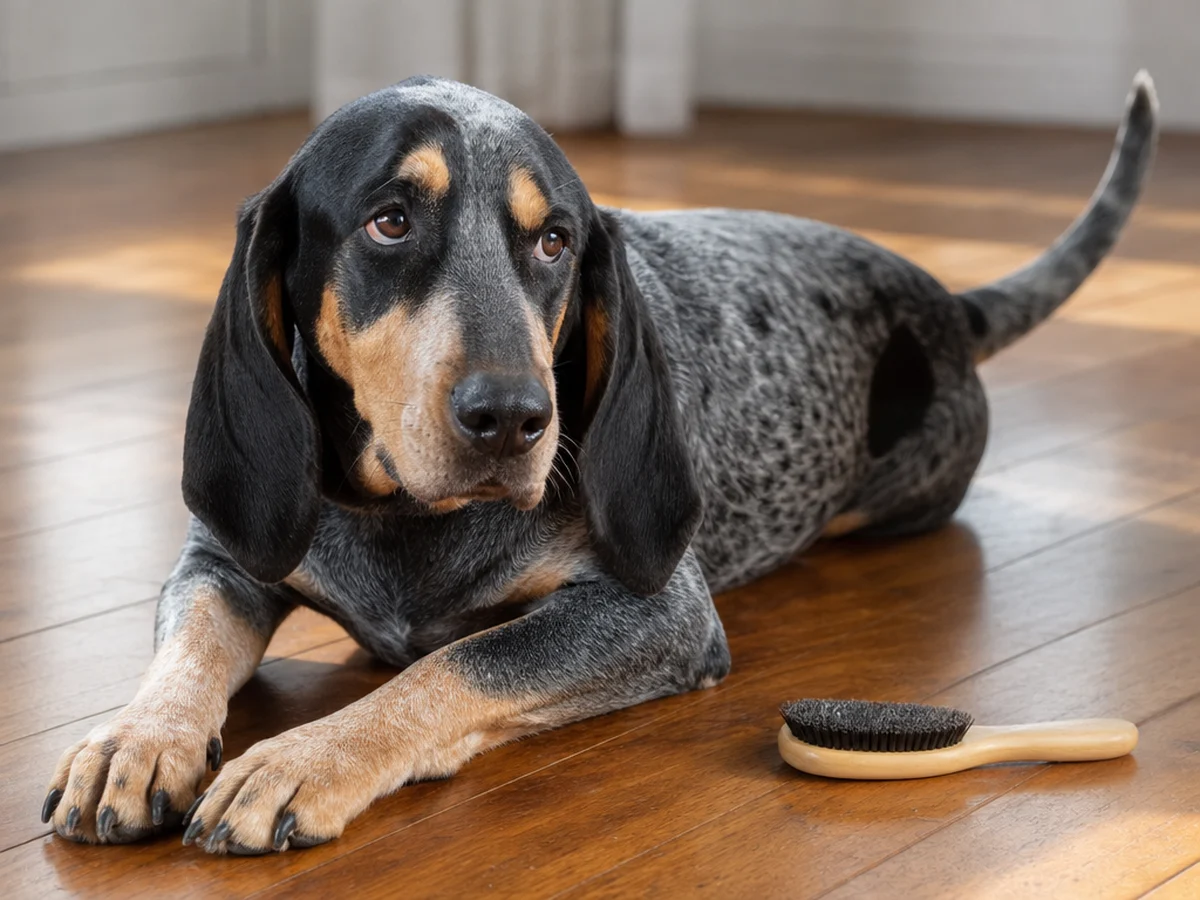
Keep the kit simple. A rubber grooming mitt or a soft bristle brush lifts loose hair from a short coat and feels like a massage, which helps a hound who is still unsure. Add a towel, a soft cloth for the face and ears, and nail clippers or a grinder that you introduce slowly. Drooling is rated low at 2 of 5, so the towel is mostly for damp paws and ears after outings.
Let your dog sniff each item before it touches them. Scenthounds investigate everything with their noses, and a tool they have inspected is a tool they are far more willing to tolerate.
A Rhythm You Can Keep
Choose a few fixed moments in the week, ideally after a walk when your hound is pleasantly tired, and brush for just a few minutes. Use long, slow strokes in the direction the hair grows. Glance at ears, paws and nails on the same days so none of them becomes a rare and strange event.
Brushing outdoors or over a washable blanket keeps shed hair from relocating to the furniture. As you work, notice lumps, scabs or sore spots, and keep up regular vet visits so anything new gets looked at early. A rhythm you can keep beats a perfect plan that falls apart by midweek.
Treats Come Before the Grooming Brush
Start by changing what the brush means. For the first sessions, the brush appears, a treat follows, and nothing else happens. Choose small, smelly treats your hound can swallow quickly, because a nose-driven dog loses interest in dry, bland food the moment something fascinating drifts past the window. A marker word such as yes tells them exactly when they earned the reward.
Building Up the Brush
Move to the next step only when your hound looks relaxed at the one before. A loose body and an easy return tell you that the current step is ready to grow.
- Show the brush, let them sniff it, then mark and treat.
- Rest the brush on one shoulder for a second, then mark and treat.
- Make a single stroke along the shoulder, then mark and treat.
- Add a few strokes, then work along the back and sides, treating between strokes.
- Move to the chest, belly and legs one area at a time, and go back a step if they stiffen.
Fading the Rewards
Once the brush is welcome, thin out the treats gradually. Reward every stroke, then every few strokes, then only at the end of a pass, with praise and calm touch filling the gaps. Bring the treats back whenever you meet a new area or a new tool, because fading too fast is how a happy hound turns back into a couch escapee.
If your dog backs away, you simply moved too fast, and that is an easy thing to fix. Return to the last step they clearly liked and repeat it for a few more sessions before trying again. Treats first, brush second, and the order only flips slowly.
Ears, Paws, and Nails Need Grooming Practice Too
Brushing is only part of grooming, and the parts that trouble hounds most are the ones where you hold something still. Once your dog accepts touch all over, the next step is handling individual body parts such as ears, lips, paws and tail. Practice each in its own short moment rather than all in one go.
Ears and Lips
A Bluetick's ears are easy to reach, but a hound who dislikes having them lifted will turn their head away fast. Stroke the base of the ear and treat. Then lift the flap briefly and treat, then look inside for a second and treat. Our guide to checking and cleaning long ears goes deeper, so here the goal is simply calm acceptance.
For the mouth, lip massage before tooth brushing is a gentle lead-in. Spend 30 to 60 seconds softly stroking your dog's lips, one or two times a day, across several weeks, and offer a treat when you finish each time. It is slow work, and it makes later dental care far easier.
Paws
Paws are touchy territory for many dogs, and a hound who has been grabbed by the foot once will remember. Rest your hand on the leg and treat. Slide down to the paw and treat. Hold it for a heartbeat and treat, then press a toe pad softly and treat. Work toward holding each foot for a few seconds while your dog stays loose, because that is exactly the posture nail trimming needs.
Nails
Wait until your dog is relaxed and comfortable before cutting anything, and give treats during and after clipping so the experience stays positive. Before the first clip, spend several sessions touching the clipper or grinder to each nail and treating.
Then trim a single nail and stop for a celebration. Add one more nail the next time. If you are unsure where to cut, ask your vet or groomer to show you at a regular checkup. One body part per practice moment keeps every session short and every memory good.
This article is general information about grooming and handling, not veterinary advice. Check with your veterinarian about nail trimming technique, ear or skin concerns, and the right time to start groomer visits for your puppy.
Can a Bluetick Coonhound Enjoy Grooming and Handling?
Yes, and a hound can learn to welcome it. This is a friendly breed, rated 3 of 5 for affection with family, and a hound who gets treats and calm touch together tends to lean into the whole experience. Enjoyment is learned through repetition, so the brush becomes a signal that something good is on the way.
Reading a Hound's Face Correctly
One breed-specific trap is the face. The standard describes a typical pleading hound expression, so a perfectly content Bluetick can look a little sad, and you may read comfort as worry. Watch the body instead of the eyebrows. A comfortable hound shows it all over:
- A loose, wiggly body with soft muscles rather than a braced stance.
- Soft eyes and a relaxed mouth, sometimes with a slow blink.
- Leaning into the brush, or nudging your hand when you pause.
- Head and tail carried naturally, not clamped or frozen.
- Staying put when you stop, or coming back at once if they step away.
When to Pause and Reset
Signs to pause include stiffening, turning away, lip licking, a yawn that has nothing to do with sleep, or sliding off the couch. None of this is defiance. It is information, and the answer is a shorter, easier next try. A few rushed sessions do not ruin your progress. A rushed session rarely undoes the work when the following sessions are slow and generously rewarded.
If you plan to use a professional groomer, start visits once your puppy is fully vaccinated, and practice the handling at home first so the groomer meets a dog who already knows the game.
Stop Each Grooming Session on a Win
End the session while your hound is still enjoying it, not after the first sign of restlessness. A Bluetick with an energy rating of 4 of 5 will tell you quickly when they have had enough, so quit one step earlier than feels necessary. Finish with a favorite treat, a few words of praise and a release, perhaps followed by a short sniffing stroll. The last moment is the one they remember, so make it a good one.
That is the whole system: brief sessions, rewards first, one body part at a time and a happy finish. Your one job today is small. Pick up the brush, give one shoulder a thirty-second brushing, mark and treat, then stop and put the brush away. Repeat tomorrow, and add the other shoulder when your hound looks eager. Within a few weeks, the dog who once slid off the couch may be the one who walks over and waits for the brush.
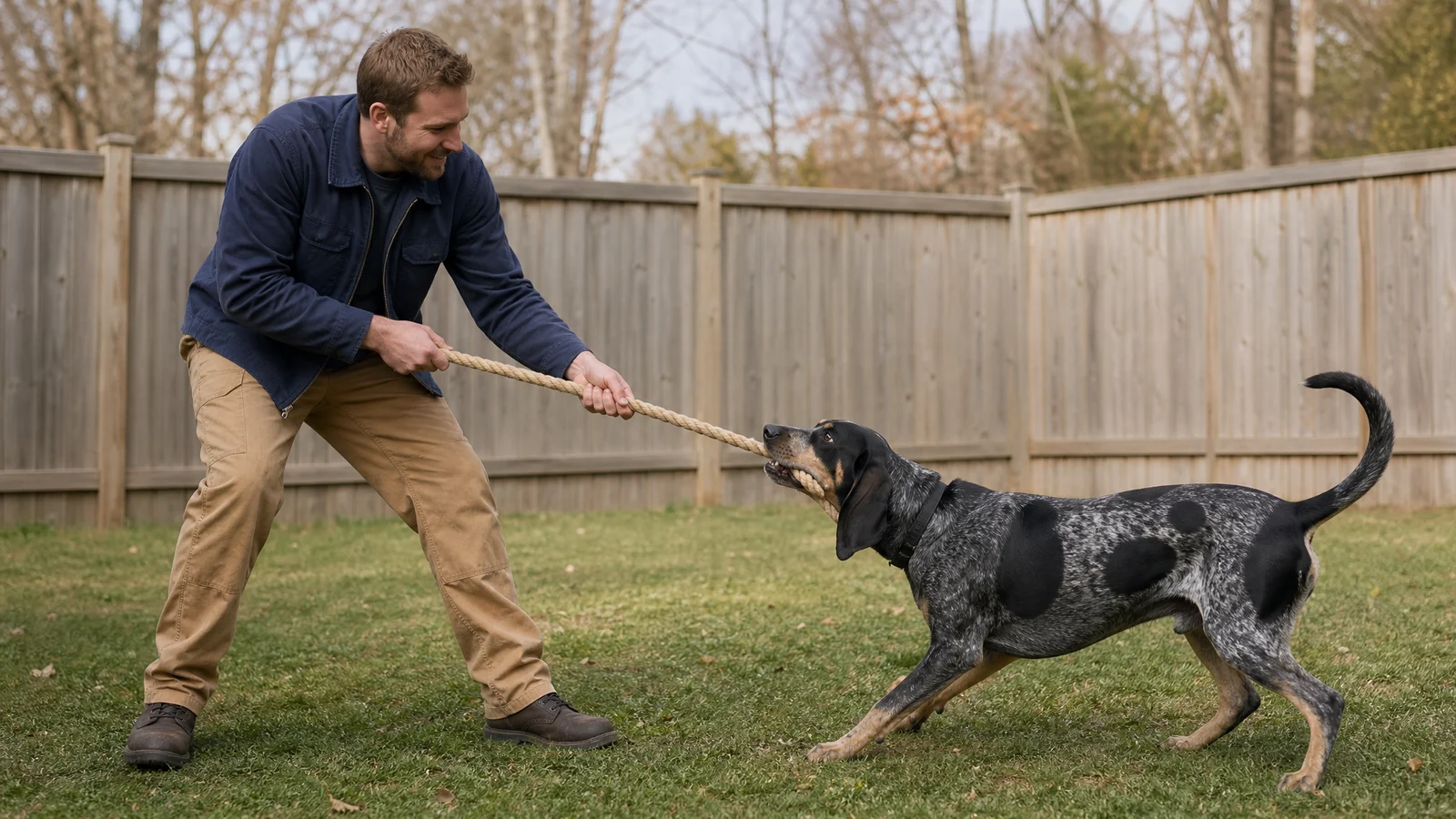 Exercise and jobsFenced Yard Play Ideas for Your Bluetick Coonhound
 Training basicsRecall Training for a Scent-Driven Bluetick Coonhound
 Puppy trainingSocializing a Bluetick Coonhound Puppy: People, Dogs and New Places