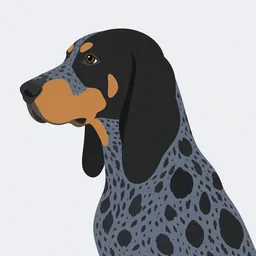
 Bluetick
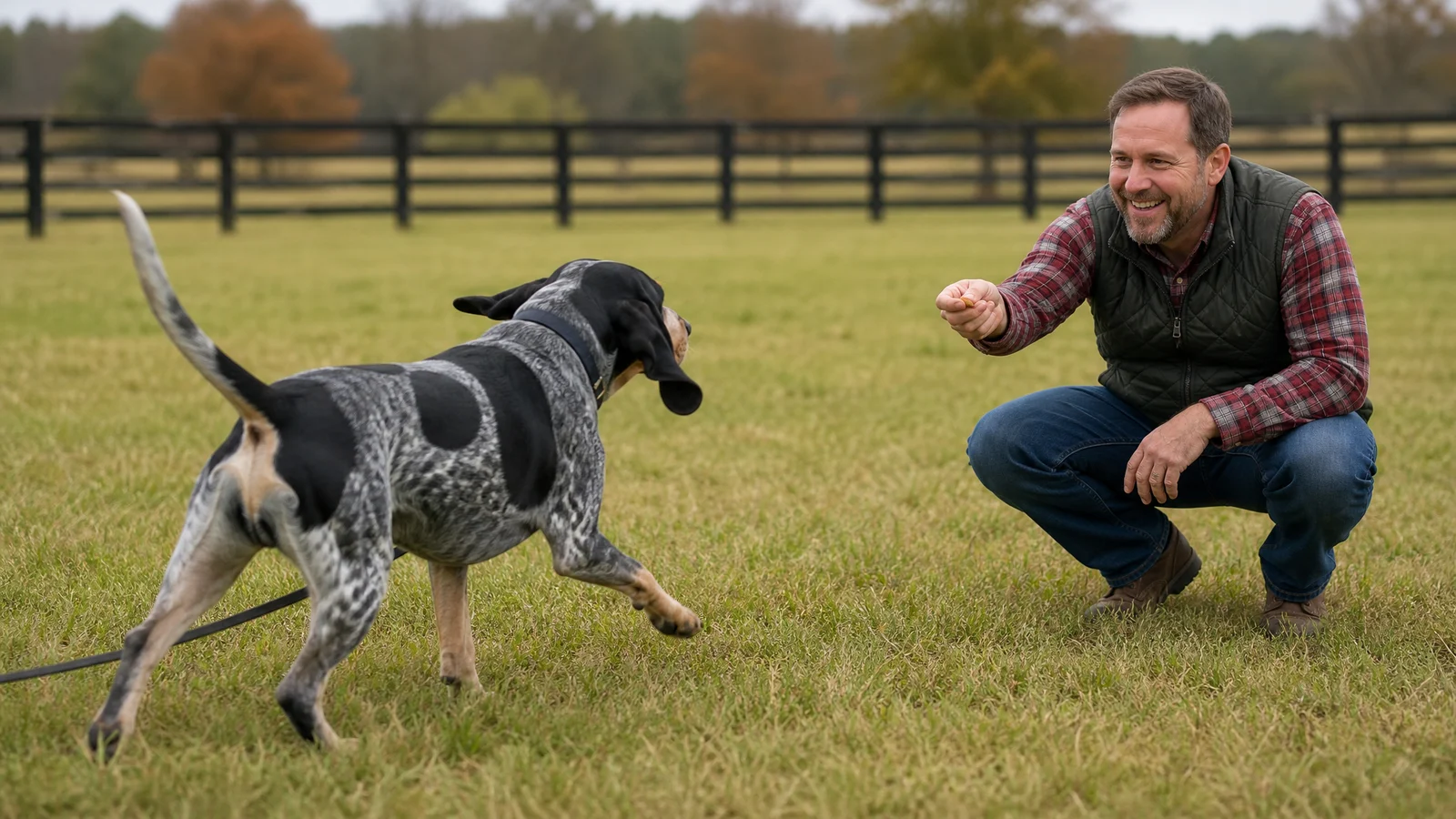
Yes, a Bluetick Coonhound can learn to come when called. It takes reward-based practice on a long line in secure areas, and it never means trusting them off leash. Their prey drive is intense, and a strong nose usually rules the day, so every cue you teach competes with one of the strongest pulls a dog can feel.
That matters because a failed recall around live scent is rarely a small embarrassment. A Bluetick can follow a trail past fences, roads and any chance of hearing you, and each ignored cue rehearses the next one. Done well, recall gives a hound real freedom inside safe limits.
Read on to choose rewards that can beat a trail, build quiet games, add a long line, respond to setbacks and set secure adult limits. Each stage protects the cue from being practiced when success is unlikely.
Bluetick Coonhound Recall Payoffs
Only rewards that feel better than the smell in front of your dog. The breed is known for a "cold nose," meaning a dog able to work trails that are hours, even days, old, and a famous line was described as picking up a week-old trail and running it 30 hours at a stretch. Plain kibble cannot compete with that, so rank your rewards before you head out and match them to the difficulty of the moment.
| Reward tier | Examples | Where it fits |
|---|---|---|
| Everyday | Plain kibble, a pat | Indoors, no distractions |
| Strong | Soft, smelly training treats | Quiet yard, mild distractions |
| High value | Small pieces of real meat or cheese | Long line near interesting scent |
| Jackpot | A handful of meat pieces fed one by one, or a favorite game | A hard recall, or a response mid-sniff |
Save the top two tiers for recall only. Real meat handed out for nothing stops being special, and the cue loses its edge against a trail. Rotate the foods so none gets boring.
One more reward costs nothing. After your dog turns and arrives, release them with a happy word to go sniff a good patch. Sniffing is a deep reinforcer for a scent hound, and nose work games show how dogs find smelly treats and reward themselves. Used this way, scent becomes the payoff for coming instead of the enemy.
The trade-off is timing: release only after the arrival, never before, or the sniff teaches your dog to drift first. The method itself has research behind it, because a number of surveys found dogs trained with reward-based methods were more obedient. For a dog this devoted to affection, that fits.
Which Quiet Games Build Recall?
During the first puppy stage, your puppy has not yet learned that a smell can outrank you, which makes this the cheapest time to build a recall. Everything happens indoors or in a quiet yard, and the only goal is for the cue to predict something wonderful. A cue built slowly now costs far less than one repaired during adolescence, when the nose is stronger and the stakes are higher.
Choose a Cue and Protect It
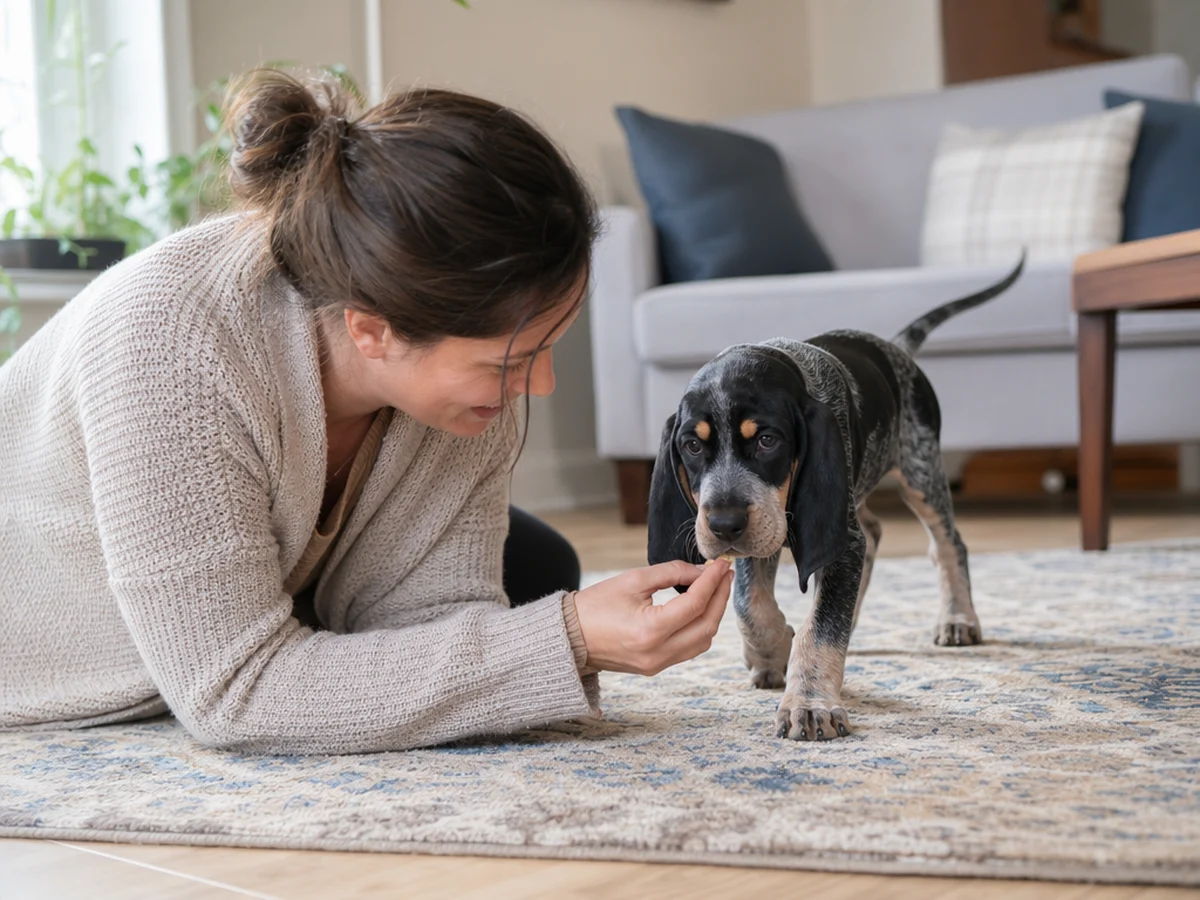
Pick one recall word and save it for recall alone, never for bath time, nail trims or the end of a good sniff. Say it once, cheerfully. The moment your puppy turns toward you, say a quick marker such as yes and follow with a treat. Blueticks crave affection and are deeply devoted to whoever provides it, so add warm praise and a scratch to the food.
Keep sessions short and frequent, and finish before your puppy loses interest. A handful of rewarded calls spread through the day builds more than one long, tiring session.
Indoor and Quiet-Yard Games
Start with relay recalls. Family members sit apart in a hallway and take turns calling, rewarding every arrival. Next, play find-me: step behind a door, call once, and reward your puppy when their nose leads them to you. This makes scent a partner of the cue instead of its rival. When indoor responses are quick, repeat the games in a quiet yard with no other animals around.
Release most calls back into play, so the cue never becomes the signal that fun is over. Potty trips are natural rehearsal too, and our guide to potty training a Bluetick puppy shows how to keep those outings rewarding.
When Should a Long Line Enter Recall?
A long line adds short distances and mild distractions while preventing a successful dash, and the order matters. Add one new element at a time, because a puppy who fails at a new level is practicing the wrong habit. The line is your safety net while the skill is still thin, and a few weeks of patience here saves months of rework later.
Handling the Long Line
Clip the line to a well-fitting harness and let it trail or slide loosely through your hand in a secure area. Your job is to prevent a launch, not to haul the dog in. If your puppy reaches the end, stop moving and wait for the tension to ease, the same idea behind stopping when a dog pulls. Then call cheerfully and reward the turn.
Walking manners and recall support each other, so it pays to settle both together. Our guide to Bluetick leash training for pullers covers the walking half.
Adding Distractions in Steps
Treat the steps below as a ladder. Move up only after several clean successes, and step back down at once if your puppy stops responding.
- Call from a short distance in the quiet yard with the line slack, and reward with meat or cheese.
- Repeat with a mild distraction, such as a toy on the ground or a family member walking past.
- Move to a corner of the yard with interesting smells, and call before your puppy's nose is fully down.
- Increase distance only after the distraction is handled, never both at once.
- If the cue is ignored, do not keep repeating it. Make the task easier, walk to your puppy, and reset.
A cue repeated into silence teaches a dog to wait for the later calls, so make that mistake rare. Each time you reset to an easier step, you are not losing ground. You are keeping the next repetition a success, which is what builds the habit.
Recall Setbacks in a Bluetick Coonhound
It will dent it, and you should plan for that rather than be surprised. As the nose matures and independence grows, a recall that looked solid in the puppy months can seem to vanish. This is a hound being a hound, not proof that your earlier work failed.
The Bluetick is described as sweet and affectionate at home, yet relentless, bold and single-minded in pursuit, and adolescence is when that second side first shows. A dog who greets you warmly on the couch may not hear you at all with their nose on a trail.
The response is to keep practicing rather than test. Lower your criteria with shorter distances, easier locations and the best rewards every time. Stay on the long line so every repetition ends in success, and keep sessions brief and upbeat. When your dog lifts their head from a scent and comes, pay a jackpot, because that is the response you will depend on later.
Some advice says to drop the line briefly and see how it goes. With live scent around, that mostly teaches a dog that the cue is optional, and each failure makes the next likelier. Wait it out instead, and keep daily exercise and scent games in the routine. Underemployed coonhounds invent their own outlets, and those tend to be louder and farther away than you would like.
Secure Limits for Adult Recall
Adult practice looks much like the earlier stages, only with faster responses and more places to use them. The line stays on anywhere a trail could pull your dog away. A securely fenced yard is the best setting for play with this breed, and long leashed walks are the other good option, since both suit a scent hound with a strong prey drive.
A secure area has a fence your dog cannot climb, dig under or squeeze through, and no gaps at gates. Check it before sessions, because a hound who finds a scent along the fence line will test it. Our guide to securing your yard walks through that check. Open fields, trails and parks are not secure for this breed, however quiet they look.
Why Open Areas Stay Off Limits
A recall that works in the yard is not proof it will work beside a trail. The Bluetick is built to run a trail with stamina to spare, and a dog on scent may not register your voice at all. So treat off-leash running in open areas as a risk no amount of training removes. For this breed, a good recall earns a longer line and a bigger fenced space, not open country.
Keeping Adult Practice Interesting
Hide treats around the yard or in open boxes for your dog to find, practice the cue in different fenced spots, and ask for it during play as well as at rest. The Bluetick is happiest with a job to do, and an engaged dog is easier to call. Keep a few jackpot calls in the mix even when the cue is reliable, so its value never fades.
The Bluetick Coonhound Recall Safety Rule
Recall in this breed is a managed skill with lifelong limits. We have trained and studied these hounds for many years, and the pattern holds: dogs do best with people who keep the line on, keep rewards strong and never stake safety on a cue alone. You are building a habit that makes life easier, not a promise that holds against a fresh trail.
Check in on your progress every few weeks. Compare the response, not just the distance. These signs tell you the work is paying off:
- Your dog turns toward you quickly after the cue, with less hesitation than a few weeks ago.
- They check in on their own during walks or yard time, glancing back without being asked.
- They respond while actively sniffing something interesting.
- They return with a loose, happy body and expect the reward.
Progress is rarely a straight line, so a bad day alone is no reason to worry. Persistent trouble is different, and these are signs to ask a trainer or behavior professional for help:
- The cue is ignored at every distance, even indoors, after steady reward-based practice.
- Your dog bolts when given a chance, or repeatedly tries to escape the yard.
- They show stress, fear or aggression during recall practice, including avoiding you when called.
- Responsiveness changes suddenly in an older dog, which is worth raising with your veterinarian, since cognitive dysfunction can bring wandering and disorientation. Regular vet visits catch what a trainer cannot.
Plan for the long run. Build the cue early, protect it with great rewards, keep the long line on wherever scent can win, and give your Bluetick plenty of exercise and scent work so their hardwired nose has good outlets. Do that, and you will share life with a hound who comes back far more often than not, in the places where it is safe to ask.
 Puppy trainingSocializing a Bluetick Coonhound Puppy: People, Dogs and New Places
 Puppy trainingPuppy Mouthing and Chewing: Redirecting Your Young Bluetick Coonhound
 BehaviorApartment Living With a Bluetick Coonhound: Quiet and Calm