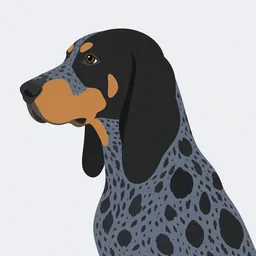
 Bluetick
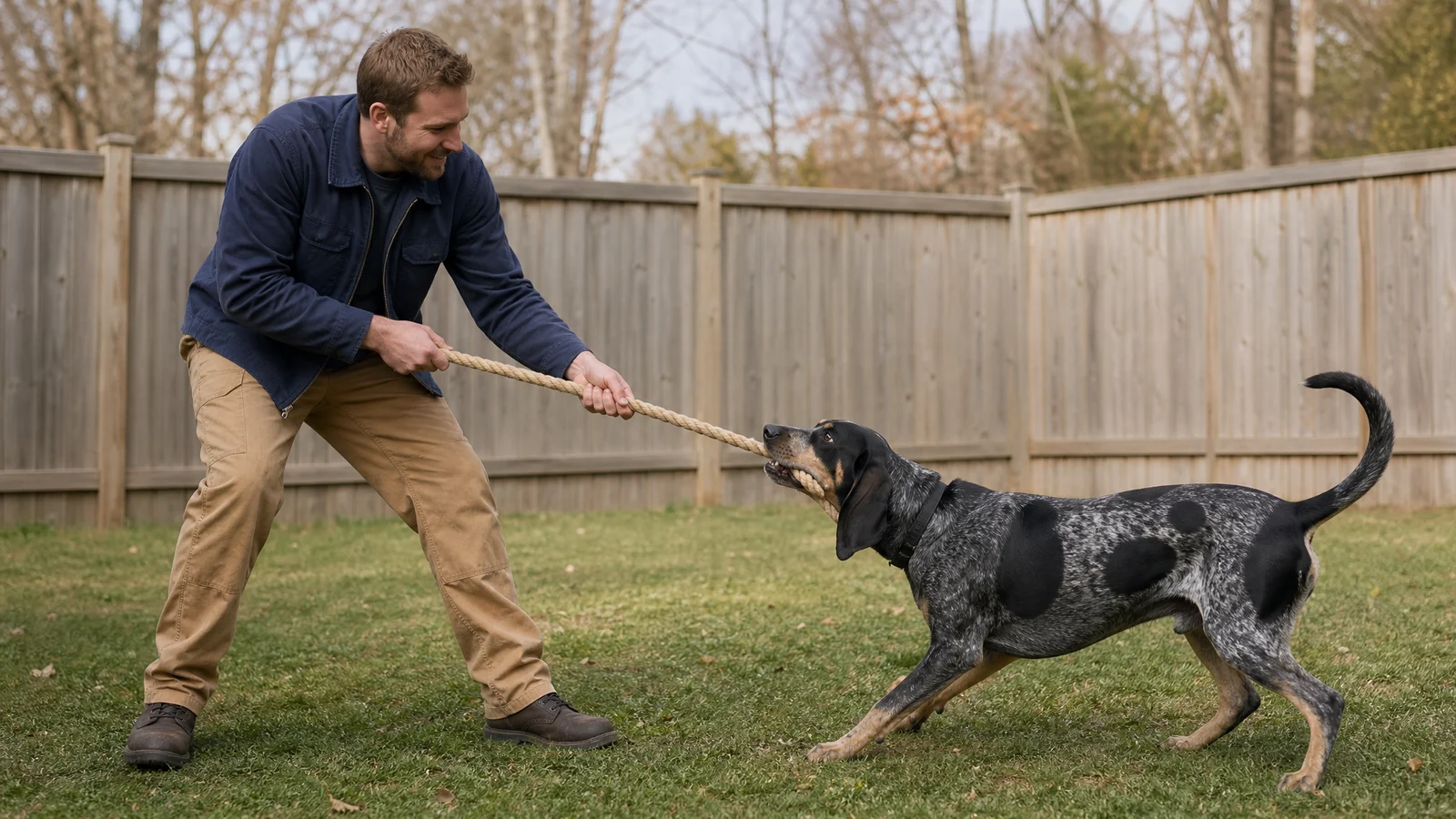
Yes, a securely fenced yard suits play with a Bluetick Coonhound. Tug and chase-the-toy games that end on a cue work best. Their nose is built for trailing and their prey drive is strong, so a yard with no plan sends them down the nearest scent line instead of toward you.
That drive has to be channeled. Neglected, underemployed coonhounds can turn to loud, mournful vocalizing that carries to the neighbors. Owner-led games give the drive a safe job and teach your dog to stop on cue. We have trained Bluetick Coonhounds for many years, and every game here is built around your part in it.
Below, you'll find fence checks, play-zone layouts, toy and treat choices, and a step-by-step retrieve-as-play plan, including the cue that ends each game, a daily schedule, and what to expect as your hound ages.
Bluetick Coonhound Yard Play Training
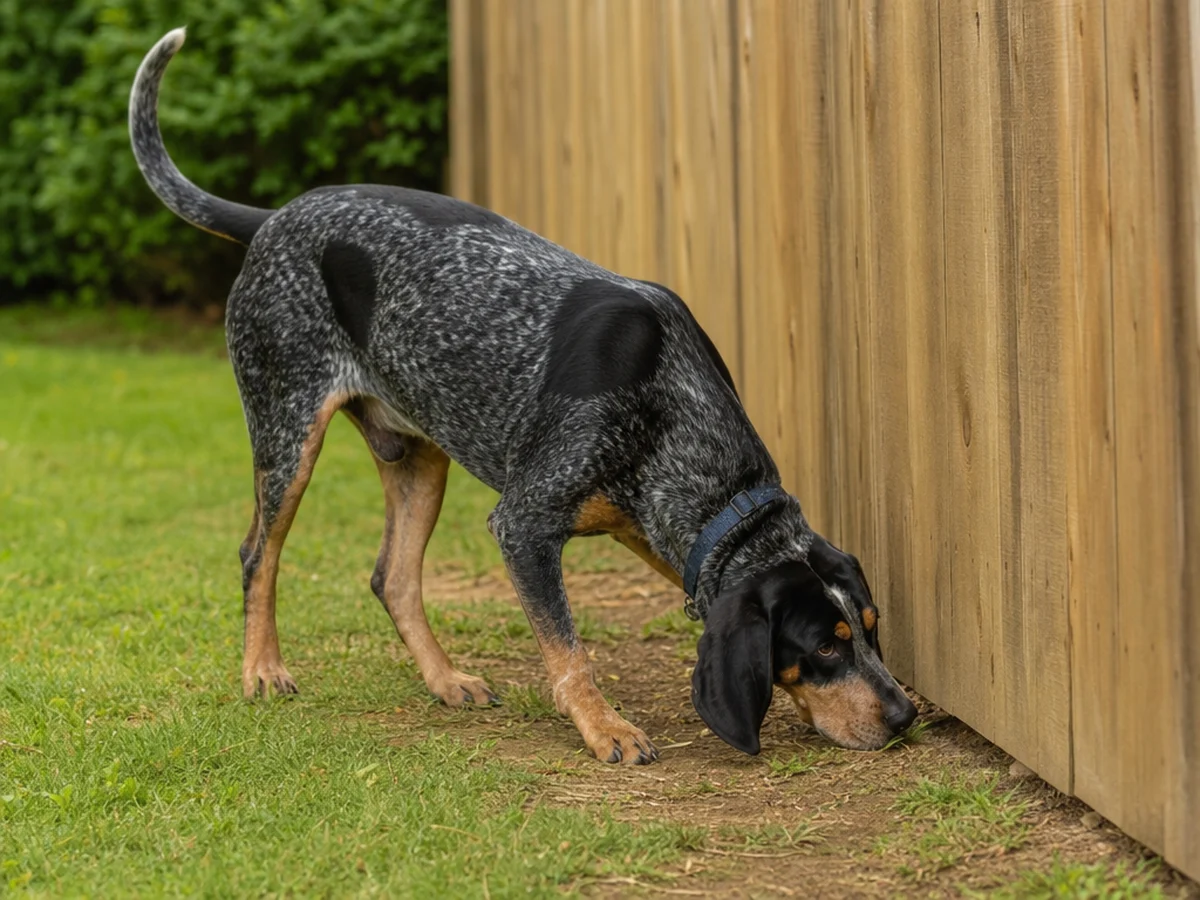
Open the back door and a Bluetick rarely heads for the toy. They head for the fence line, nose low, reading whatever crossed the yard overnight. That is the breed working as designed. The standard calls the Bluetick active, ambitious and speedy on the trail, and yard play has to compete with that.
One famous line of Blueticks was described as having a nose that picks up a week-old trail and the endurance to run it 30 hours at a stretch. You will not out-run that dog. You can out-plan them. Short games with a clear start and a clear finish teach your hound that you are the most interesting thing in the yard.
Why Solo Yard Time Falls Short
Common advice says to open the door and let the dog run it off alone. For this breed, that is the weaker plan. A Bluetick alone in a yard tracks, bays and patrols. Nothing in that routine teaches a stop, and the bond you want comes from games you share. The breed ratings below show why owner-led play fits.
| Trait (AKC rating) | Score out of 5 | What it means in the yard |
|---|---|---|
| Energy Level | 4 | Plan real exercise, not a quick potty break. |
| Trainability | 4 | Games with clear rules are learned fast. |
| Playfulness | 3 | Moderate. Expect interest, not non-stop silliness. |
| Mental Stimulation Needs | 3 | Pair chasing with scent and thinking tasks. |
| Barking Level | 4 | Excited baying is normal. Keep sessions calm enough to manage it. |
| Good With Other Dogs | 5 | A friendly dog can join once your cues are solid. |
What the Games Aim For
Every game in this article serves the same goals. Your hound gets an outlet while returning attention to you remains part of the fun.
The first is to spend physical energy so your hound ends the session settled instead of wired. The second is to make you the source of the best action, so your voice competes with the scents around you. The third is to build a reliable stop, so excitement ends when you say it ends.
For the total daily exercise this breed needs, see our guide to daily Bluetick exercise needs and brain games. Yard play is one part of that plan.
Fence Safety for Yard Training
A hound's nose finds the weak spot in a fence before you do. Gaps, loose boards and soft ground all get investigated. Set up the space before the first game. A dog who slips out mid-chase is in real danger, and learns that the fence is optional.
Fence Checks
Walk the whole perimeter before the first session and again after storms or heavy digging. Look at the base as well as the top. A fence is only as secure as its lowest gap and its easiest latch. Work through this list:
- Check the bottom edge for gaps, bare patches or dips where a nose and paws could work through.
- Keep the fence tall enough that your dog cannot clear it from a running start, and move benches, bins and stacked items away from it.
- Test every gate latch. A hound who noses everything will test it too, so use a latch they cannot lift or push.
- Scan the grass for trash, droppings and anything with a strong smell that will pull them off task.
- Repair loose boards and broken wire right away, since one weak spot becomes the only spot your dog cares about.
Wildlife trails cross many yards at night. You cannot remove the scent, but you can walk the area first and start play away from the strongest trail. Teach an emergency U-turn cue so you can turn your dog away from a trigger and move off together.
Laying Out Zones for Tug and Chase
Divide the yard by job. Tug needs a small patch of clear, level ground near the door, away from the fence. Chase needs a long, straight lane that points away from the boundary and ends where you stand. The third area is the reset spot, where games end and the treat scatter happens.
Keep play off the fence line. A toy that lands against the boundary pulls your hound into the strongest scent in the yard, and the game turns into tracking. Throw toward open grass and stand between your dog and the fence. Use the same layout every session. Hounds learn routines quickly, and a predictable layout makes the end cue easier later.
Toys and Treats for Training Games
A Bluetick will often walk past a squeaky toy to inspect a smell in the grass. The toy has to be worth more than the lawn. That value comes from the type of toy, the treats you pair with it and how rarely your dog gets it.
Tug Toys
Choose a long, soft tug made of rope or sturdy fabric. Length keeps your hands well away from the mouth during excited grabs. Small, light toys work for chasing but not for tugging. Tug is a game with rules, and the rules are what make it useful for a driven breed.
Start with a cue such as "take it." Let your dog grip, tug gently and pause now and then. If the grip gets rough or teeth land on your hand, stop moving and let the toy go dead. That calm interrupt ends the fun and shows that careful play keeps it going. Then ask for the end cue and trade the toy for a treat.
Treat Value
Early socialization and treats are very useful aids in training a Bluetick, and the yard is the hardest classroom you have. Use soft, smelly, small pieces. A hound sniffs out weak rewards and ignores them. Save your best treat for the moment your dog gives up the toy or returns to you. A plain biscuit cannot beat a scent trail.
Use treats in two ways. First, pay for returns, cue responses and calm. Second, finish with a treat scatter, tossing pieces into the grass for a last sniff. The scatter gives the nose a legal job and turns the end cue into a reward.
Toy Rotation
Keep the best toys special. Store the tug and the chase toy indoors, bring them out only for sessions and put them away when the game ends. A toy left in the yard all day becomes a lawn object, one more thing to sniff, and loses its power.
Rotate a small group of toys across the week. When your dog seems bored with one, retire it and bring out another. A fresh texture or sound restarts interest at no cost. Inspect every toy for wear before each session and replace frayed ones, since loose fibers are easy to swallow.
Retrieve Training as Play
Retrieve here means a chase that ends with your dog coming back to you. It is play, nothing more. You are building a game where the hound runs, grabs the toy, returns and stops when you say so. Keep it light and short, and let the chase do the work.
Chase-the-Toy Starts
Begin with the toy moving along the ground in front of your dog so they chase it by instinct. Keep the first runs short, in a clear zone with no strong scents nearby. Follow these steps:
- Drag the toy along the grass and let your dog pounce on it. Praise right away.
- Toss the toy a short distance and mark the pickup with a cheerful word.
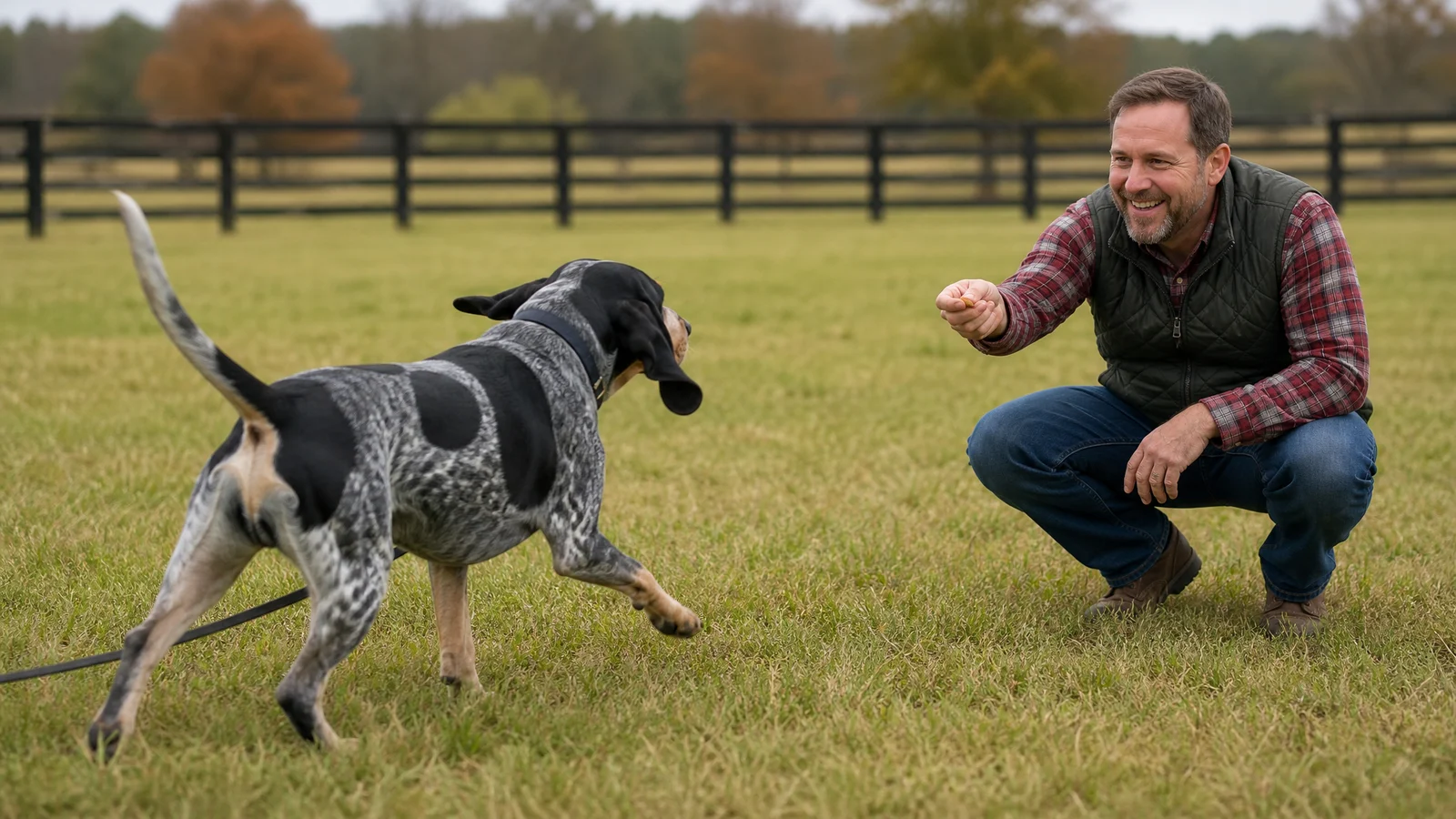
- Back away or crouch to invite your dog toward you, and reward any step in your direction.
- Offer a treat or a short tug in exchange for the toy, and say the release cue as they let go.
- Repeat only a few rounds, then end the game while your dog still wants more.
If your hound grabs the toy and veers toward the fence, do not chase them. Stop, turn away and use your U-turn cue or a happy call. Try again the next day with a shorter throw and a better treat. Most early problems come from throws that go too far.
A Bluetick who loves the chase may enjoy structured outlets later. Our guide to sports and jobs for Blueticks covers where the same energy can go.
The Cue That Ends the Game
Pick one word for the end, such as "done," and use it every time. Say it in a calm voice, show empty hands and put the toy in a bag or out of reach. Then toss a handful of treats into the grass as the finish. Your dog learns that "done" means the toy goes away and the nose gets paid.
Say the cue before excitement peaks, not after. A cue given to a wild dog gets ignored and then means nothing. If your dog keeps pushing for the toy, stand still, fold your arms and wait. A pause in the game, ended by a quiet "done" and the scatter, is a mild consequence that fits a reward-based plan. Restart only when your hound is calm. Over weeks, the stop gets faster.
Daily Yard Training Routine
Short sessions on a steady schedule beat one long one. The breed benefits from plenty of exercise and also loves snoozing at your feet. A few brief games spread across the day, each ending with a settle, match both sides of the dog.
Pick times when you can give full attention. A distracted owner makes a messy game. The table gives a pattern you can adjust to your own day.
| Time of day | Activity | Purpose |
|---|---|---|
| Morning | Tug, a few chase-the-toy rounds, end cue, treat scatter | Releases overnight energy and practices the stop |
| Midday, if you are home | Scent game with hidden treats in the grass | Gives the nose a job without high arousal |
| Evening | Calmer chase, then a settle by your chair | Winds the dog down for the night |
When to Stop
Keep each session short enough that your dog is still eager at the end. You are not trying to exhaust a hound built for stamina. You want them satisfied and keen to play again. In hot weather, move games to cooler hours, offer water and stop earlier than you think necessary. End the session when you see any of these signs:
- Your dog slows down, drops the toy or turns their attention to the fence line.
- The grip on the tug turns rough, or the baying gets louder and harder to interrupt.
- They ignore the release cue repeatedly, which tells you excitement has outrun the lesson.
- You feel your own patience slipping, because tense handlers make hounds worse.
Daily outlets matter beyond the yard. A hound who gets regular games and jobs is far less likely to vent boredom through nonstop baying. Keep up regular vet visits as well, so any soreness or other change is caught before it affects play.
Bluetick Coonhound Play Over Years
Play with a Bluetick changes shape as the dog matures, but the pieces you build now carry through every stage. Here is what to expect, from the testing months to the gray-muzzle years:
- As your hound matures, scent may pull harder than the toy. The dog who returned it reliably last month may suddenly cut away with their nose down, so shorten your throws, sweeten your treats and keep the end cue the same. Do not take it personally. This is a scent hound doing what they were bred for.
- In the adult years, the pattern settles. Energy stays high, but your dog knows the rules, the zones and the cue. Add small challenges, such as a longer chase lane or a second toy, once the stop is reliable.
- A friendly dog can join part of a session, since the breed generally gets along well with other dogs, but your cue still has to work with a playmate present.
- In the senior years, intensity drops while interest stays. Trade fast chases for gentle tugs, short walks along the yard edge and more scent games, and ask your veterinarian to check joints and comfort before you adjust.
Keep playing with an older dog throughout life. Patience for a slower learning curve lets you polish old cues and teach new ones, so a senior Bluetick can still learn a new game.
Expect play to remain a lifelong bond. The end cue will get steadier with every year of practice, and the games will feel easier on both ends of the leash. What will not fully fade is the nose and the drive.
Even a gray-muzzled Bluetick will drop everything for a fresh trail, so keep the fence secure, keep sessions owner-led and keep paying well for the stop. Do that, and the yard stays a place where your hound runs, returns and settles with you at the end of the day.
 Training basicsRecall Training for a Scent-Driven Bluetick Coonhound
 Puppy trainingSocializing a Bluetick Coonhound Puppy: People, Dogs and New Places
 Puppy trainingPuppy Mouthing and Chewing: Redirecting Your Young Bluetick Coonhound