 Bluetick
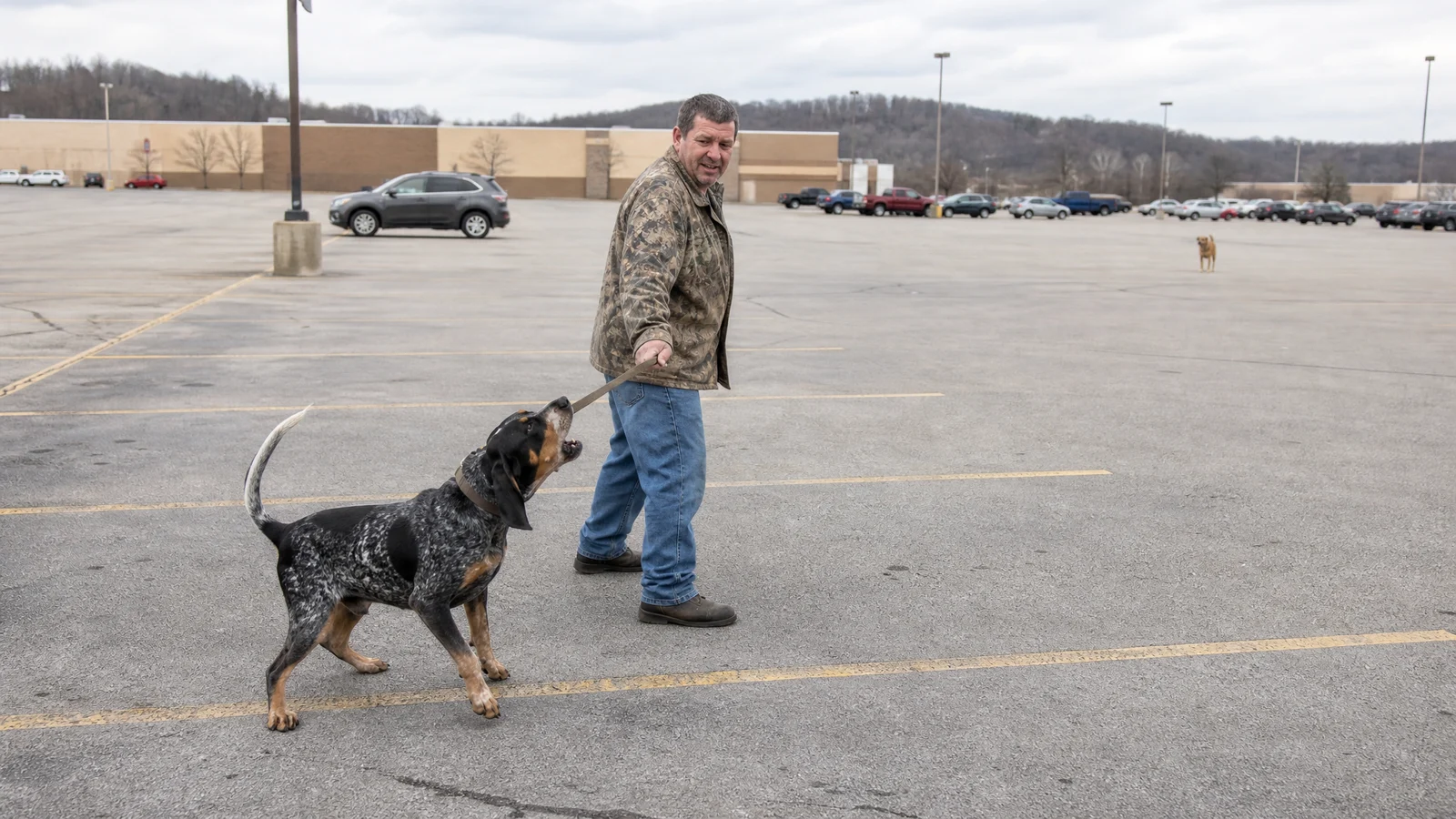
Your Bluetick leans on every visitor, then bawls and lunges at a dog across the parking lot as if they had never met one. The whole block hears it, and your shoulder feels it.
What helps most is a gap your hound can handle, and the work starts with finding exactly how wide it has to be. A gap that is too narrow only teaches the hound to bawl harder.
Find where your hound can still eat and think, pay for what they notice from there, and close the gap slowly. That is how to stop Bluetick Coonhound reactivity without turning every walk into a fight.
Below, you'll find how to measure that gap, pair other dogs with treats, handle a surprise pass and let a hard moment wear off, plus why a friendly hound with a big voice reacts the way Blueticks do.
How to Stop Bluetick Coonhound Reactivity From the Right Distance
Everything else on this page depends on one measurement, the gap at which your hound can still act like themselves. Blueticks are typically friendly with other dogs, which is part of the trouble, because for some hounds the lunge starts as wanting to get there and a taut leash turns that wanting into noise. Every bawl at close range also rehearses the habit, so the closer the encounter, the better practice the bark gets.
How far is far enough? The rule of thumb on Michigan Humane's behavior blog is blunt and it holds up, since a dog who will not eat treats or behave while the other dog is in view is too close. Treat that as your measuring stick. A hound who is eating, breathing and still turning an ear toward you is inside a workable range, while a hound who stares straight through the food is not.
Running the Treat Test Once
The test takes a single outing and needs nothing but treats and a long view. Do it on a day when the street is quiet and you have time to stand still, because rushing it only muddies the answer. The five steps below are all it takes.
- Choose a spot with a long view, such as a big parking lot or the far edge of a park, where dogs pass by but never head straight for you.
- Stand still with a loose leash and the best treats you own, then wait for a dog to show up at the far end.
- The moment your hound notices the dog, offer a treat. A hound who takes it softly and glances back for more is inside their range.
- If the treat is ignored, the body goes stiff or the first bawl starts, back away until food works again. Add a little extra room, and that is your starting gap.
- Pick a landmark at that spot, such as a lamp post or a painted line, so you can find the same distance again.
In our sessions with Blueticks, a hound fixed on a dog across the street will often walk straight past a treat that works fine in the kitchen. That is not stubbornness. It is a nose and a mind locked on something bigger than a snack, which is why the gap has to grow until food wins again, and why that landmark becomes your starting line for everything that follows.
Pairing Triggers With Treats From Far Away
With a starting gap in hand, the job changes from measuring to teaching. Your hound already knows what a passing dog is. What they have not learned is what a passing dog predicts, and the lesson sinks in best when it begins well before the nose stiffens and the voice winds up.
Counter-Conditioning a Reactive Bluetick Coonhound
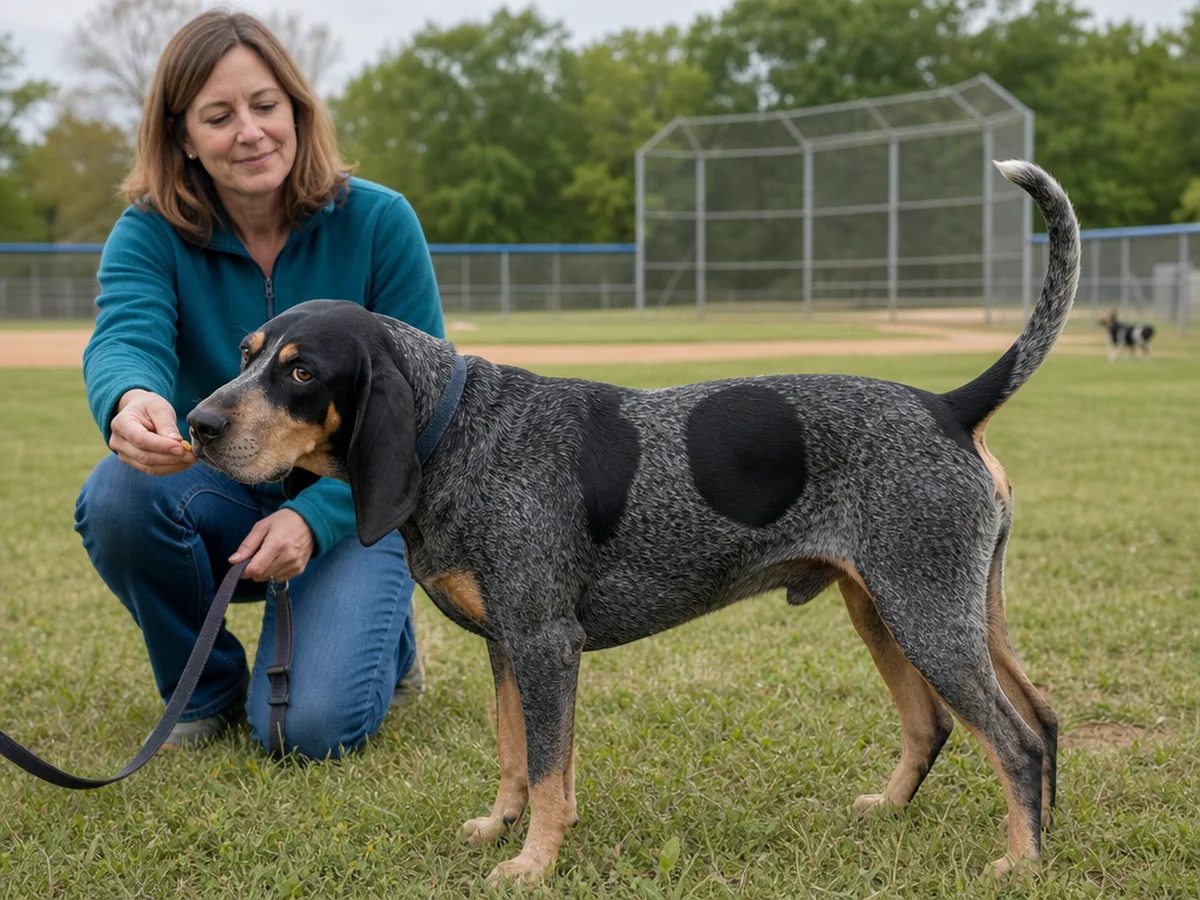
Counter-conditioning sounds technical, but a session is simple. Stand at your starting gap with a pouch of tiny, soft treats. The leash reactivity handout from the Wisconsin Humane Society is clear about the order, with the dog seeing the trigger first and the food starting second, and then the food keeps coming until the trigger goes out of sight or you move your dog farther away.
Food that shows up after the bark pays for the bark, so keep a treat in your hand before the dog appears. The Blueticks we've trained are affectionate with their people, and it is usually another dog who flips the switch, so other dogs are the first trigger to plan around.
Turning a Stare Into a Quick Glance
Many reactive hounds lock on to a dog, and a hard stare is often the step right before the bay. Teach a glance instead. When your hound looks at the dog and then back at you, or even just softens, say yes and pay. When the stare returns, say yes again, tilt a treat toward the nose to turn the head, and let them eat.
Over several outings the glance tends to get shorter and the look back at you faster. That is the first real sign that the dog on the horizon is turning into background, and it is your cue to hold the gap steady and let the habit settle before you change anything.
Closing the Gap Slowly
Move closer only when your hound eats readily, carries a loose body and recovers quickly at the current spot, and then move by a few steps at a time. If a session goes wrong, give the distance back before anything else, because a hound who is already over the line only practices the old lesson. If the nose is working the air or the voice is warming up, give the room back, and that choice protects every step you have already earned.
How to Stop Bluetick Coonhound Reactivity During a Surprise Pass
Corners, gaps between parked cars and doorways are where a Bluetick's surprises tend to come from, and practice at a distance does not cover them. A hound who trains well far away still needs a way out when the gap disappears in a second, and that way out has to be rehearsed on days when nothing is going wrong.
Bluetick Coonhound Reactivity on Leash in Tight Spots
Sidewalks, trail bends and doorways leave little room, and a full turn is not always possible. These moves cover the tight spots, roughly in the order we reach for them.
- Turn early. At the first stiffening, say your cue, turn and pay once you are a short distance from the other dog.
- Cross the street or step behind a parked car before the other dog is close, so your hound meets the sight at a gap instead of head-on.
- Keep the Leash Loose. A tight line tells a worried or excited dog there is no way out, so hold slack and let your feet do the steering.
- Say no to hellos. A dog who walks up to a leashed hound turns a manageable pass into a meeting at close range, and a friendly wave and a step aside keep both leashes quiet.
Feed while the other dog is in view and stop once the dog has passed, so the treats come to mean that dog rather than a reward for noise. In a tight spot you will be working at a smaller gap than in your practice sessions, which is exactly why the earlier sections matter.
Teach the About-Face as a Game
Teach a quick turn before you need it. On a quiet day, say a bright cue, spin to walk the other way, pat your leg and jog a few steps with your hound, then pay. We teach it as a game long before it is needed, so the turn feels like an invitation to run with you rather than a retreat.
On the street the turn works only if it happens early. A Bluetick who is already baying has stopped listening, so the turn belongs at the first stiffening, not after the first bawl, and the treat belongs the moment you are clear of the other dog.
Speaking Up for Your Hound
A Bluetick's soulful face invites strangers to walk right up. When someone heads your way, you are allowed to say, kindly and clearly, that your hound is in training and needs space. Most people respond well to a plain sentence, and a short refusal costs far less than the lunge that follows an unwanted greeting.
Recovery After a Reactive Pass
A pass that goes well still costs your hound something, and a pass that goes badly costs more. What happens in the minutes afterward decides how much of it follows you into the next walk, so recovery deserves a plan of its own.
Give the nose a calm job right away. A slow sniff along a quiet verge, a scatter of treats in short grass or a stuffed chew toy at home all let a hound come down from a hard moment without more noise to manage. Bluetick Coonhounds have a nose and a voice built to be used, and a reactive pass uses both up fast.
Between lessons, the aim is to stop your hound from practicing the habit. These routines keep the rehearsals down and the exercise up.
- Walk when fewer dogs are out, and choose open routes with room to turn around instead of narrow, busy blocks.
- Skip the dog park for now, since a crowd of loose dogs makes every gap impossible to control.
- Trade some walks for yard play, scent games and chew time. A Bluetick needs plenty of exercise, and our Bluetick exercise and brain games guide shows ways to spend it without a trigger in sight.
- Keep everyday manners steady with our Bluetick leash training guide, which handles the pulling that has nothing to do with other dogs.
A few quiet days do not undo the gap you have earned, and one careful route can protect a great deal of it. Think of these routines as the part of the plan that happens when no trigger is in sight.
Telling Loud Apart From Dangerous
Reactive dogs are not necessarily aggressive dogs, but reactivity can turn into aggression, so attention to training matters, as the guidance from Cornell's veterinary college makes clear. Growling or snapping, a hound who will not recover after a pass and reactions that keep getting worse are all reasons to bring in a reward-based trainer or a veterinary behaviorist.
Common Questions About Bluetick Coonhound Reactivity
Questions come up most about the backward stare, a sudden change in behavior and the bay. Here is how we handle each.
Why Does My Bluetick Keep Looking Back?
We see Blueticks keep searching down the street long after the other dog is gone, and that backward stare usually means the nose and mind are still working the encounter. Let your hound look once, say your cue and walk on. Pay the instant the head turns forward, so the reward belongs to leaving the encounter behind rather than to staring after it.
Could Pain Explain a Sudden Change?
It can. In some cases leash reactivity may be due to an underlying medical condition such as pain, discomfort or illness, a point made in PetMD's overview of leash reactivity. When a hound who used to pass dogs calmly changes quickly, book a visit with your veterinarian before you change the training plan, and keep regular vet visits on the calendar the rest of the year.
Does a Bay Always Mean My Hound Is Angry?
Not always. Some Blueticks bay from sheer excitement, and the same voice that sounds fierce from across the street can be an invitation to play. The plan does not change either way, because a hound hauling toward a stranger's dog on a leash is a hard pass whatever the reason. If the bay itself is the main trouble, our Bluetick howling guide covers it separately.
Keeping a Reactive Hound's Loud Seconds in Proportion
Count the seconds of an actual walk that are loud and the total is small. The loud part on the sidewalk is often only a handful of seconds between a trigger appearing and the trigger being gone, and the rest of the outing is an ordinary hound sniffing an ordinary street.
Distance work goes after exactly those seconds. The gap makes them smaller, the treats change what they mean and the recovery afterward keeps one hard pass from spilling into the next hour. None of it asks your hound to stop being a hound, with a big voice and a nose that wants to visit everything.
So keep the loud seconds in their place. They are one thin slice of a dog who is otherwise affectionate and easy to live with, and the work on this page is meant to thin that slice over time, not to trade your Bluetick for a different dog.
 Puppy trainingBluetick Coonhound Puppy at 4 to 6 Months: What Changes
 Puppy trainingBluetick Coonhound Puppy at 3 to 4 Months: Teething and Mouthing
 Training basicsAre Bluetick Coonhounds Easy to Train? What Their Temperament Means