 Bluetick
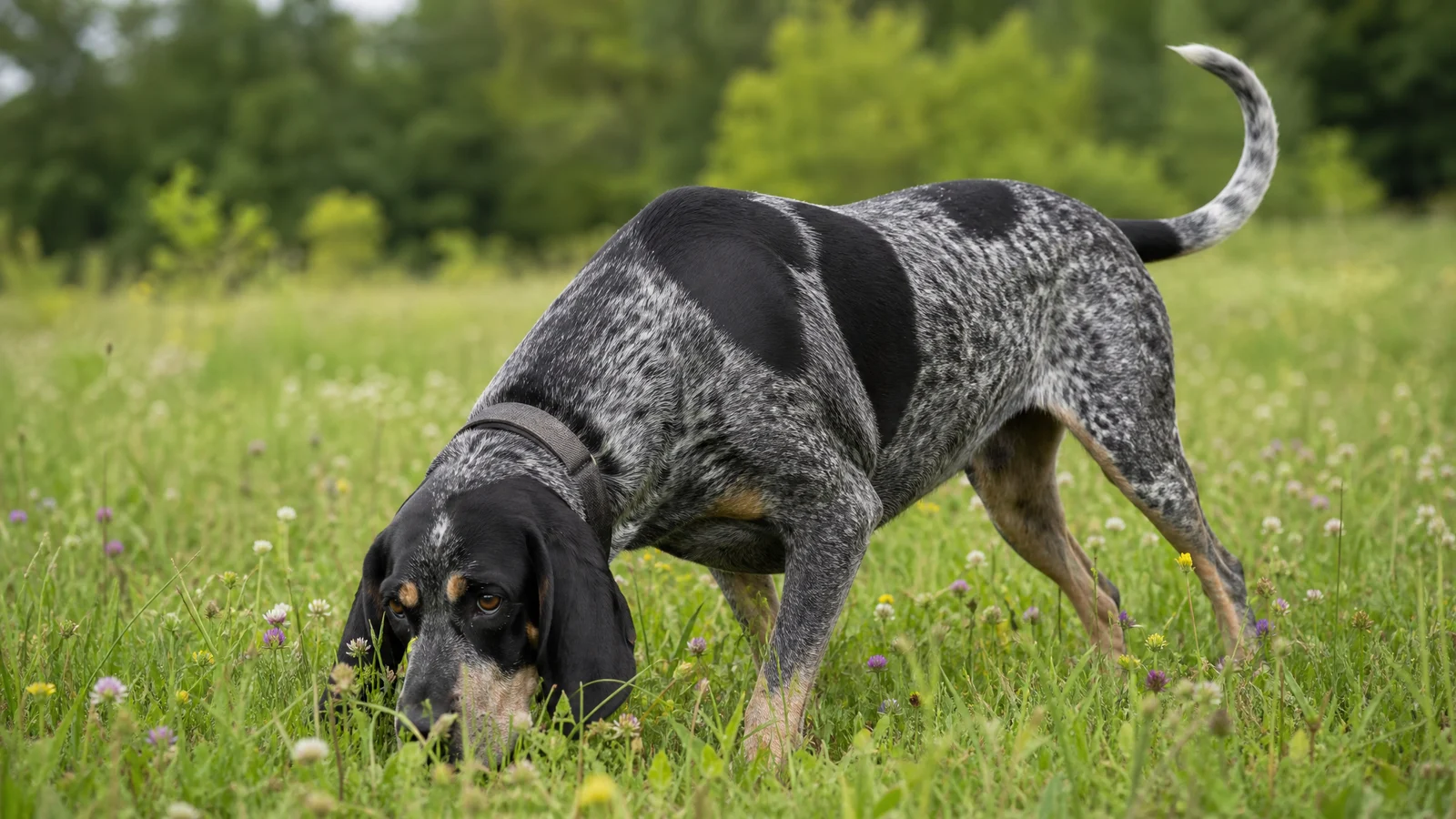
A common trap is repeating a cue in a scent-rich spot. Come, come, come, across a field full of smells, until your voice becomes background noise and waiting you out becomes the dog's best strategy.
The fix has two halves, in a fixed order. Manage the setting first, so you rarely ask a question of a nose that has already left. Then pay for listening so well that checking in with you beats the trail. For a Bluetick Coonhound, bred to follow a trail with their nose, skipping the first half turns the second into a losing fight.
This guide maps selective hearing by what you see: an ignored first cue, food losing to scent, listening that changes by location, reliance on a long line, half-trained cues and distance failures.
First-Cue Bluetick Coonhound Selective Hearing
It will happen anyway. Plan your response now, because a baying hound at the end of the leash is a poor moment to improvise. Say the cue once. Repeating adds no information and teaches that your words are cheap. Treat the failure as data: the distraction beat the training level.
- Reset. Stop talking, let the moment pass, and step out of your dog's line of sight to the temptation if you can.
- Add distance. Move away until your dog can sniff, look and eat again, then ask once more.
- Help them succeed. Use a happy voice, lure them off the line by bringing a treat to the nose, and pay generously as soon as they look your way. When recovery isn't possible, calmly walk away. A quiet exit keeps practice from turning into a fight, and the next session starts easier.
Respect early warnings. In the ladder of communication, ignored early signals push a dog up to more obvious ones. A stiffening Bluetick who is allowed to keep approaching can escalate into the howling, lunging display some owners describe.
Expect slow recovery. Some hounds keep looking back for the other dog after it has gone. Give them a quiet few minutes and a sniff break, with no new demands. Not every bark at another dog is anger, either. Some owners find the same noise is a play invitation that fades once the dogs are close enough to sniff. You cannot always tell in advance, so read body language and never force a greeting.
Schedule regular vet visits, and tell your vet if your dog suddenly starts listening differently than before. A hound who feels off will not work at their best.
So after an ignored cue, the choice is always the same: reset, add distance, make the next try easy, and never repeat the cue. That response protects the cue while helping your hound succeed.
Too Many Cues Cause Selective Hearing
Common advice says to drill every basic cue daily. Be suspicious of that. A hound with a pile of half-trained cues has a pile of cues to ignore. Narrow the list to the three that matter most and make those solid.
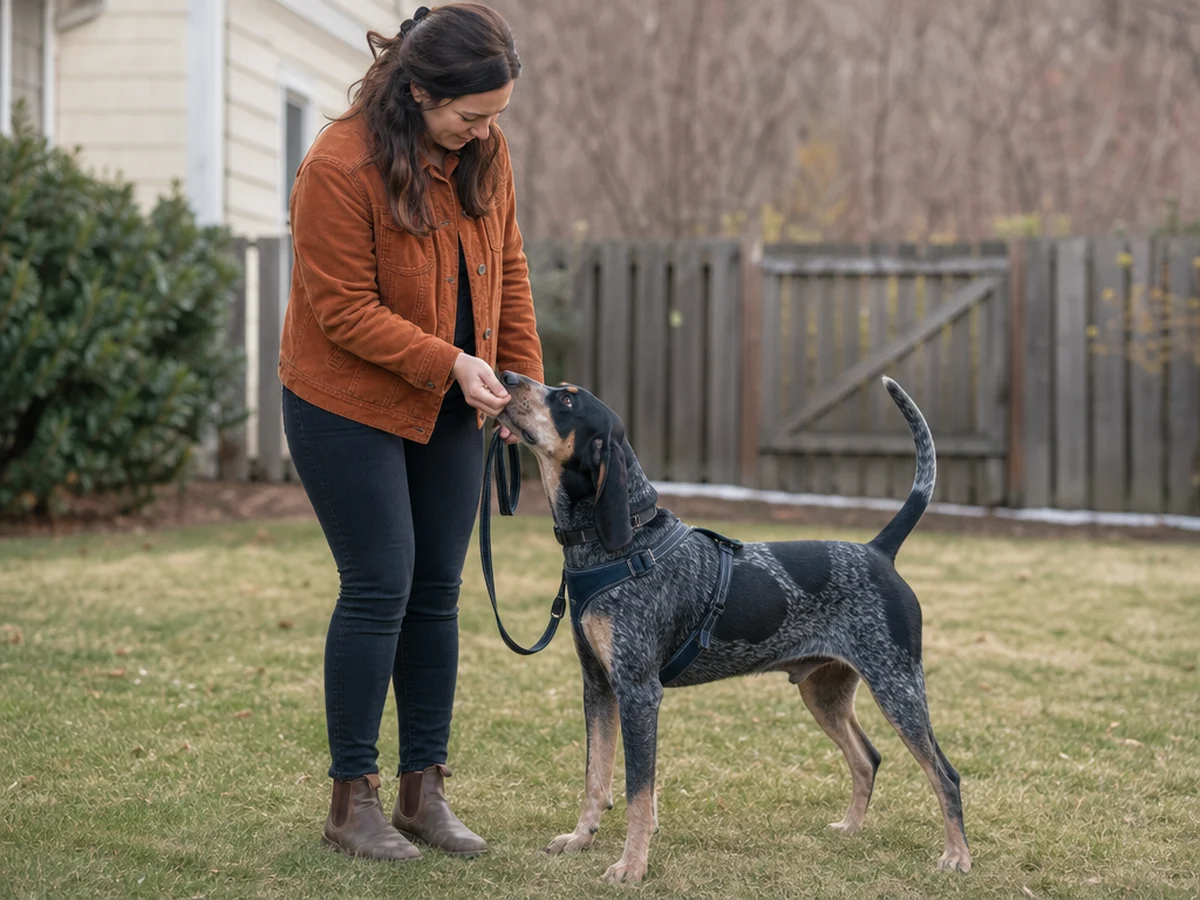
Ours are a check-in, a come and a leave it. The check-in is a look toward you when your dog hears their name or a marker word. Everything else grows from it, because a dog who offers attention can be steered. Come brings the dog to you, and with this breed it is practiced on a long line long before it is trusted. Leave it covers dropped food, squirrels and the smell that is about to win.
Build the check-in first, in week one. Come and leave it follow in week two. Sit, down, stay and tricks can wait. They are easy to perform in a living room and are rarely the cue that goes missing when a scent hits.
If your Bluetick is new to the home, expect a slow start. A new dog may take weeks to warm up, adjusting a little more each day before play and bonding appear. Puppies tend to learn slowly but steadily, and sometimes faster than expected on certain skills. Follow what your dog picks up quickly, and keep the first cue tiny.
Verdict: check-in first, come second, leave it third, everything else later. That order builds attention before asking for distance or restraint.
Distance Restores Selective Hearing
Distance is the dial you control. Every cue has a level where your dog can answer and a level where the nose takes over. Practice sits just under that line and creeps up.
Watch for the other-dog trap. Blueticks are often very friendly and sweet with people and family, yet some go nuts around other dogs. Gentleness with people tells you nothing about manners with dogs, so plan for both. A big hound can knock over small children without meaning to, so supervise those meetings. For the household side, see Blueticks with kids and dogs.
If the Cue Works Indoors
A dog who responds in a quiet room but fails elsewhere knows the cue. Distraction is the missing piece. Say your marker word and treat every glance toward you until your dog starts offering them. Add the name or check-in cue and pay each head turn. Then add household noise and a family member walking past.
If the Yard Changes the Answer
When the room works but the yard does not, smell is the trigger to isolate. In the fenced yard, ask for a check-in before every release to sniff, so the sniff is part of the pay. Then add smell on purpose: ask while your dog is mid-sniff at something mild, reward, and send them back to it. Come and leave it enter here at low difficulty.
If Another Dog Takes Over
A dog who listens in the yard but fixates outside has crossed another threshold. Use a calm sidewalk at a quiet time, on leash, then bring in other dogs from far off, far enough that your hound can still eat. Reward looking at you before the stare locks, and close the gap gradually over many sessions. If your dog stops eating or stares, you are too close. Step back to the last distance that worked.
Watch the head. The breed standard describes a hound who carries head and tail well up in motion, so a head dropping toward the ground is an early sign the nose has taken over.
Read the face and tail too. Tension around the face, a tail tucked low and a lifted front paw are signs of discomfort that ask for the situation to stop. A dog showing them is not ignoring you. End the encounter.
Some Blueticks never love other dogs. Some prefer not to play with dogs at the park without being hostile, and others do best as the only dog in the home, so match your goals to your dog. Slow exposure to very mellow, friendly dogs helps many.
When Recovery Speeds Up
Faster recovery matters more than the calendar. Look for these:
- Your dog glances at you on their own, before you ask, when something interesting appears.
- They take a treat with another dog in sight, which means you are working below the fixation line.
- They recover from a strong smell or a passing dog sooner and stop looking back for it afterward.
- At the car door, their eyes find you before the voice erupts.
- Vocal bursts get quieter or shorter.
The decision here: pick the easiest level where your dog is right almost every time, work there until it feels boring, then take one small step toward the temptation.
Does Scent Beat Selective Hearing?
The popular answer is better treats. That is half right. Food matters, and some Blueticks refuse plain store-bought biscuits, so a soft, smelly treat earns its place. But owners also report treats that failed to break a fixed stare at another dog. When arousal is high, the best chicken in the world loses. Distance, covered next, matters more than value.
Three payoffs are worth comparing, and the hound's own nose gets a vote. The table lays out where each one works.
| Reward | Where it shines | Where it falls short |
|---|---|---|
| Small soft treats | Quiet places, fast repetitions, building the habit | High arousal near another dog, and dogs who turn up their noses at plain biscuits |
| Play and praise | Affection-loving dogs, and games of chase once play has appeared | New dogs may take weeks before they play, and play is hard to start mid-fixation |
| Release to sniff | Outings, because it pays in the currency the hound already wants | Needs a safe leash or fence, and it ends the exercise |
Our pick for the main payoff is a small soft treat followed, on outings, by a release to sniff. Ask for a look at you, pay, then let your dog go to the smell. That turns the thing they want into the paycheck for the thing you want.
Save the jackpot for hard moments: passing another dog, stepping out at a new place, or turning away from a strong smell. A quick run of treats in a row, then a free sniff, tells the dog the hard choice was the best choice. Keep it rare and it keeps its power.
Long-Line Rules for a Bluetick Coonhound
A long line manages the cost of a missed cue. It does not cure selective hearing. A scent hound with strong prey drive can cover ground faster than any cue, and the line buys you the chance to reward a good decision instead of watching a bad one run away.
Use it in open, unfenced areas, clipped to a flat collar or harness, with plenty of slack. Call while the line is loose, pay on arrival, then release to sniff. Let your dog explore the full length. Sniffing is a reward, not a fault.
Skeptics say a long line becomes a crutch. It does if you never raise the standard. Use it to practice come and the check-in at the same distances you trained, and move to longer ones slowly.
When can it come off? A good week proves less than you think, because scent, not skill, decides the next minute. A fenced yard is the one place it can go, and only after you have checked the fence. If you are not sure yours holds a determined hound, see securing your yard first.
The rule: the line stays on anywhere that is not securely fenced, no matter how well the last walk went. It comes off only inside a fence you have checked.
Lower Distractions for a Bluetick Coonhound
Before blaming the dog, check the room. Most selective hearing is a setting problem. A famous line of Blueticks was described with a nose that could pick up a week-old trail and the endurance to run it 30 hours at a stretch. A hound built like that is not ignoring you out of spite. Your voice is losing a bidding war.
We have trained this breed for many years, and the pattern is steady. Ask in a scent-rich spot and the cue fails. Ask in a dull one and the same dog looks like a genius.
Smell drives the voice too. Owners report Blueticks who start baying the moment they catch wind of wildlife, even from a quarter mile away, and others who erupt on stepping out of the car somewhere exciting, drawing every head nearby. Pitch and intensity vary by dog. If the noise is your bigger problem, read why Blueticks bay.
Choose the First Practice Area
These steps cost nothing and work from day one. They make the quiet setting as deliberate as the reward itself. Set them up before you call your hound.
- Keep your dog on a leash anywhere that is not securely fenced, because scent and strong prey drive will outrun any cue in open ground.
- Begin practice where smells are weakest: indoors, then the fenced yard, then a calm sidewalk. Parks and trailheads wait until much later.
- Arrive at exciting places in stages. Wait in the car until your dog settles, then pay for a glance at you before the door opens.
- Spot other dogs early and turn or cross the street before the stare starts, since a locked stare is hard to break once it begins.
- Give exercise and sniffing time before a session, because a hound with energy to burn will find their own outlet.
- Ask only when you can pay within a moment, so the dog never has to guess whether payment is coming.
Dependable attention, calm near other dogs and a solid recall are different. Those are training, and they take weeks. Until they exist, a leash or a fence does the job. Underemployed hounds with no outlet for their hardwired impulses also drift toward problems like loud, mournful vocalizing, so daily exercise belongs in the plan, not the bonus pile.
The decision, then: before you train anything, find the dullest place your dog has ever behaved well, and start there. A reliable response begins where the nose has little reason to compete.
Daily Selective Hearing Adjustment
End each outing with two questions: did your Bluetick answer the first cue, and how quickly did they return after scent won? Those answers tell you what to change next without blaming the dog.
If the first response held, raise only one variable next time: a little more distance, a stronger smell or a busier setting. Keep the leash or fence protection in place while you test it.
If the cue failed, reduce distance, return to the quieter setting and improve the payoff. That daily decision keeps selective hearing from becoming a rehearsed habit while giving a scent-driven hound a fair route back to you.
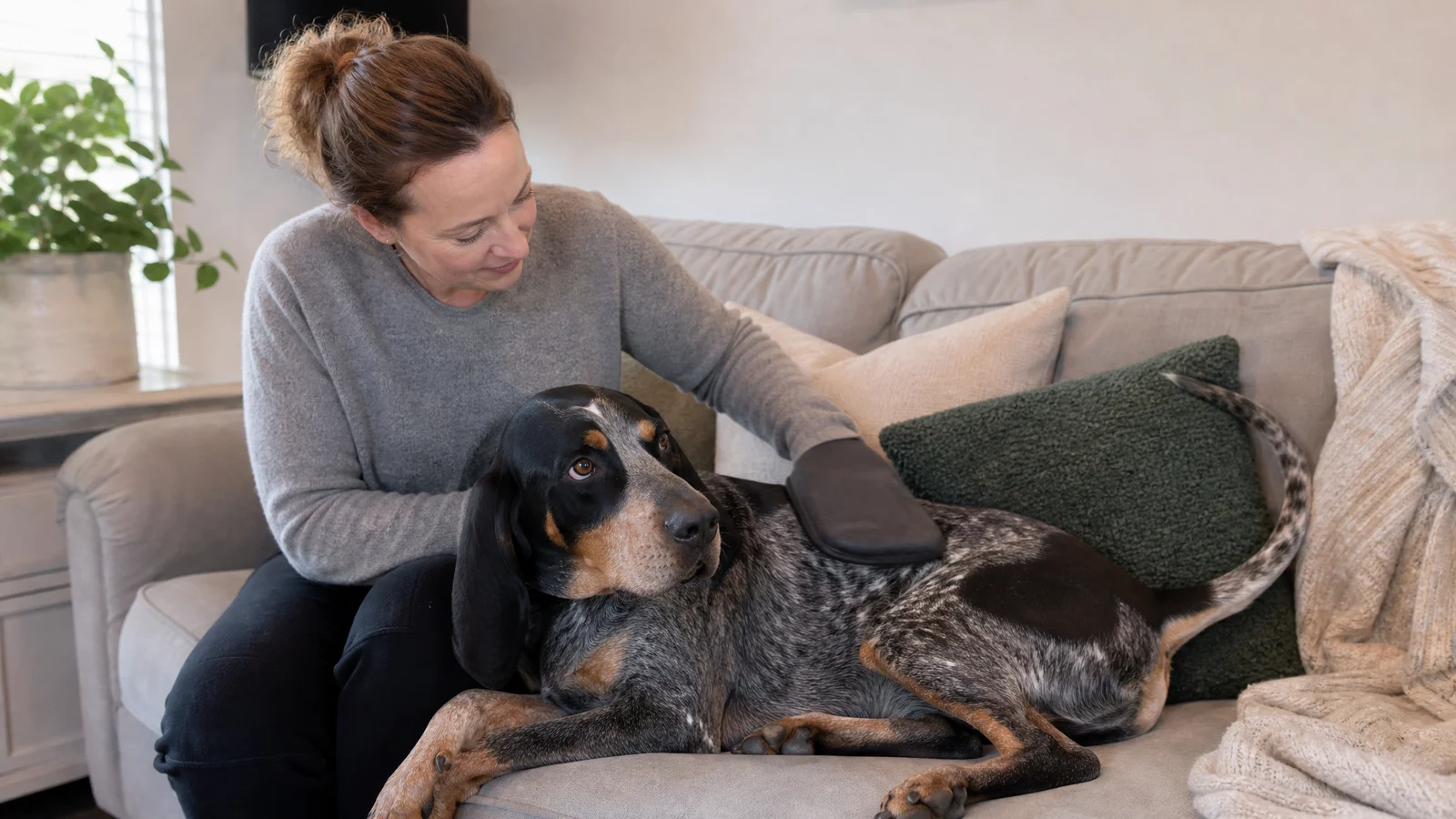 CareGrooming Time as Training: Brushing a Shedding Bluetick Coonhound
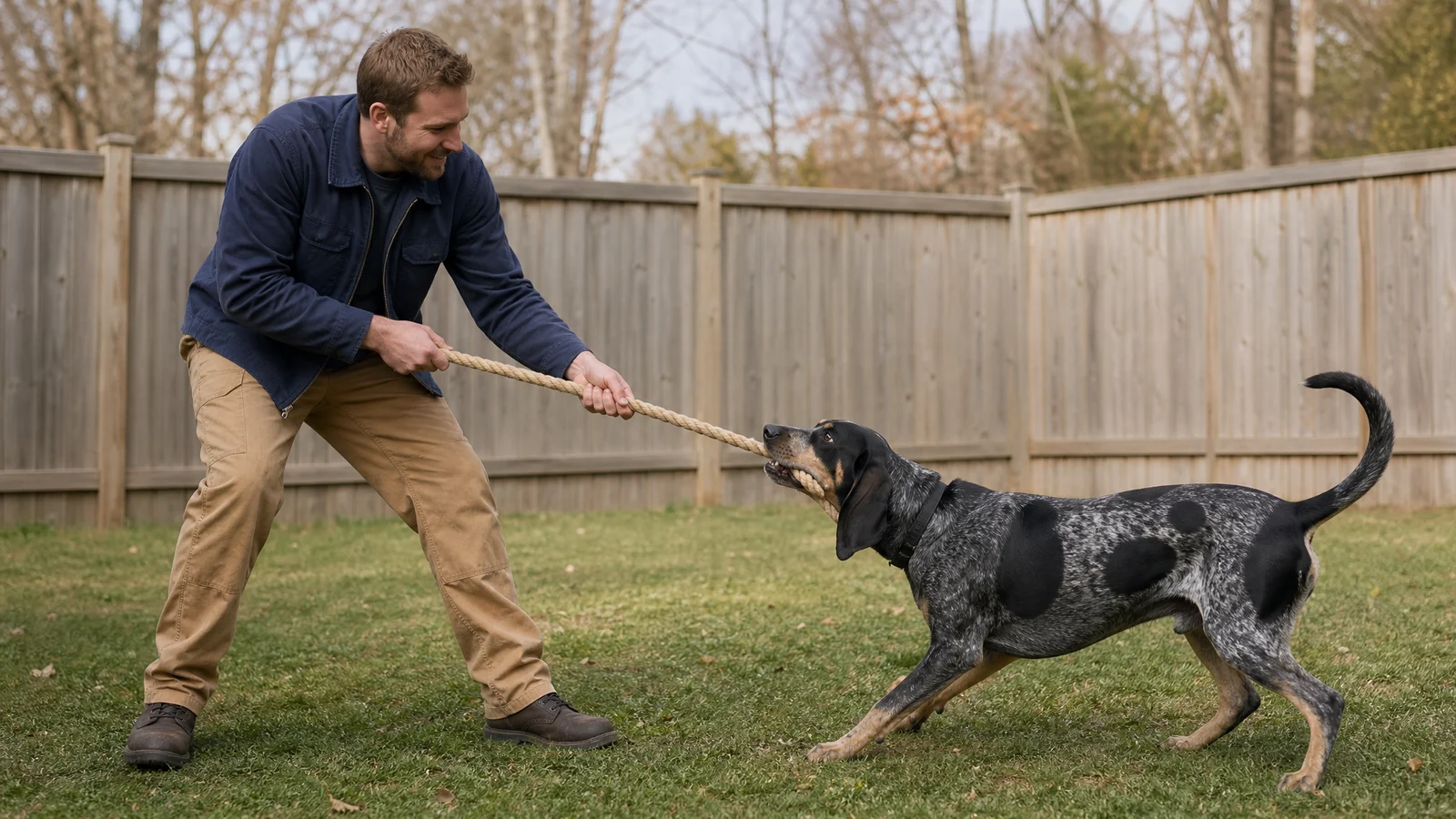 Exercise and jobsFenced Yard Play Ideas for Your Bluetick Coonhound
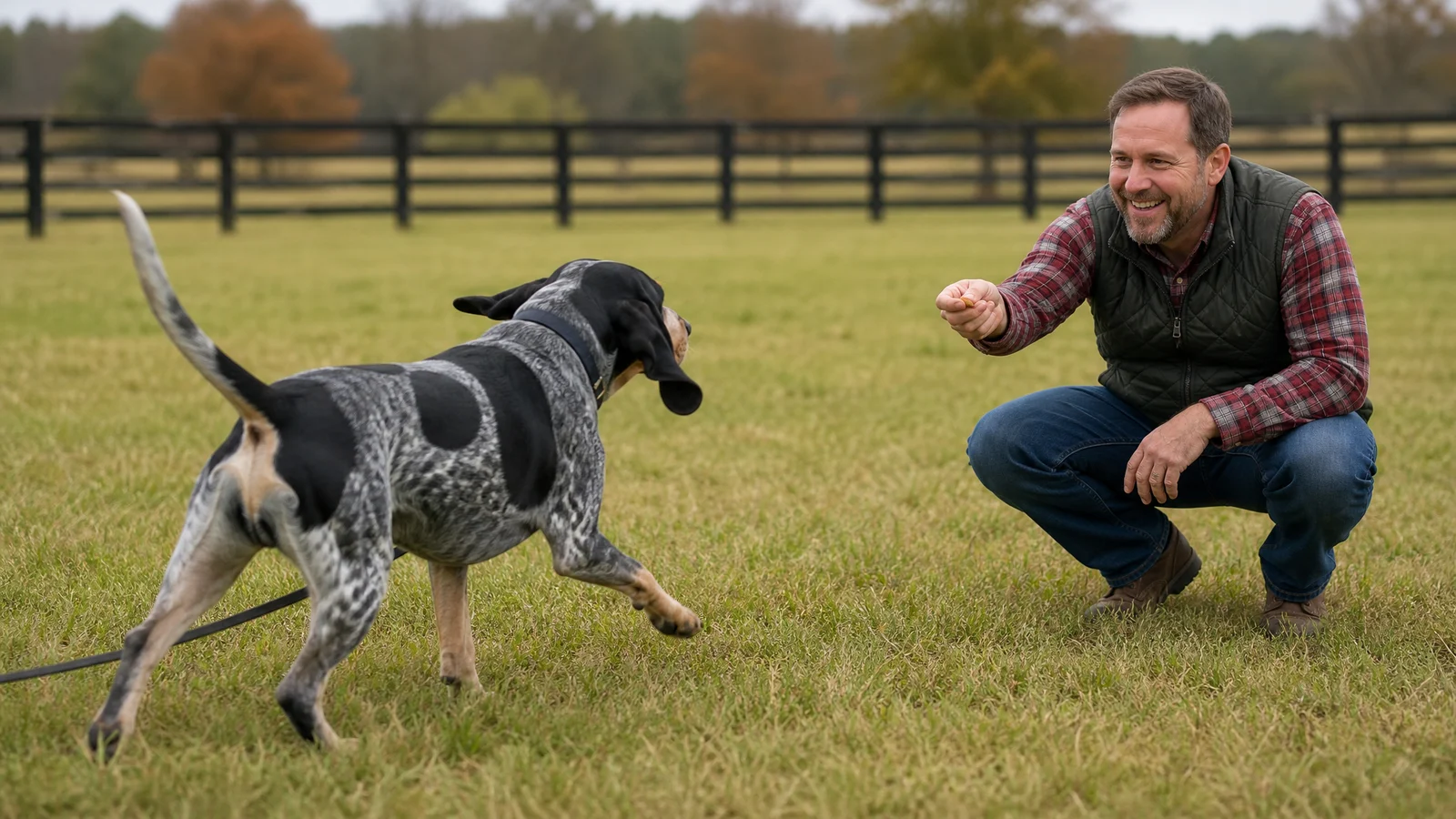 Training basicsRecall Training for a Scent-Driven Bluetick Coonhound