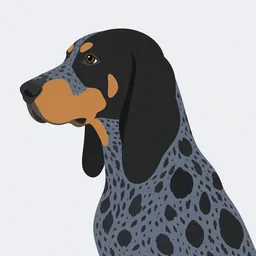
 Bluetick
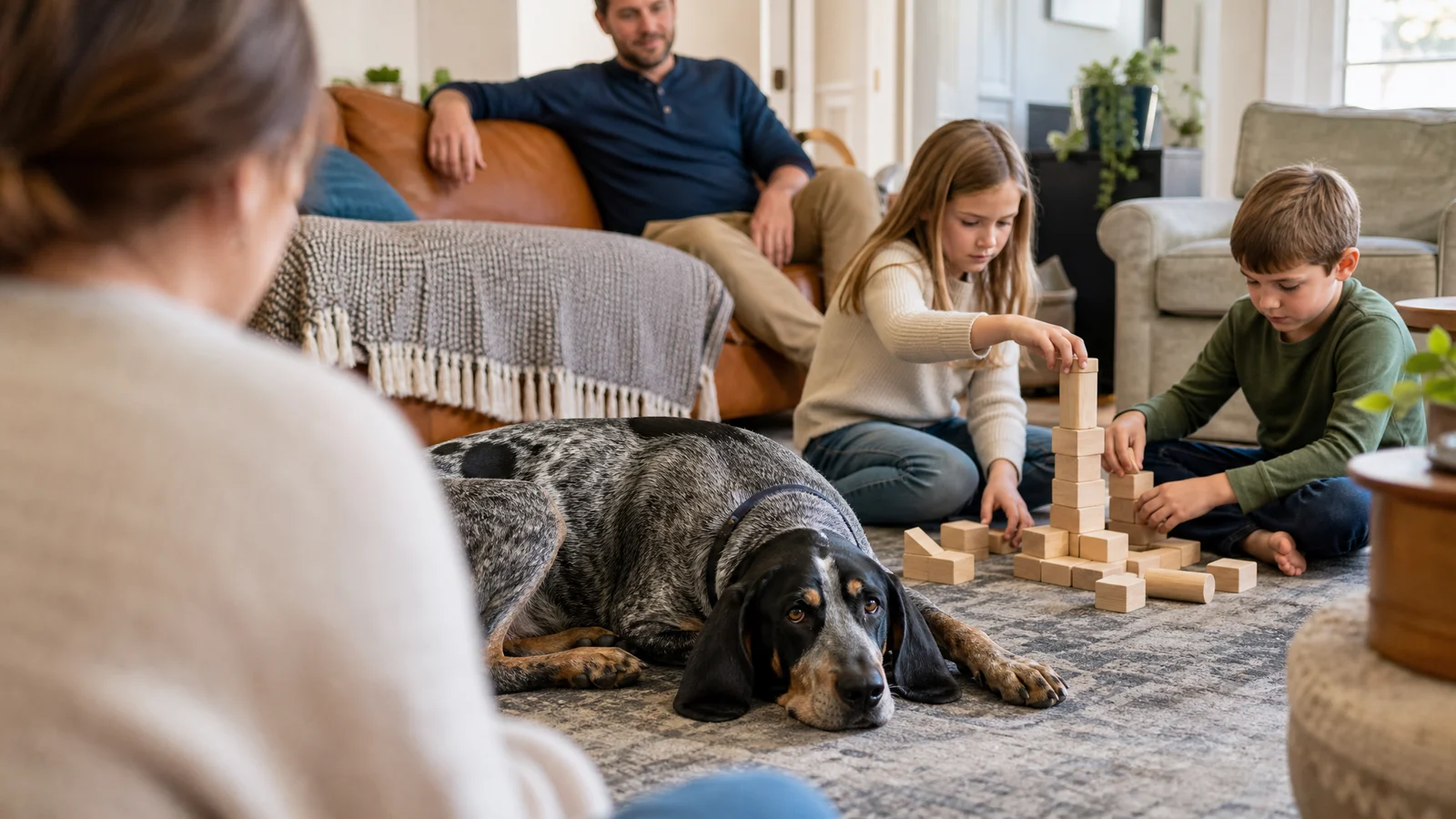
Ask owners when a Bluetick Coonhound turns steady around family life and the honest answer is a stretch of seasons rather than one birthday. The puppy months are loud and nose-first, and the calm arrives in layers. The weeks when a young hound first meets people, dogs and household sounds are when socialization pays off most.
This article looks at the Bluetick Coonhound as a family dog, so you can set a realistic timeline and plan introductions to other dogs, children, cats and visitors, then lock in habits with rewards. Done well, the breed gives back a sweet, devoted companion who dozes at your feet. Done badly, you get a bored hound who bays, bolts and bowls over the smallest person in the house.
When a Socializing Bluetick Coonhound Finally Calms Down
Calm tends to build in layers rather than all at once, and the first layer is simply settling in. A new Bluetick, puppy or adult, may need time to watch the household before they feel at home. Give a new dog weeks to settle before you expect play, and keep rewarding the small signs of comfort, like lying down on a mat or taking a treat calmly. Dogs vary, but many settle more as the home becomes familiar.
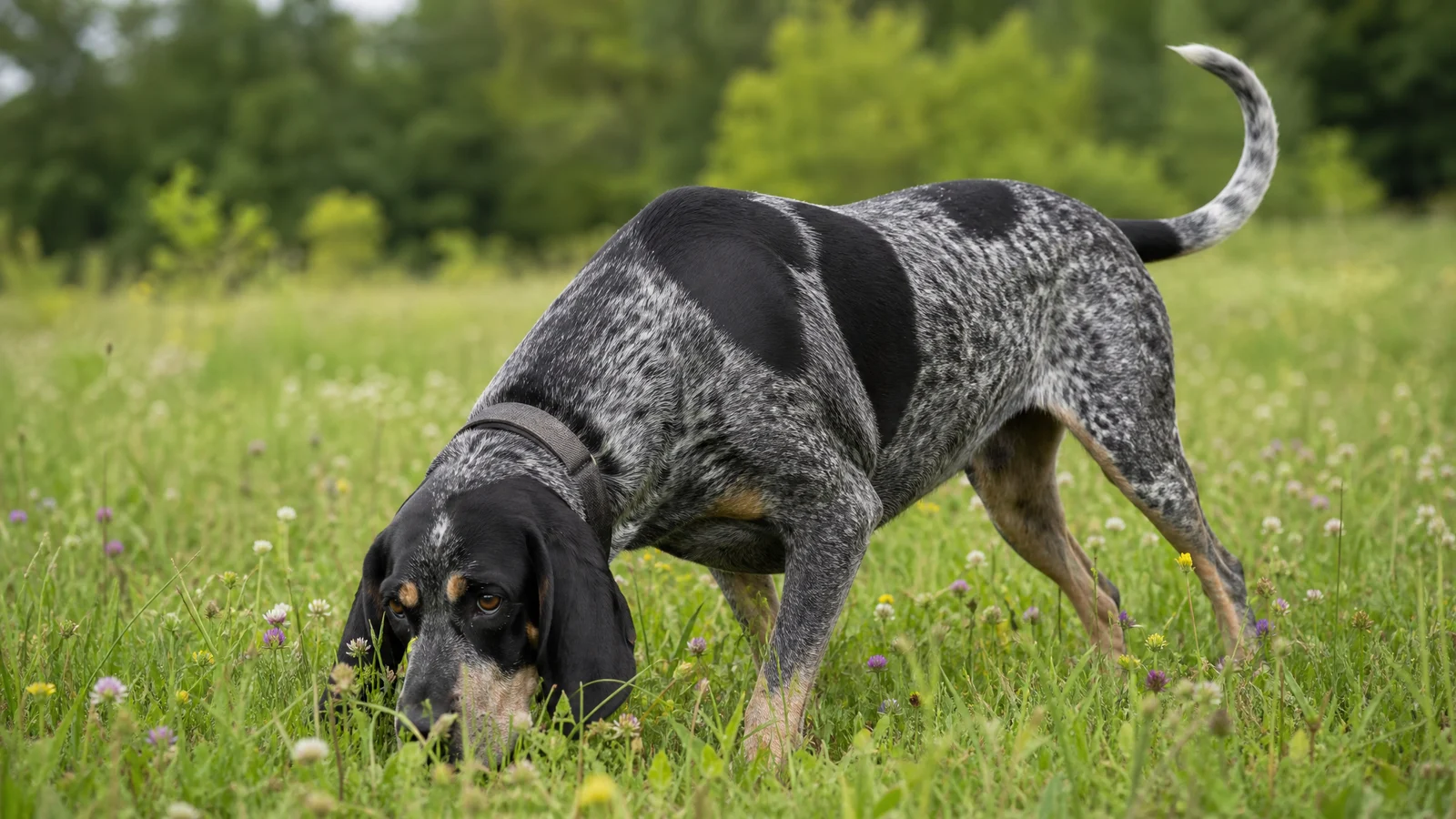
What settles with time is the body more than the nose. The breed rates 4 of 5 for energy, and the hound is described as a sweet, affectionate charmer who loves snoozing in the shade yet turns relentless and single-minded once a scent grabs them. Expect that split for life: a soft couch companion indoors and a focused tracker outdoors.
Matching Energy to Your Routine
Match your expectations to your routine. Long leashed walks, play in a securely fenced yard and unhurried sniffing time give the energy somewhere to go, and evenings tend to turn quieter once those outlets are dependable. Affection with family rates a middle 3 of 5, labeled friendly, so some Blueticks lean on you all evening while others shadow you from a few feet away. Both are normal.
Because dogs vary, plan the first stretch in rough stages rather than by exact ages. Early on, build routines, rest and gentle introductions. As the hound grows, the nose and the voice gain strength, so recall practice, a mat settle and a retreat space matter more. Adults with steady daily outlets are the ones owners describe as easy housemates. Plan for gradual softening and measure progress by the week, not the day.
Socializing Your Bluetick Coonhound With Other Dogs
The breed's AKC ratings give Blueticks 5 of 5 with other dogs, and the standard calls for a hound willing to be hospitable to both people and dogs around them. Many owners confirm it. Yet gentleness with people does not guarantee calm manners with dogs, and some owners describe the same sweet family hound going wild at the sight of another dog down the street.
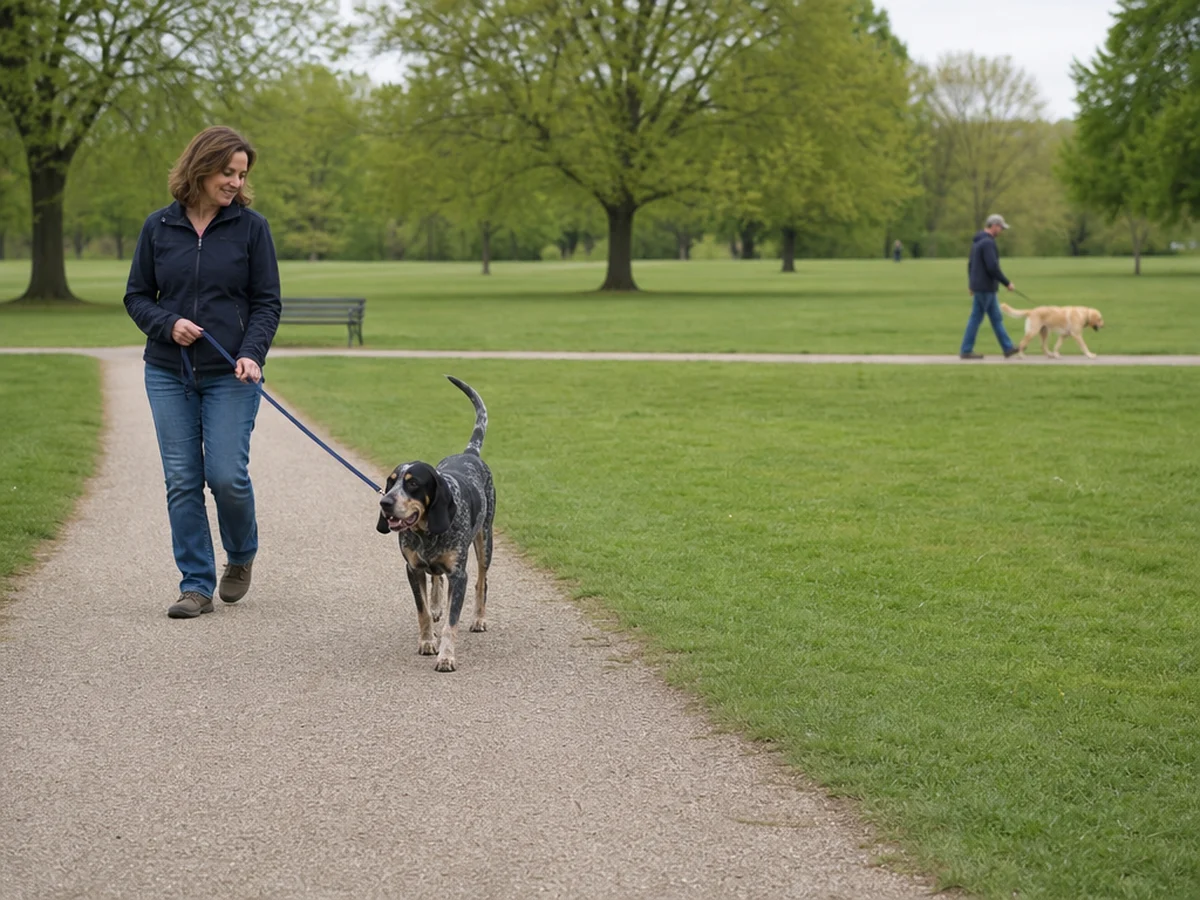
Learn to read the bark, because the same loud voice can mean very different things. Some Blueticks howl and lunge at another dog and keep craning back long after that dog has gone, which looks like fixation. Others use the same big bark as a play invitation, and it usually stops once they are close enough to sniff. Loose, wiggly bodies suggest an invitation. A stiff, fixed stare is your cue to add distance and reward a turn away.
Introducing Dogs Slowly
Introduce slowly either way. Start with a parallel walk at a distance where your dog can still take a treat, reward every glance at you, and close the gap only while both dogs look loose. Owners report slow but real progress from repeated calm exposure to friends' very mellow, friendly dogs. Keep each greeting to a few seconds, then call your dog away and pay them.
If you already have a dog at home, meet on neutral ground first and give each hound their own resting spot. Social style varies widely in this breed. Some Blueticks do best as the only dog, and owners report that a hound who reacted badly around resident dogs can flourish once placed alone.
Others stay independent and rarely play at off-leash parks, without any hostility. A dog who prefers your company is not broken. Judge your own hound's social style, not the 5 of 5.
Socializing Bluetick Coonhounds With Young Children Under Supervision
The rating for young children is 3 of 5, labeled with supervision, and the reason is easy to see. Blueticks can adore children and still knock over small ones, because a big, happy hound has no sense of their own size. The breed standard asks for a neat, compact body, but a compact, muscular hound still carries plenty of momentum.
Love for children is a great start, and supervision is what makes it safe. Supervision means an adult's eyes on both dog and child, not a parent in the next room. These rules cover most homes:
- An adult watches every interaction, and when nobody can, a gate, crate or closed door keeps dog and child apart.
- Ask for all paws on the floor or a sit before a child pets the dog, and reward that calm greeting with a treat.
- Give the dog a bed or crate that children never enter, and teach kids to leave a resting hound alone.
- Keep chews, favorite toys and food bowls out of reach of children.
- Teach kids to stand still, pet the chest or shoulder gently, and skip hugs, climbing and chasing.
Around babies and toddlers, give your dog an exit. Teach a reward-based go-away cue so they learn they can walk off rather than feel trapped and growl or snap. Reward the choice to move away, and teach children to let the dog leave.
Watch for yawning, lip licking, turning away and stiffening, and end the session before your dog needs to say more. A hound who is tired of the game will tell you early if you are looking. Loving and supervised is the combination that works.
Prey Drive Limits Socializing With Family Cats and Small Pets
Gentleness with people tells you very little about how a Bluetick will treat the cat. The AKC calls this breed's prey drive off-the-charts and says it must be channeled, and a scent hound's focus can switch on in a heartbeat. Treat every cat or small pet as a long project, not a quick introduction. Whether a given Bluetick can ever share space with a cat unsupervised varies, and the safest plan is to earn that trust slowly.
Keep rabbits, hamsters and similar small pets behind closed doors the dog cannot open, and assume a friendly nature toward people says nothing about them. For cats, work through these steps and move on only when your dog is relaxed:
- Give the cat a dog-free room and high perches, and swap bedding so each learns the other's scent.
- Let them see each other through a gate while your dog is on leash, and reward every calm look at you.
- Hold short leashed sessions in the same room with the cat free to leave, rewarding loose posture and sits.
- Practice a come-away cue and pay generously for turning from the cat.
- Supervise every contact, and keep them separated whenever you cannot watch.
Stop and add distance if your dog stares, stiffens, whines or starts to howl. Daily sniffing walks, food puzzles and fenced play help too, because a satisfied nose is less likely to treat the cat as the day's only project. If your hound keeps fixating even with good management, bring in a trainer who uses rewards to work out a plan with you.
Reserved Greetings With Strangers at the Family Door
Visitors are where the breed's mixed ratings show up. Openness to strangers rates a middle 3 of 5, labeled ambivalent, and watchdog nature rates a low 2 of 5, so most Blueticks are neither guards nor everyone's best friend. The standard asks for a hospitable dog, and many owners describe a hound who is very friendly and sweet with people once the hellos are over.
Trouble usually comes from volume and enthusiasm. Barking rates 4 of 5, so the doorbell can set off a chorus, and a happy hound may jump, spin and bolt toward an open door. Build a doorbell routine: ring the bell, send your dog to a mat, and drop small treats between their paws while the door opens. Repeat until the bell predicts the mat.
Then practice with real people. Ask visitors to ignore the dog at first, stand sideways, and let your dog approach if they wish. Reward all paws on the floor, and have the guest turn away if your dog jumps. Rehearse with different ages, voices, hats and bags, one new thing at a time, and keep a leash on until your dog has stayed calm for a whole visit.
A stuffed chew on the mat keeps a busy nose occupied while people settle. If your dog backs off, stays stiff or refuses treats, increase the distance and let them watch from across the room. Reserved is a valid answer, and calm choice beats forced politeness.
Early Socialization Habits Family Owners Credit Most
Early socialization and treats make a Bluetick easier to train, and the approach that works best is many short, calm, varied exposures rather than one big outing. Socializing works like a savings account. Each pleasant meeting with a new surface, person, sound or dog adds a little, and your hound draws on it later when the doorbell rings.
A common suggestion is to take a young hound to the dog park and let them sort it out. We would skip that. A crowded park can mean frantic greetings from a vocal, nose-led breed, so we prefer slow introductions to a few mellow, friendly dogs you know, with rewards for calm behavior.
Pay for everything you like. Reward-based training means giving the dog something they love, such as food, toys or praise, right after a behavior, and that behavior becomes more likely. Use a marker word, then a tiny treat, for calm looks at children, strangers, dogs and the cat. These habits make the difference:
- Keep sessions short and end while your dog is still relaxed and interested.
- Change one thing at a time, whether the person, the place or the distance.
- Teach a mat settle, a come-when-called cue and a leave-it before you need them.
- Exercise first, so a hound with energy at 4 of 5 arrives at each introduction a little more settled.
- Make trips to the veterinarian happy visits, and keep regular checkups on the calendar so any sudden change in behavior gets looked at early.
Every family member should use the same cues and rules. Short, sweet and frequent beats long and overwhelming.
Social Questions Owners Ask Next About Bluetick Coonhounds
Once the basics are in place, owners tend to circle back to the same handful of questions, and the answers follow from everything above.
- Why does a Bluetick howl and bay when guests arrive, and can the noise be reduced? Baying comes with the breed, and our guide on why Blueticks howl and bay shows how to reward quiet and give the dog daily outlets.
- Can a Bluetick be left alone with the kids? No. Even a dog who adores children can knock over a small one, so an adult stays present until the children are older and the dog's manners are proven.
- Can a Bluetick live with a cat? Sometimes, but only with slow, reward-based introductions, separate spaces and constant supervision.
- Does a Bluetick need a canine friend? Not necessarily, since some hounds do best as the only dog while others enjoy a calm, mellow companion.
The Bluetick is a warm, devoted family hound with a big voice, a big nose and a big body, and those traits turn into trouble only when they have nowhere to go. Give your dog daily exercise, a steady routine and a lifetime of calm, rewarded practice with the people and animals in your home, and the sweet companion owners describe is the one you will get.
 BehaviorSelective Hearing in Bluetick Coonhounds: Making Listening Pay
 CareGrooming Time as Training: Brushing a Shedding Bluetick Coonhound
 Exercise and jobsFenced Yard Play Ideas for Your Bluetick Coonhound