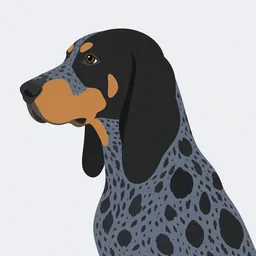
 Bluetick
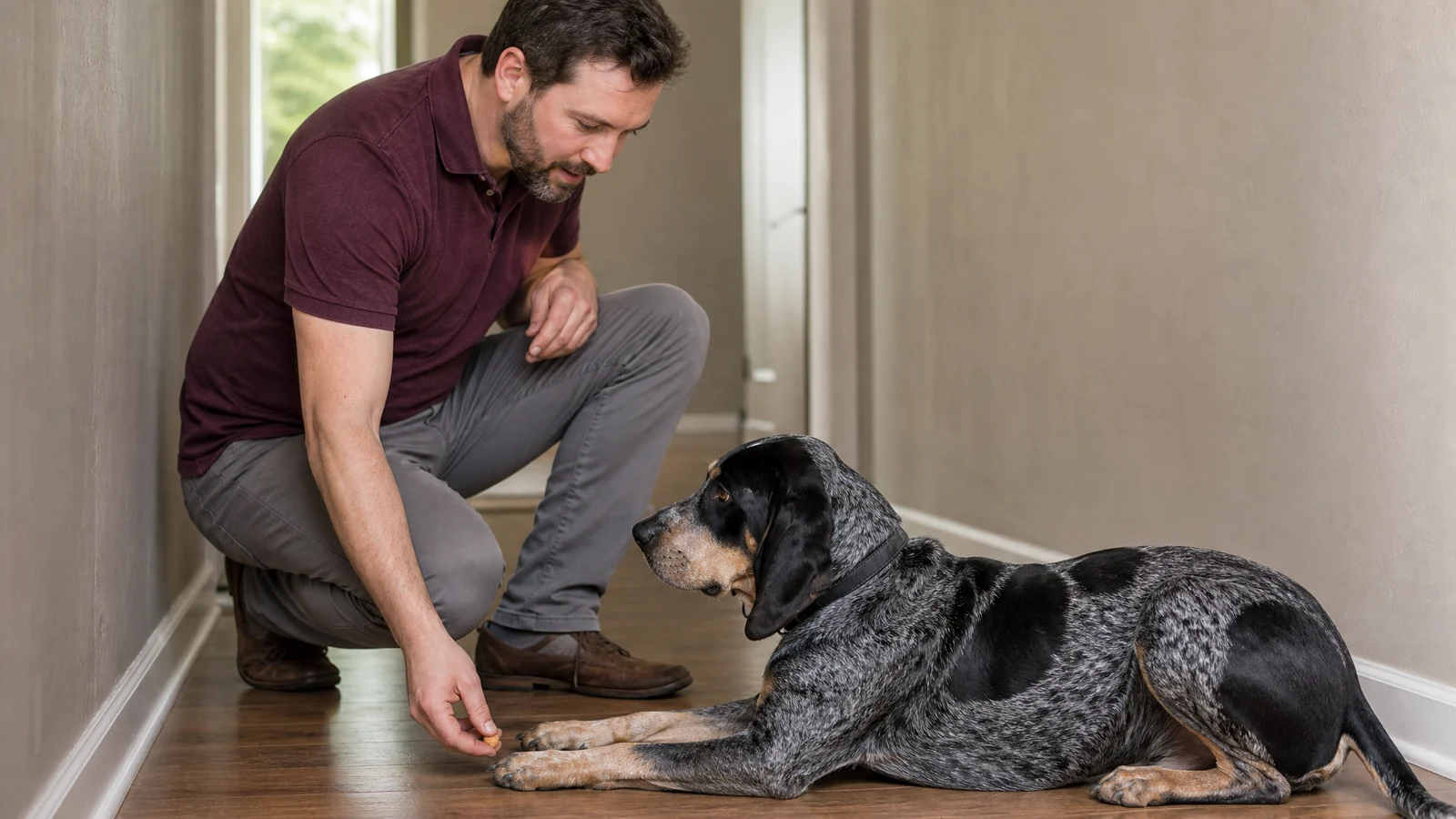
How can we get your Bluetick Coonhound to sit, lie down and stay when their nose is already somewhere else? Just using treats is the usual answer, and it falls short for a hound bred to follow a trail with the head down. To a nose like theirs, your hand is one smell among thousands, and the carpet may be more interesting than the best treat you own.
This article looks at teaching sit, down and stay with a lure, a marker word and short sessions, so you can pick the right reward and the right room, build each cue in order, and reset calmly when the nose takes over. Done well, these cues become habits at every door. Done badly, they stay stuck in one quiet corner of the house and fall apart the first time something smells better than you.
Choosing Training Treats Your Bluetick Coonhound Will Work For
The AKC calls treats a useful aid for this breed and rates their trainability at 4 of 5, a score that sits between agreeable and eager to please. Read that as a hound who works well when the pay is good, not one who works for approval alone. Food is your main tool, and a scent hound judges food by smell before taste.
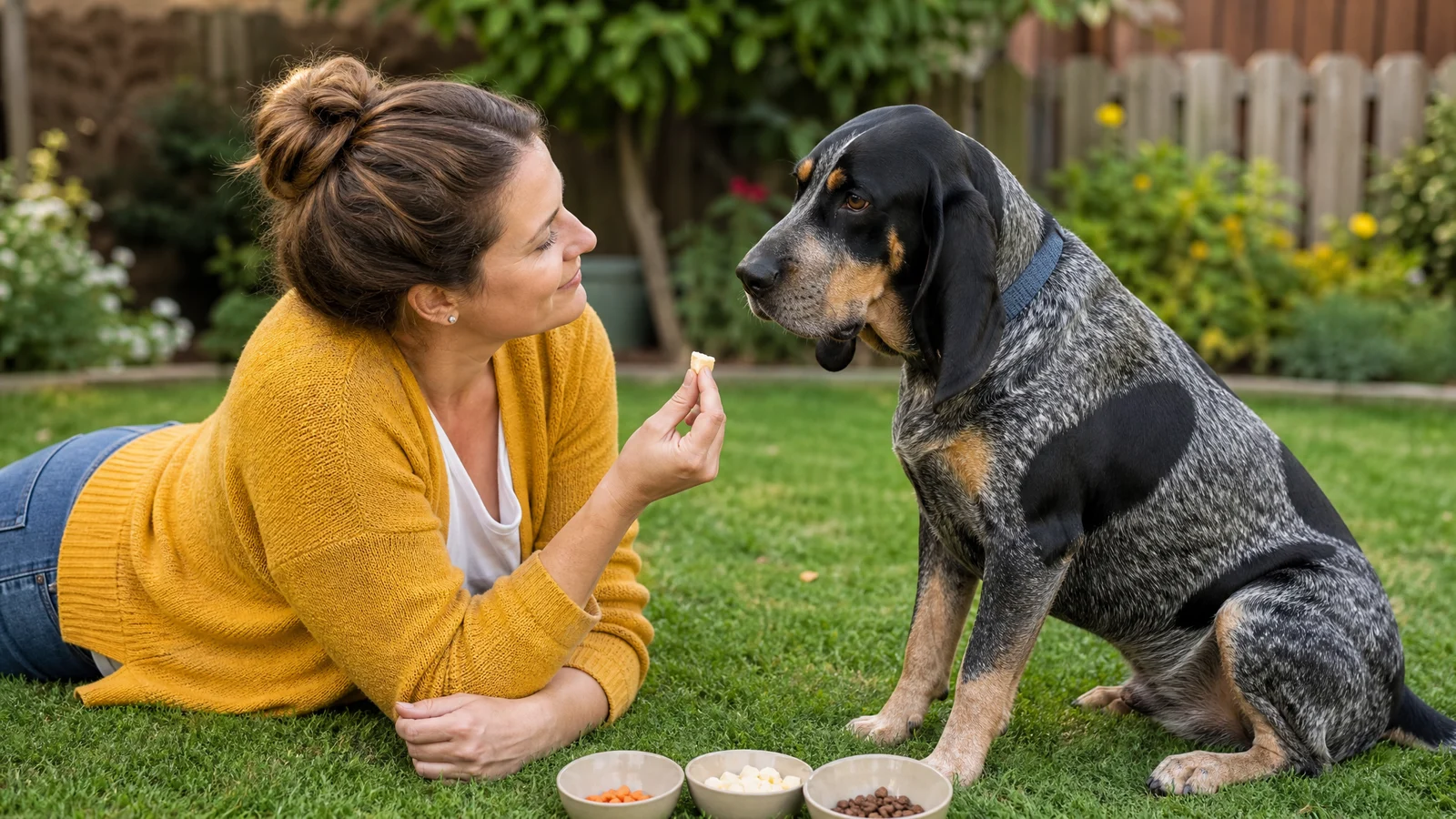
Sort your rewards into tiers before the first lesson. Common advice says plain kibble is enough to start, but a nose this capable files kibble under background noise as soon as the room holds anything better. Tiers let you match the pay to the smell level of the moment.
- The low tier is dry kibble or a plain biscuit, fine for easy repeats in a dull room and the first thing a hound ignores when scent rises.
- The middle tier is soft, pea-sized morsels with a clear smell, cut ahead of time so chewing never stalls the lesson. This is your everyday working treat.
- The top tier is something strong and special, such as tiny bits of cooked meat or cheese, saved for new skills and the hardest moments.
Layer Praise and Play
Praise and play add value, and our Bluetick treats and praise guide covers how to mix them. In the first lessons, though, food does the heavy lifting. Part of the daily meal can become rewards, since a hound who is a little hungry works with more interest.
Using part of your dog's daily food for training, or adding richer treats, is general information only. Ask your veterinarian how much your hound should eat and which treats suit them, especially if weight or health is a concern.
Choose the middle tier as your everyday treat and keep the top tier in your pocket for new skills and loud-scent moments. Keep regular vet visits too, because a food-loving hound who suddenly refuses treats may need a checkup, not more patience.
Picking Short Session Lengths and a Quiet Training Spot
Choose the room before you choose the cue. A bedroom or hallway with the door closed holds the least scent, while the kitchen and any spot where food has landed are traps. A hound who finds one crumb will spend the whole lesson working the floor, and no cue can compete with that. We have trained this breed for many years, and a dull room wins more lessons than a clever technique.
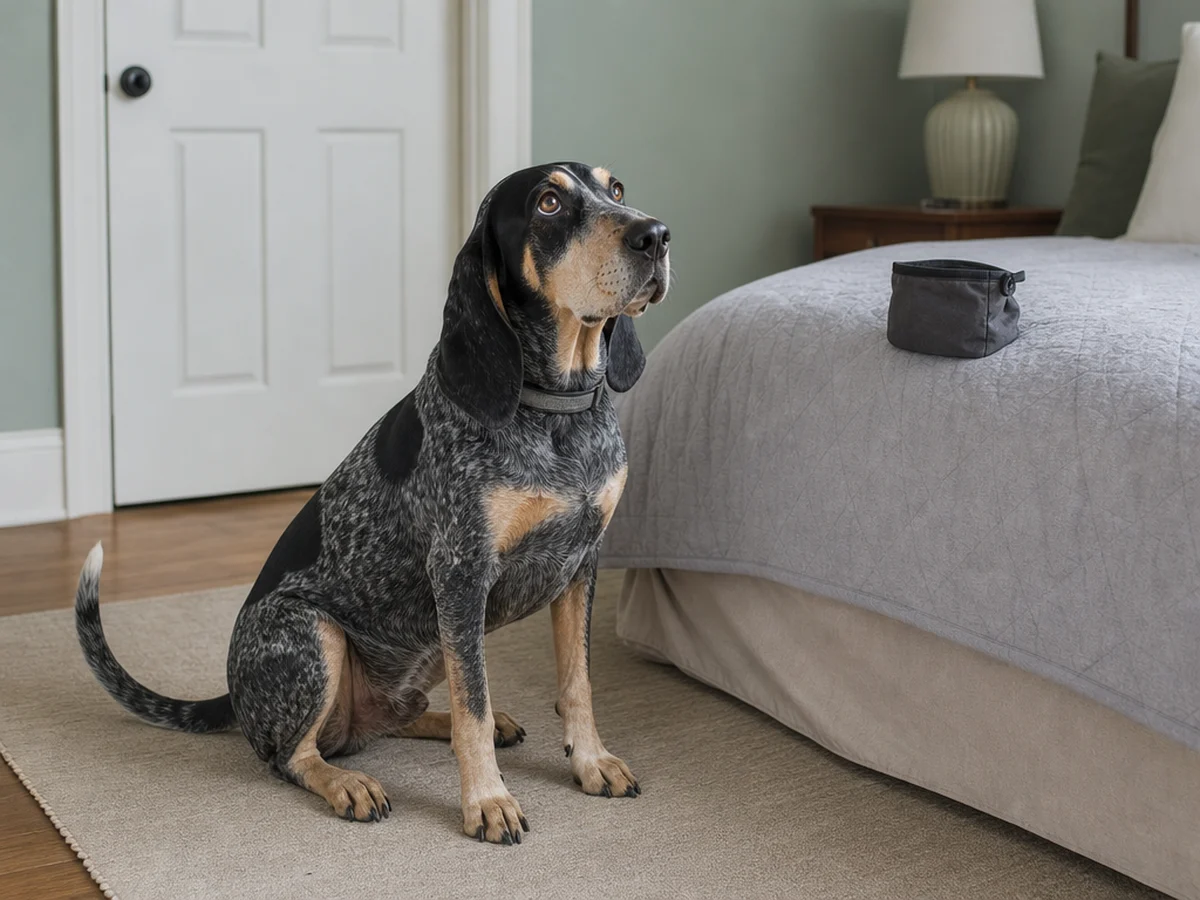
Then keep the lesson short, a few minutes at most, and stop while your hound still wants more. The usual advice to keep going until they get it right backfires with a trail hound, because long sessions drift into sniffing and every sniffing minute is practice at ignoring you. Several tiny sessions spread across the day work better than a single long block.
Keep early practice indoors or in a securely fenced yard, and use a leash anywhere else. A strong prey drive means a squirrel can end a lesson in a second, so prevent that before it happens. Run through this checklist before each session:
- The room is closed, quiet and free of crumbs.
- Treats are cut tiny and waiting in your pouch.
- You have chosen a marker word such as yes and a release word such as okay.
- Your hound has had a walk or some play first, since this is a high-energy breed and the first rush of energy gets in the way.
- You know in advance when you will stop, by the clock or after a small batch of repetitions.
Decision made: a few minutes, in the low-scent room, several times a day. Consistency matters more than stretching any one practice session.
Luring Your Bluetick Coonhound Into a Sit
Luring means guiding the dog into position with a treat. It is one of the capturing, shaping and luring methods used in reward-based training, where a cue asks, a marker tells the dog they got it right, and a treat pays. For a nose-led breed, luring is a natural fit, because the nose is what already leads them everywhere.
Charge the marker first. Say yes calmly, then give your hound a treat immediately, and repeat until their ears lift at the word. Then stand in the quiet room with your hound in front of you.
- Pinch a treat in your fingers and let them sniff it without taking it, so the nose is locked on.
- Move the treat slowly over their head toward the shoulders. As the nose tips up to follow, the hips fold down.
- Mark with yes the instant their bottom meets the floor, then bring the treat to mouth level so they do not jump for it.
- Toss a treat a step away so they get up, which gives you a fresh start for the next repetition.
- After several smooth repetitions, make the same sweep with an empty hand and pay from your pouch.
- Shrink the sweep each time until a small lift of the hand is enough.
Add the word last. Once the sit appears every time, speak the word sit a single time right before your hand starts to move, so the word predicts the signal. Repeating it louder only teaches a hound that your voice is background noise.
Choice made: pay for the hand signal alone, with the reward coming from your pouch and never from the lure hand. That keeps the signal clear and prevents the visible food from becoming part of the cue.
Down Training Comes Second, Lured From the Sit
Add down only after sit is smooth, because lying still on a floor full of smell is a bigger ask of a dog made to cover ground. Starting from a sit gives you a settled position to build from, and the lure follows the same logic as before: the nose leads and the body follows.
From the sit, hold a treat at the nose, lower your hand straight to the floor between the front paws, then slide it slowly forward along the floor. The head follows, then the shoulders, and finally the elbows touch down. Mark the moment the elbows meet the floor. If the rear pops up, slow the lure or pay for smaller steps toward the floor.
Pay in position, and pay more than once. Hand over several treats while they stay down calmly, then release with okay. Rewarding the held position instead of the arrival is what makes a down last. A rug or mat gives grip and is kinder than bare tile. Fade the lure the same way as for sit, then add the word once the hand signal works.
Choice made: keep each rep easy. Finish on a down that came quickly, and if attempts keep going wrong, drop back to a sit, win one, and stop.
Stretching Stay Training by Time, Then Distance
Stay is the hardest of these cues for a trail dog, since it asks for self-control with something interesting close by. Start from the down, a more settled position than sitting. Many guides stack time, distance and distraction together, but this breed does better when you raise them one at a time. The release word is part of the cue, because a stay ends when you say okay, not when the dog decides.
- Ask for the down, then say stay once with a flat palm.
- Pause for a single second, mark with yes, and bring the treat to their mouth while they are still in place. Then release.
- Add a beat or two to the pause across repetitions, always paying in position.
- When the pause feels easy, take one small step back, return and pay. Go to the dog with the reward, so it arrives while they are still staying.
- Stretch the distance gradually, then add small changes such as stepping sideways or turning away.
- If they break, lead them back to the spot without comment, make the next try easier, and carry on.
Always end by releasing. A hound who is never released learns that stay has no end, and one who is released too late learns to release themselves. When the down-stay holds, repeat the steps from a sit.
Choice made: vary just one element per round. When you add distance, keep the time short, and when you add a distraction, shrink the distance.
Handling a Bluetick Coonhound Nose Pulling Attention Away
You will know the moment: the head drops, the nostrils work, and the treat in your hand might as well be a pebble. Your hound has not decided to defy you, they have switched to the work they were bred for. The breed standard describes a Bluetick as active, ambitious and speedy on the trail.
Their prey drive is described as off-the-charts, and a famous line of Blueticks could pick up a week-old trail and run it 30 hours at a stretch. A sit beside the sofa is a small ask next to that. Do not repeat the cue when the nose wins. Use this reset plan instead.
Spot the Drift Early
Watch for the signs that come before the sniffing: a lowered head, a slower response to the marker, a glance toward a door. Mark and pay a moment before the drift, not after, so the reward lands on attention. Catching it early keeps the lesson alive.
Step Back and Lower the Difficulty
If a stay breaks as you step away, return to the last easy step and cut the time or distance in half. If the room has gone loud with scent, move to a plainer one. If the treat lost the contest, move up a tier. If your hound is truly gone, say okay and let them sniff for a minute as a life reward, then restart easier.
Reward the Return of Attention
The moment their eyes come back to you, mark and pay, even if you have asked for nothing. A hound who learns that looking back at you earns the best treat of the session will start checking in on their own.
Choice made: step back, lower the difficulty, and reward the return of attention. Your hound learns more from an achievable repeat than from another missed cue.
Short Training Sessions Make Sit, Down and Stay Last
The pattern behind every choice above is the same: a few rewarded minutes a day outperform marathon sessions. Sit, down and stay stick when the plan respects the hound's nose, with a quiet room, a treat worth the effort, a lure that gives the nose something to follow and a lesson that ends before the sniffing starts.
A simple daily routine puts it together. Before breakfast, run a short sit session with middle-tier treats. At midday, practice a down on a mat. In the evening, work one stay step, then release and let them sniff as a reward. Move to a harder setting only when the last one has become easy.
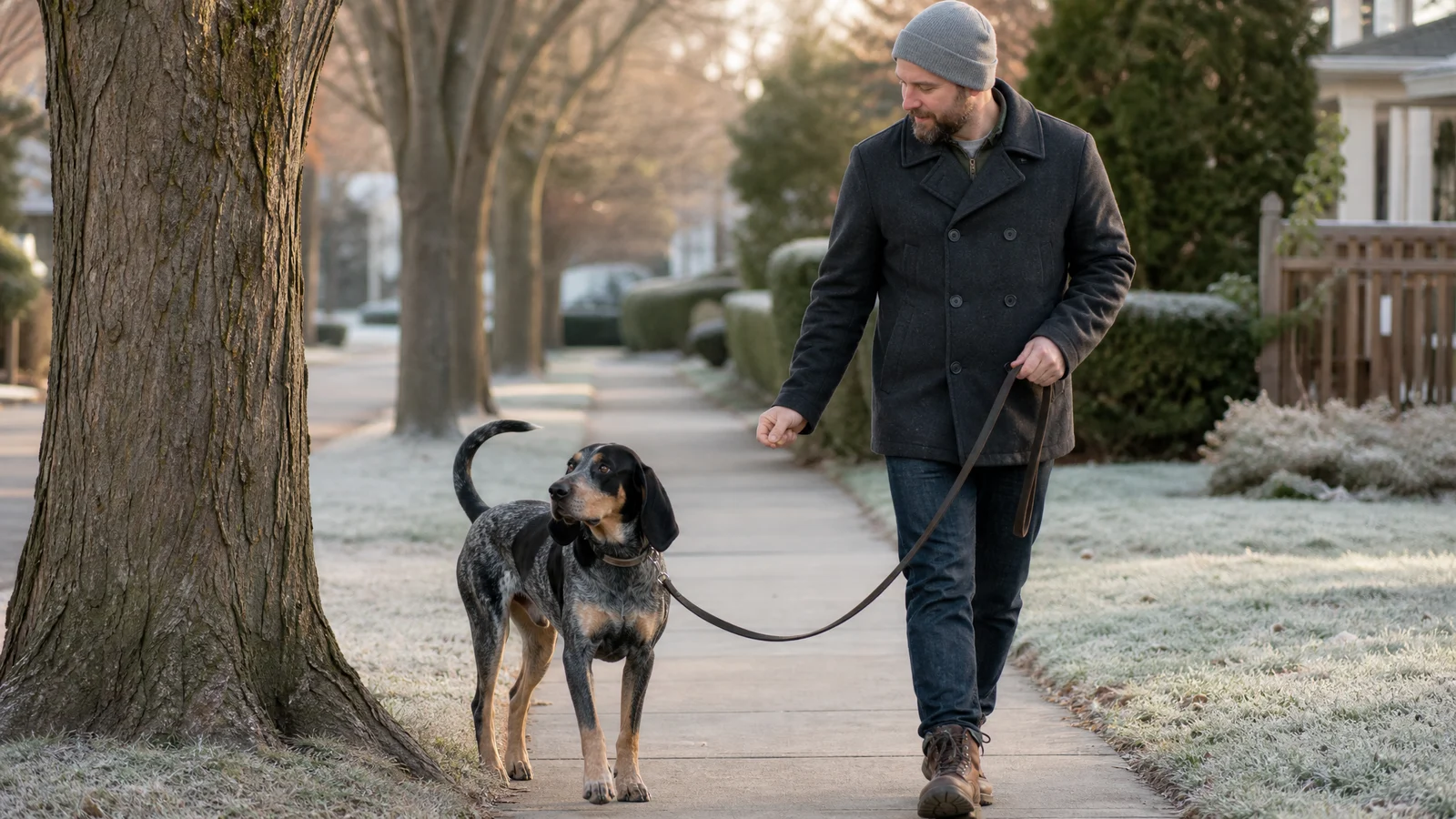
Several questions tend to come next. If the cues fall apart once you step outside, leash training a Bluetick who pulls carries them into the neighborhood. If progress feels uneven, Bluetick temperament and training ease explains why a trainable hound can still look stubborn. And if you want the whole path in one place, the step-by-step Bluetick rewards guide maps the road ahead.
Whatever you tackle next, keep paying for the position your dog actually holds and keep every lesson brief. A Bluetick who learns that listening to you is the best-paid work on offer will carry these cues into every room, yard and doorway, and the nose that once pulled them away becomes the reason they turn back to you.
 Training basicsWhat Treats and Praise Work Best When Training a Bluetick Coonhound?
 Training basicsLeave It: Managing Your Bluetick Coonhound's Off-the-Charts Prey Drive
 BehaviorCan a Bluetick Coonhound Live With Cats and Small Pets?