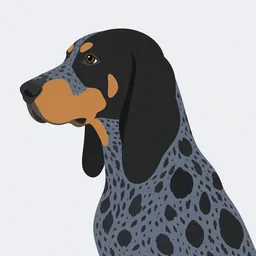
 Bluetick
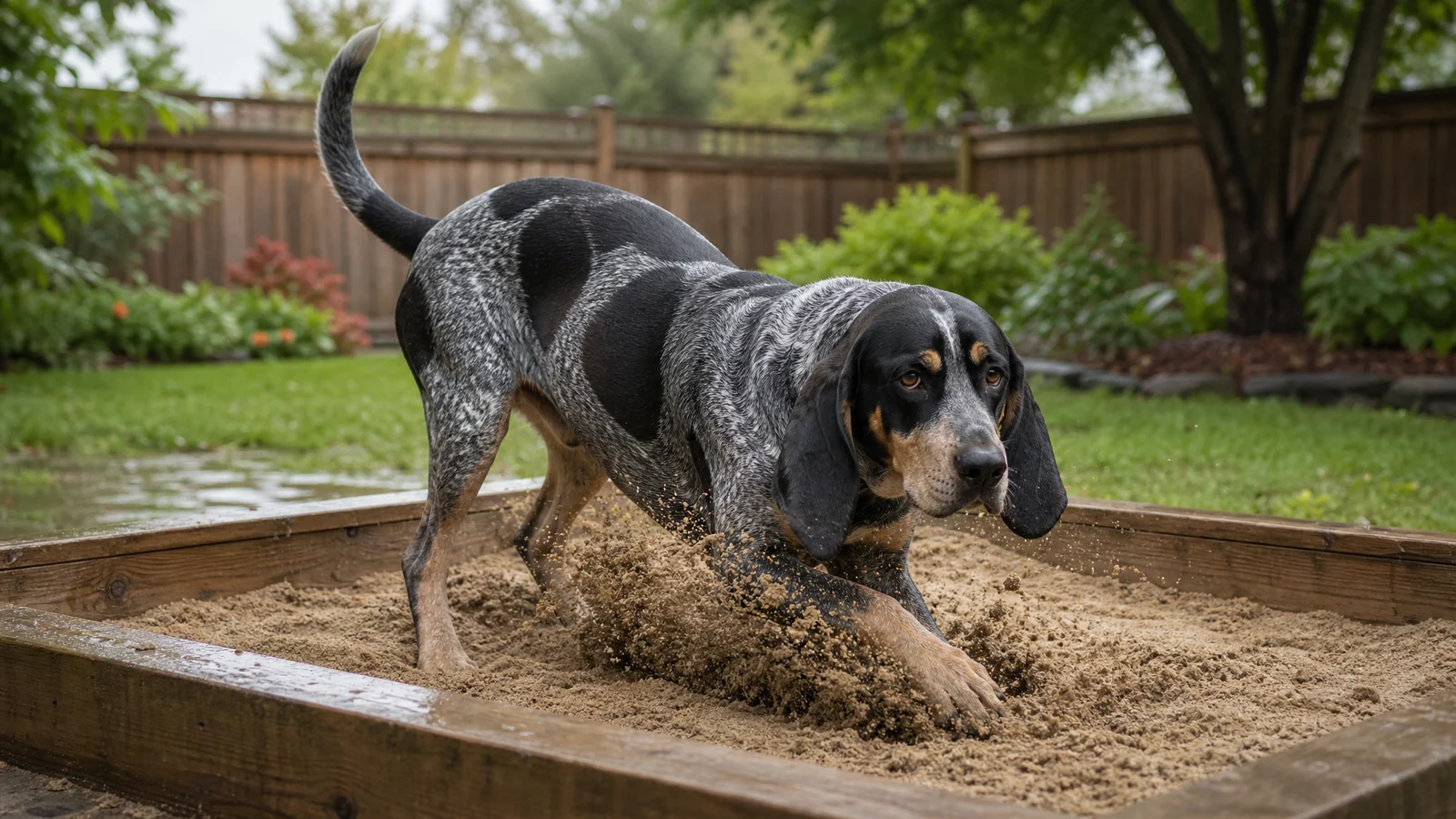
Ordinary dog advice about digging says to shut it down. With a Bluetick Coonhound, the training delta is different: you redirect the dig instead of suppressing it, and what you add is a legal place to dig, not a ban. These are hounds whose voice erupts the moment they catch wind of wildlife, so a smell rising from under the lawn is a strong invitation.
This article looks at why scent pulls them into the soil and what sets off each hole, so you can build a dig spot, teach it with buried treats, and manage the rest of the yard while the habit shifts. Done well, your hound gets a daily job for their nose and your flower beds survive. Done badly, you get a frustrated dog and holes along every fence.
The Bluetick Coonhound Nose
Many owners notice that a Bluetick's digging looks purposeful. The hound circles, sniffs along one line, then commits to a single spot and works at it as if the matter were settled. That commitment is a breed trait, not a quirk of your dog.
The standard describes a steady coarse chop at the tree, which tells you these dogs were bred to stay with the quarry until the job was done. Breed descriptions call them determined, hardy and happiest with a job to do. Tracking is a chain of small decisions: find the line, follow the line, stay with the line when it gets difficult. A smell that drops into the soil is one more difficult stretch, so a Bluetick reads it as the next part of the trail.
The same arousal spike that makes a Bluetick bay can reach the paws. Some owners report that their hound starts baying the moment they catch wind of wildlife, even from a quarter mile away, and baying and digging are often one dog in two moods. If the voice is your bigger concern, our guide to why they bay covers it.
Hounds with no outlet for their hardwired impulses can develop problem behaviors, and holes are among the most visible. Many owners find that sniff-focused walks leave a hound calm at home, while hard running can leave them harder to settle. A fed nose pulls less toward the lawn.
What Does Breed History Explain About Digging for Critters?
Watch a Bluetick cross a yard after rain and the whole body seems organized around the nose. The breed standard says that, as a Scenthound, their natural head and tail position in motion is parallel to the ground. That posture fits a dog built to work with the nose low, reading the surface rather than scanning the horizon.
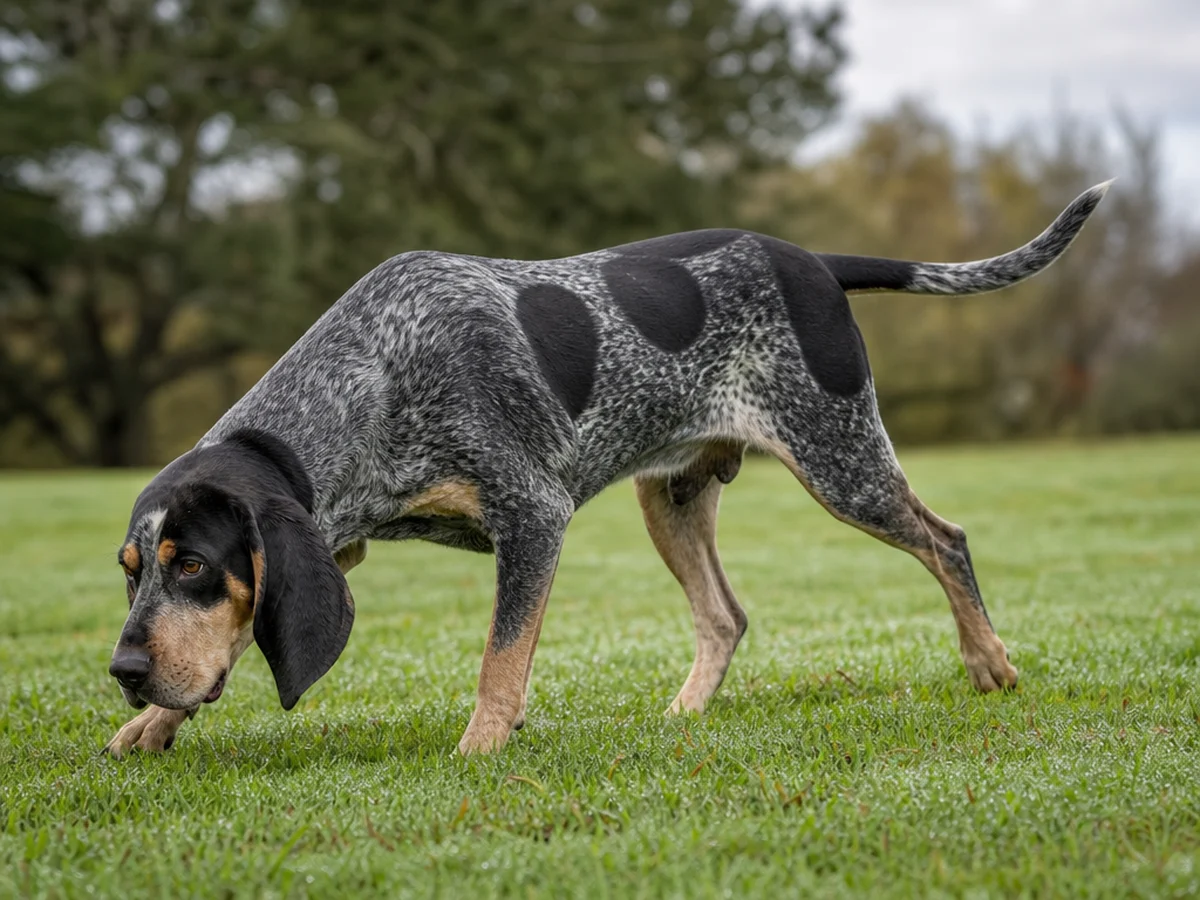
The mechanism is the job. Blueticks were bred as hunting dogs to follow a scent line and stay on it, and the standard calls for a dog who is active, ambitious and speedy on the trail. Breed admirers describe a nose that can pick up a week-old trail and the stamina to keep working it.
A dog selected for that kind of single-minded tracking does not switch the instinct off in a suburban yard. Their prey drive is described as off the charts, and it has to go somewhere. To them a lawn is a crowded page, with every beetle, vole and passing squirrel written into the grass and the soil beneath it.
Scent also sits low, so a hound following it spends the day with the head down and attention narrowed. When a smell is strongest at one patch of soil, the natural next step is to get closer, and closer means scratching. We have trained Blueticks for many years, and we treat digging as a scent behavior first and mischief second.
Scent Restarts Digging for Critters
To understand the holes in your yard, start with the job these dogs were built to do. Blueticks were bred as hunting dogs, and their history is all about following a trail with the nose and not giving up on it. That history is a big part of why a smell under the lawn can feel like a trail to them.
One famous line of the breed was described as a big, bell-voiced hound with a nose that can pick up a week-old trail and the endurance to run that trail 30 hours at a stretch. A dog with that kind of scent drive does not switch it off at the back door. Their prey drive is described as off-the-charts, and it needs a place to go.
The body tells the same story. As a Scenthound, the Bluetick naturally carries head and tail parallel to the ground in motion, which is a nose-forward posture. When a strong smell sits in the soil, that nose goes down, and digging is the next step in reaching it.
Your Bluetick is not acting out of spite. They are following the same instinct that generations of selection rewarded. Our job is to give that drive a legal outlet, so the lawn stops being the only place where the effort pays off.
The First Digging-for-Critters Hole
Holes in a Bluetick's yard rarely appear at random. They cluster in the same few patches, usually after the dog has spent a while with the nose pressed to one spot. Before you build anything, spend a few days noting where holes appear and what the ground is like there, because the triggers are fairly predictable.
- Moles, voles and other small animals tunneling under the turf leave a scent line that ends at one patch of lawn, and the dog follows it straight there.
- Damp or freshly turned soil smells richer than dry, packed ground, so holes often show up on the first outing after wet weather.
- Wildlife that crossed the yard overnight leaves a trail the hound can read long after you can see anything, and fences and shrubs hold those trails longest.
- Leftover energy and too few sniffing outlets push a bored hound to find something to do, and an old hole is the easiest answer.
The scent starts the behavior, and a lack of outlets keeps it going. Once a patch has been dug, the loosened soil sends out even more smell, so the dog returns. The corners that draw your hound first are the ones you will manage most closely.
The Approved Digging for Critters Corner
A hound who keeps returning to the same corner has told you where they want to dig, and that corner is a clue, not a verdict. The answer is a spot you choose, built to be more interesting than anywhere they would pick themselves. Digging is an instinct, so letting some of it happen in a place that costs you nothing is the realistic plan.
Choose an area you can see from the house and keep it away from fences. A dig spot against a fence invites tunneling toward the other side, and a wandering hound is a bigger problem than a hole, so look at securing your yard first if your fence needs work. Light shade helps, since Blueticks enjoy snoozing in it once the work is done.
What makes a spot attractive to a scent-driven hound is smell and soft ground. Loose soil gives under the paws far more easily than packed lawn, and buried treats and toys give the nose something real to find. Because a Bluetick is happiest with a job, many take to the game quickly, and the spot becomes the one place where their nose is useful.
Build the Bluetick Coonhound Dig Spot
The first session works because the reward is already waiting under the surface. A scent hound's nose finds it before you have asked for anything, and the find does most of the teaching. Build in order, and do not bury a single treat until the spot is finished.
Gather Materials and Mark the Edge
Remove the sod and fill the area with loose, soft soil, or a mix of soil and sand, plain and untreated. Make it large enough for your dog to turn around and lie down in, since a tiny patch gets abandoned for the lawn, which has more room. Edge it with timbers, bricks or large stones so the boundary is obvious and the dirt stays inside.
Use the finished spot for a quick safety check. Review these points before your dog uses it.
- The spot is in view of the house and well away from any fence line.
- The soil is loose enough that a paw sinks in with a single scoop.
- The edging makes the boundary obvious from a few steps away.
- You have a smelly treat, a favorite toy and a marker word ready.
- The spot has a cover, so neighborhood cats do not turn it into a litter box.
Plant Scent so the Nose Wins
The setup borrows from beginner nose work games, where a row of open boxes holds strongly scented treats in only some of them. The dog sniffs out the food and pays themselves for the find. Your dig spot is the same game with soil in place of boxes.
Pick a treat with a stronger smell than anything the lawn offers. Make early finds easy, with the scent close to the top, then bury deeper as the dog gets the idea. Mixing in a favorite toy makes the dig take more effort and keeps the game interesting.
Reward Every Visit to the Spot
Reward-based teaching has a simple shape. A cue, marker and reward work together, and a dog who gets something they love for a behavior is more likely to repeat it. This idea sits at the heart of reward-based training. Work through these steps in order:
- Bury a few pieces just under the surface while the dog watches, then walk them to the spot on a leash.
- When the nose goes down and the paws start scratching, say your marker word and let them eat the find.
- Praise warmly and let them keep digging for a while after the first find.
- Over several sessions, bury treats a little deeper so the dig takes more effort.
- Once the dog heads to the spot eagerly, say a cue word such as dig just as they begin to scratch.
- Start restocking the spot when the dog is not watching, so every visit carries a chance of payoff.
- End each session while your hound is still eager for another find.
If your hound bays with excitement over the early finds, that is normal. Mark the scratch rather than the noise, and the voice usually settles as the game becomes familiar. Restocking matters most, because a dog who finds the spot empty several times in a row goes back to testing the lawn.
Can Yard Repairs Redirect Digging for Critters?
A fresh hole beside the shrubs where moles have been working is the classic test. The lawn smells like the real thing, so a hound with a fresh scent will still try it, and the honest answer is that you can cut the habit down sharply but not erase it. Aim for fewer holes and a dog who comes back to you quickly. Repairs buy time, and supervision does the teaching.
Repair Holes Right Away
Fill each hole level and press the soil down, since loosened dirt smells strong and invites a return visit. Cover the patch with something your dog cannot easily move while the grass recovers. Where critters are the cause, the scent may linger, so problem corners need repeat attention. A temporary fence around beds and favorite patches keeps temptation out of reach while the new habit settles.
Supervise Until the Rule Sticks
A Bluetick left alone in the yard has hours to follow their nose, so go out with them while the spot is new and keep visits short. Use a long leash when the ground is damp and rich with scent. If you catch a hole starting, call cheerfully, lead them to the spot, and reward the first scratch there. If they are too wound up to learn, a short break indoors lets everyone reset.
A hound deep in a scent may not hear you at all, so selective hearing practice makes your voice worth turning toward. Also remember that a hound digging for critters may be circling a hutch or pet enclosure near the house, so keep cats and small pets safe with their own plan.
Manage a Bluetick Coonhound Yard
Here is the honest expectation to carry forward. The urge to dig for critters fades only partly, because it comes from the same nose and drive that make a Bluetick who they are. Most owners see fewer holes once the dig spot becomes the rewarding place to be, and some dogs settle a great deal over the years, but a fresh mole run or a strong smell after rain can still pull a hound toward the lawn.
That means the setup you built is not a temporary fix. Keep the dig spot stocked with buried treats and toys, keep rewarding visits to it, and keep filling lawn holes right away so the soil does not smell inviting. Supervise when the yard is new to them or when wildlife has been active.
Outlets matter just as much. Coonhounds with no outlet for their hardwired impulses can develop problem behaviors, so daily exercise and sniff-focused walks belong in the routine alongside the dig spot. Regular vet visits are a good habit too, since a dog who suddenly digs far more than usual deserves a check.
Remember this above all: a Bluetick's nose will always lead, and your part is to give it somewhere good to go. Offer them a soft, baited place to dig, daily scent work, and a yard you watch with them, and you trade a ruined lawn for a hound who is busy, satisfied and still gloriously themselves.
Long-Term Bluetick Coonhound Digging Expectations
Expect the first weeks to show the most holes and the most progress at once. Every dig in the spot pays and the lawn pays only now and then, so many owners find that holes outside the spot drop quickly once the dog understands the rule. Damp weather, a new wildlife visitor or a change in routine can bring a short burst back, and a burst is a cue to restock the spot, not proof that training failed.
Over the years the urge itself does not vanish, because the nose that follows trails stays sharp. Many owners describe a similar path with the voice: a hound who still speaks up sometimes but gets quieter about it with enough sniffing outlets and steady practice. Digging follows that pattern. Light upkeep keeps the plan working:
- Refresh the loose soil and repair the edging when it slumps.
- Rebury treats and toys often enough that the spot stays the best payoff in the yard.
- Keep sniffing walks in the weekly routine so the nose is fed elsewhere.
- Fill any new hole right away and note what drew the dog there.
A Bluetick will want to follow their nose into the ground for as long as they live, because that is what the breed was made for. A spot that keeps paying turns that urge into a contained, predictable habit, and a little weekly upkeep keeps your lawn intact.
Keep up regular vet visits too, and mention it if the digging suddenly changes in how often or how hard. Years from now you will still see your hound stop at the old corner, sniff, and trot over to their own patch of dirt.
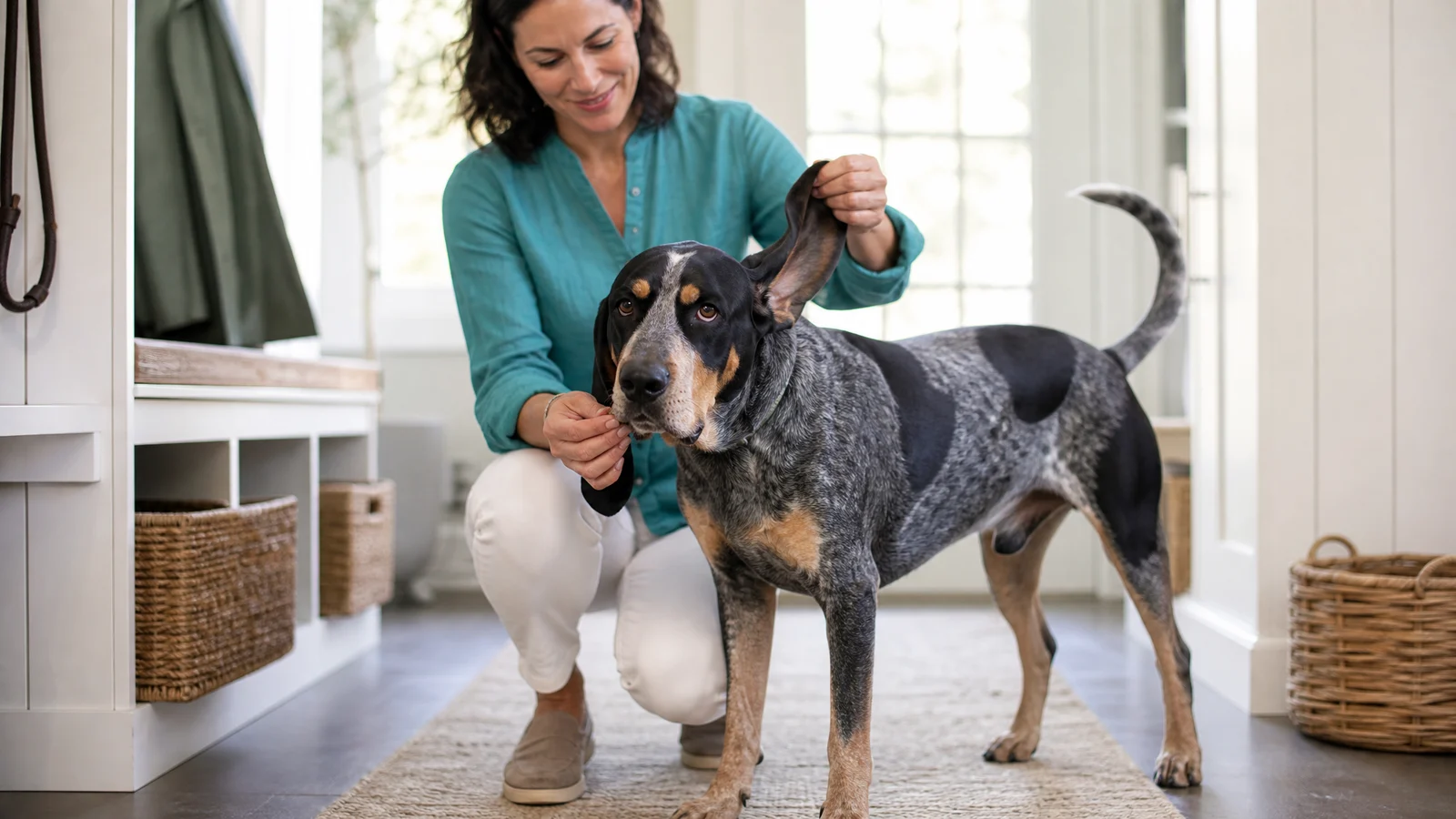 CareMaking Long Bluetick Coonhound Ears Easy to Check and Clean
 BehaviorHow to Stop Bluetick Coonhound Reactivity With Distance Work
 Puppy trainingBluetick Coonhound Puppy at 4 to 6 Months: What Changes