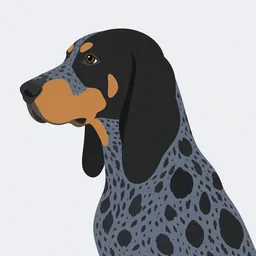
 Bluetick
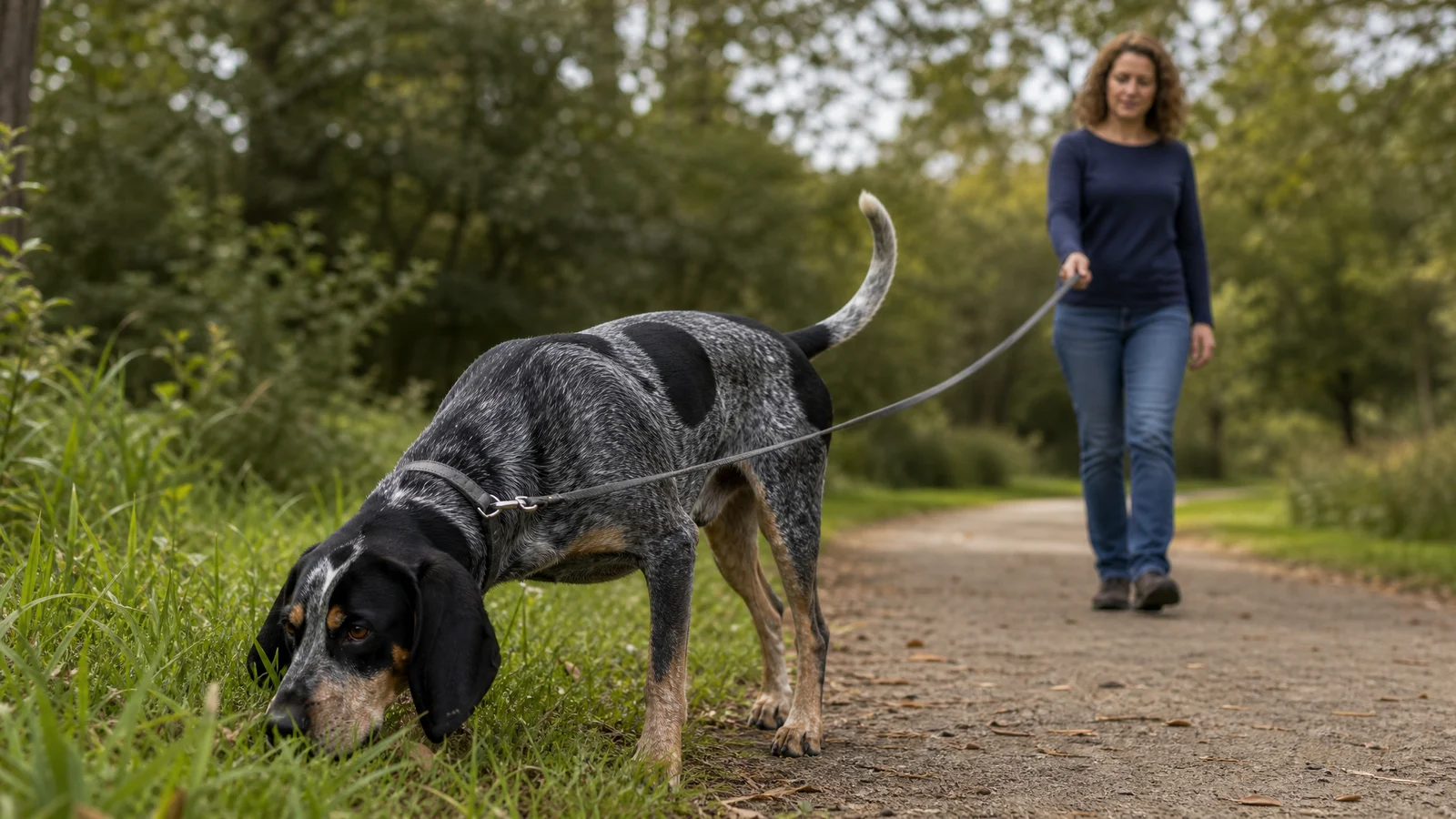
A Bluetick Coonhound can tighten the leash with their nose buried in grass, lean steadily toward the route or surge suddenly at movement. Those patterns feel similar in the handler's hand, but they are not the same training problem. One response will not solve all three.
We use a symptom map before choosing an exercise. The breed is a scent hound with strong prey drive, so sniffing and rapid orientation are expected parts of a walk. Safe leash training channels those behaviors into predictable access, distance and check-ins.
This guide maps nose-down tracking, steady pulling, sudden surges, vocal arousal, fixation and slow recovery. Each section shows what to watch, what to change first and which behavior to reward, without asking the dog to ignore every scent.
Nose-Down Leash Training for Blueticks
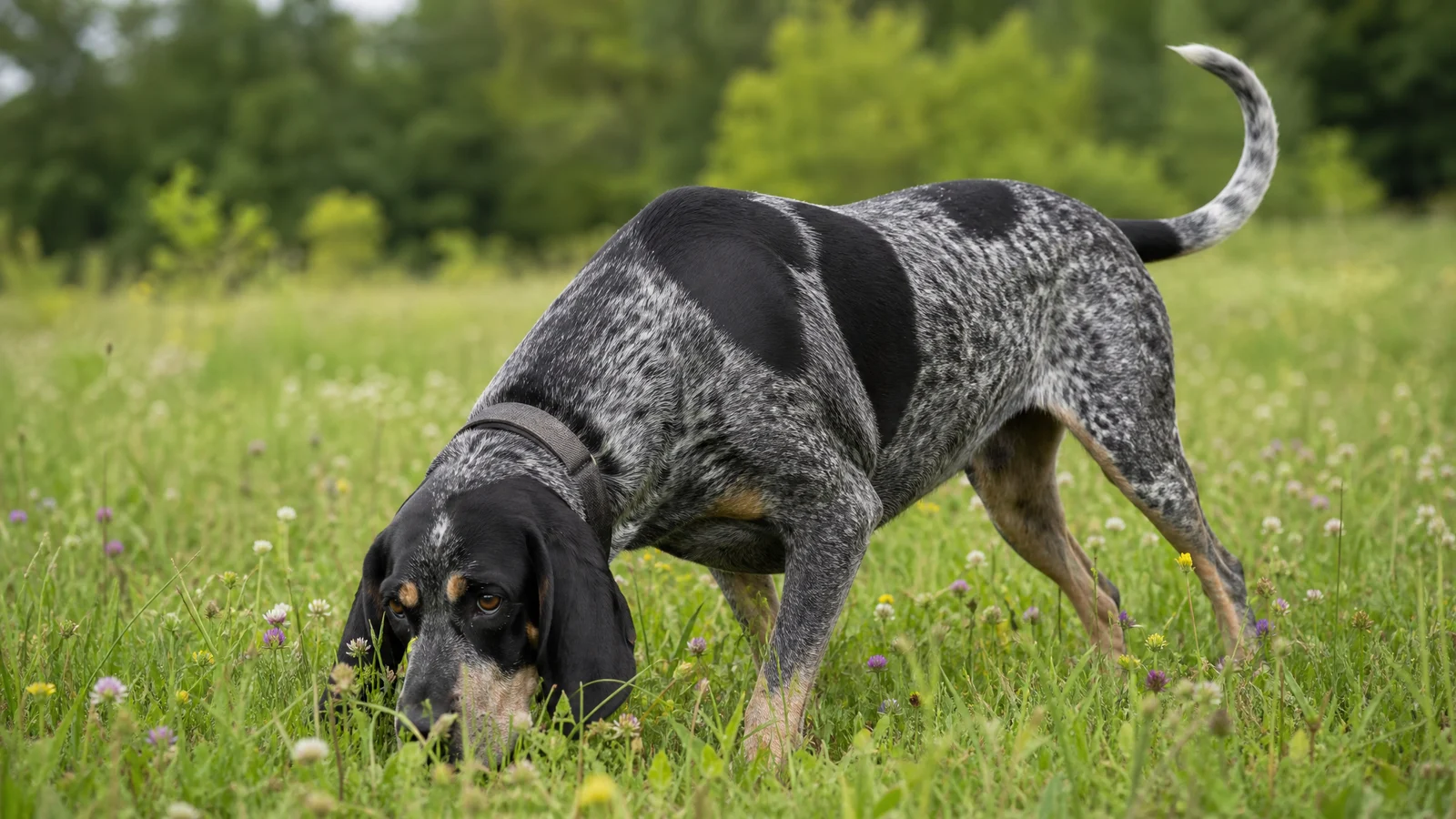
Nose-down pulling usually has a clear destination even when you cannot see it. The head drops, the path zigzags and the dog may pass a normal food reward without looking up. Bluetick breed guidance describes strong prey drive and recommends long walks on a leash, which makes managed sniffing part of the answer. Removing every sniff would discard the most useful reward on the route.
Map the Scent Pattern
Notice where the nose drops and whether the dog can lift their head before the leash becomes tight. A patch of grass invites a different plan from a narrow sidewalk beside traffic. The useful training moment arrives at the first orientation, before the dog's full weight commits to the trail. Early observation gives both partners room to turn without a contest at the leash.
Choose specific sniff zones on a safe route. Approach on a loose leash, pause, then give a release cue that allows the dog to explore within the leash length. A separate finished cue ends access and predicts movement with you.
Pay Check-Ins With Sniffing
Food is not the only reward available. If the dog wants the scent, a glance back or a step toward you can earn permission to reach it. Mark the check-in, move together on slack and release to sniff. The environment then pays the behavior you want.
If the dog cannot turn, move away from the scent until they can respond. Repeating the cue beside the source makes your voice easier to ignore. The Bluetick rewards guide explains how to build the marker and check-in in a quieter place first.
Steady Pulling in Bluetick Leash Training
Steady pulling is the learned engine of the walk. The dog leans, the person follows and tension repeatedly produces forward movement. The symptom may continue even without an obvious scent because the route itself has become the reward.
Find the Reinforced Position
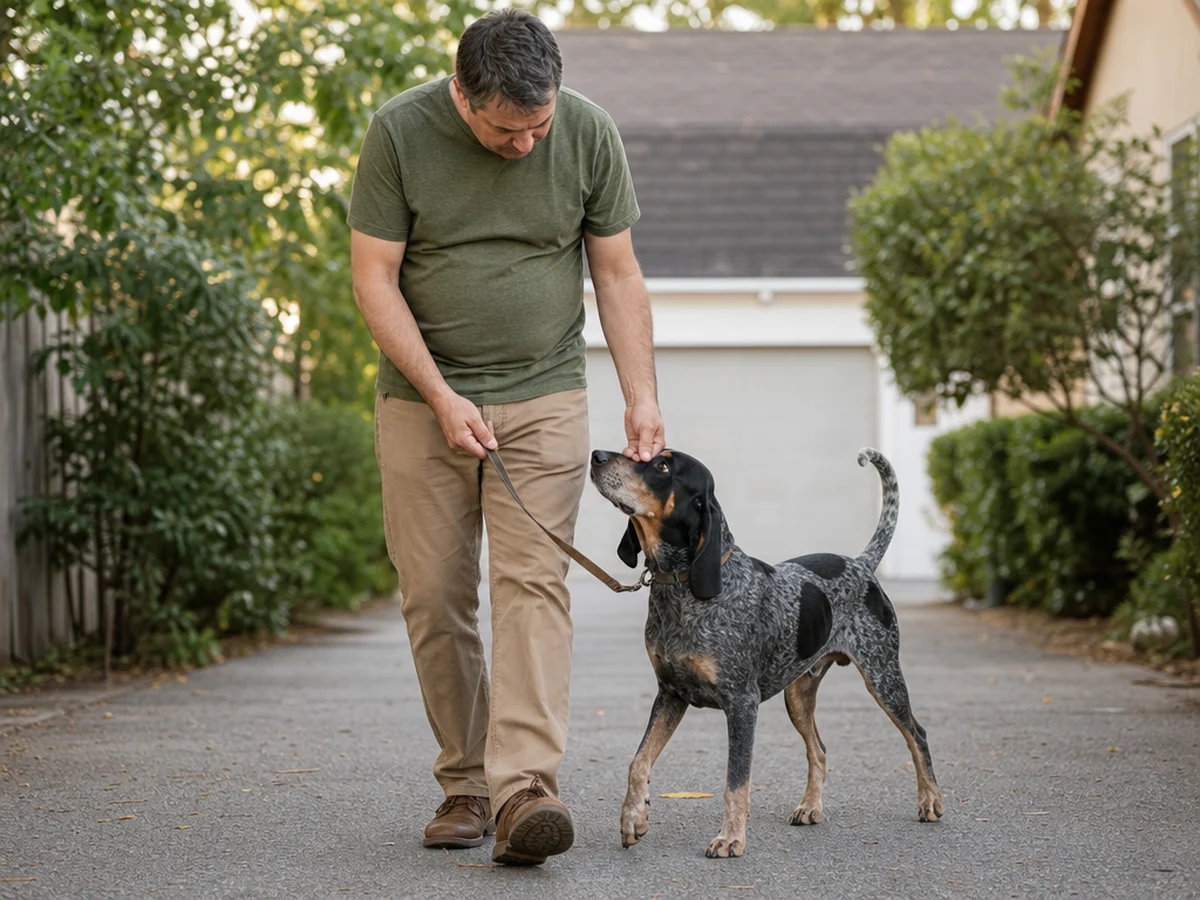
Watch where rewards land and what the leash does immediately afterward. Food delivered in front can pull the dog ahead again, while a reward beside your leg supports a useful position. Keep your hand quiet and give enough leash for natural movement without a long runway.
Start where the dog can succeed, such as a quiet driveway or low-distraction stretch. Mark one step on slack, reward beside you and move again. Build fluency before asking for the same skill beside animals, traffic or exciting entrances.
Make Slack Move the Walk
When the leash tightens, stop forward travel and wait without pulling back. The instant tension eases, mark and move. Loose-leash guidance uses this stop-and-wait pattern so pulling no longer advances the route.
Use the same loop consistently. The sequence makes forward access predictable and keeps the handler from improvising after tension appears. Practice it first where both partners can notice the change in the leash:
- Begin on a quiet stretch and reward the first step taken with slack in the leash.
- Deliver food beside your leg, then continue before the dog has time to forge ahead.
- Stop when tension appears, wait for any release and mark the softer leash.
- Move forward as part of the reward, adding planned sniff releases along the route.
- End the practice while both dog and handler can still repeat the pattern calmly.
Do not demand one fixed walking position for the entire outing. A Bluetick can walk with slack while moving ahead, beside you or behind for a moment. The standard is a soft connection and a dog who can return to you, not formal precision on every block.
Sudden Surges During Leash Training
A sudden surge is an event, not a steady habit. The dog may spot movement, catch a fresh odor or reach the end of restraint before you recognize the change. Safety improves when the handler learns the early signal and creates space before speed arrives.
Catch the First Orientation
The first sign may be a head snap, closed mouth, lifted posture or abrupt change in pace. Mark any return of attention, then retreat together before the body commits forward. Once the leap begins, leash and handler are stopping momentum instead of guiding a choice.
Scan ahead and choose crossings, parked cars or wider paths as distance tools. A route with room to turn is more trainable than a narrow route full of surprises. Equipment should fit securely and comfortably, and the leash should remain attached to the handler without wrapping around hands or the dog. Check the fit before entering a route where sudden movement is likely.
Rehearse the Exit Before Need
Teach a cheerful turn cue in a quiet place. Say the cue, rotate away, mark the dog for following and deliver several rewards as you move. Practice from both directions until the motion feels familiar and does not require leash pressure.
Then use the turn at the first sign of a real trigger, not after contact with the end of the leash. Distance is part of the reward because it restores the dog's ability to think. A successful exit may be the whole lesson for that outing.
Vocal Arousal on Bluetick Coonhound Walks
Barking, baying or whining on leash signals more than volume. The dog may be excited, frustrated, worried or intensely interested, and the body supplies the missing information. A loose body moving toward a social target differs from a rigid body that cannot turn away.
Read Voice With the Body
Note the trigger, distance and posture when the voice begins. Also watch whether the dog can eat, move with you and recover after the trigger passes. The goal is not to name the emotion from one sound. It is to choose a setup where the dog can perform an alternative behavior. That workable distance may change with wind, space and what happened earlier on the outing.
A high-energy outing can add arousal instead of draining it. We prefer a quieter route, greater distance and a simple movement pattern when vocalizing rises. Keep regular vet visits on the calendar. Discuss any abrupt shift in voice or walking behavior with the veterinarian.
Change the Route Before the Cue
A quiet cue learned in the kitchen may not survive a narrow path beside a trigger. Route design comes first. Cross early, turn down a side street or step behind a visual barrier while the dog can still move. Then reward orientation back to you.
Use this response map when the voice begins. The branches prioritize movement and space before extra cue requests. Choose the first option the dog can complete without adding more tension or noise:
- If the dog can eat and move, create more distance while rewarding each step that follows you.
- If the dog cannot take food but can turn, leave the area and restart only after breathing and movement soften.
- If the dog freezes or surges, prioritize a safe exit rather than asking for several stationary cues.
- If the same location repeatedly triggers vocalizing, remove it from the route while easier practice builds.
- If safe management is failing, pause that route and seek qualified reward-based help.
The Bluetick temperament guide explains why tenacity and scent focus can look like refusal. On leash, that distinction matters because lower difficulty usually helps more than repeating a familiar cue.
Fixation in Bluetick Coonhound Leash Training
Fixation narrows the symptom map. The dog stops scanning, holds their eyes or nose on one target and may become still before pulling or vocalizing. At that point, a treat placed under the nose may be ignored because the dog is no longer available for ordinary training.
Work Outside the Fixed Stare
Begin far enough away that the dog can notice the target and then disengage. Mark the first glance back, head turn or weight shift away. Place the food along the direction of your retreat, then increase distance before asking for another repetition.
Do not close the gap simply because one reward was accepted. Look for repeated easy turns and loose movement. Distance changes by trigger, day and environment, so the workable location is discovered through the dog's behavior rather than a fixed measurement.
A controlled scent game away from the trigger can restore purposeful sniffing without feeding the fixation. Nose work basics begin with food hidden in open boxes, a task that can be practiced indoors before being used as a calm pre-walk activity.
The game is preparation, not a way to lure the dog past a trigger. Finish the search, let arousal settle and choose a route with enough space. If fixation includes lunging or cannot be managed safely, a qualified professional should observe the full pattern.
Slow Recovery Shapes the Next Walk
Recovery begins when the trigger is gone, but it may continue long after the dog stops vocalizing. Watch breathing, muscle tension, scanning, food response and the ability to sniff normally. A dog who remains vigilant is still telling you the previous challenge was expensive.
Do not stack more triggers to prove the dog can cope. Turn toward a quiet return route, offer space and let the dog move without adding difficult cues. Recall reward guidance supports using something the dog strongly values, which also helps make the exit cue worth following.
Record the symptom, location, earliest sign and recovery quality after the walk. A brief note such as nose-down pull with quick recovery is more useful than calling the entire outing bad. Patterns show which routes support learning and which repeatedly push the dog too far.
The next walk should begin below the previous difficulty. Choose more distance, a quieter time or a shorter route through the challenging area, then reward early check-ins. Improvement looks like earlier disengagement and easier recovery, even before pulling disappears.
The symptom map keeps leash training specific: scent access for nose-down tracking, slack for forward movement, distance for surges, quieter setups for vocal arousal and wide margins for fixation. Let recovery decide what comes next. A Bluetick who can return to ordinary sniffing and connection is learning the walk, not merely enduring it. That recovery is the clearest permission to make a later walk slightly harder.
 BehaviorIs a Bluetick Coonhound a Good Family Dog?
 BehaviorSelective Hearing in Bluetick Coonhounds: Making Listening Pay
 CareGrooming Time as Training: Brushing a Shedding Bluetick Coonhound