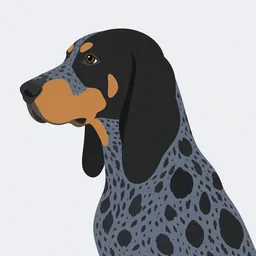
 Bluetick
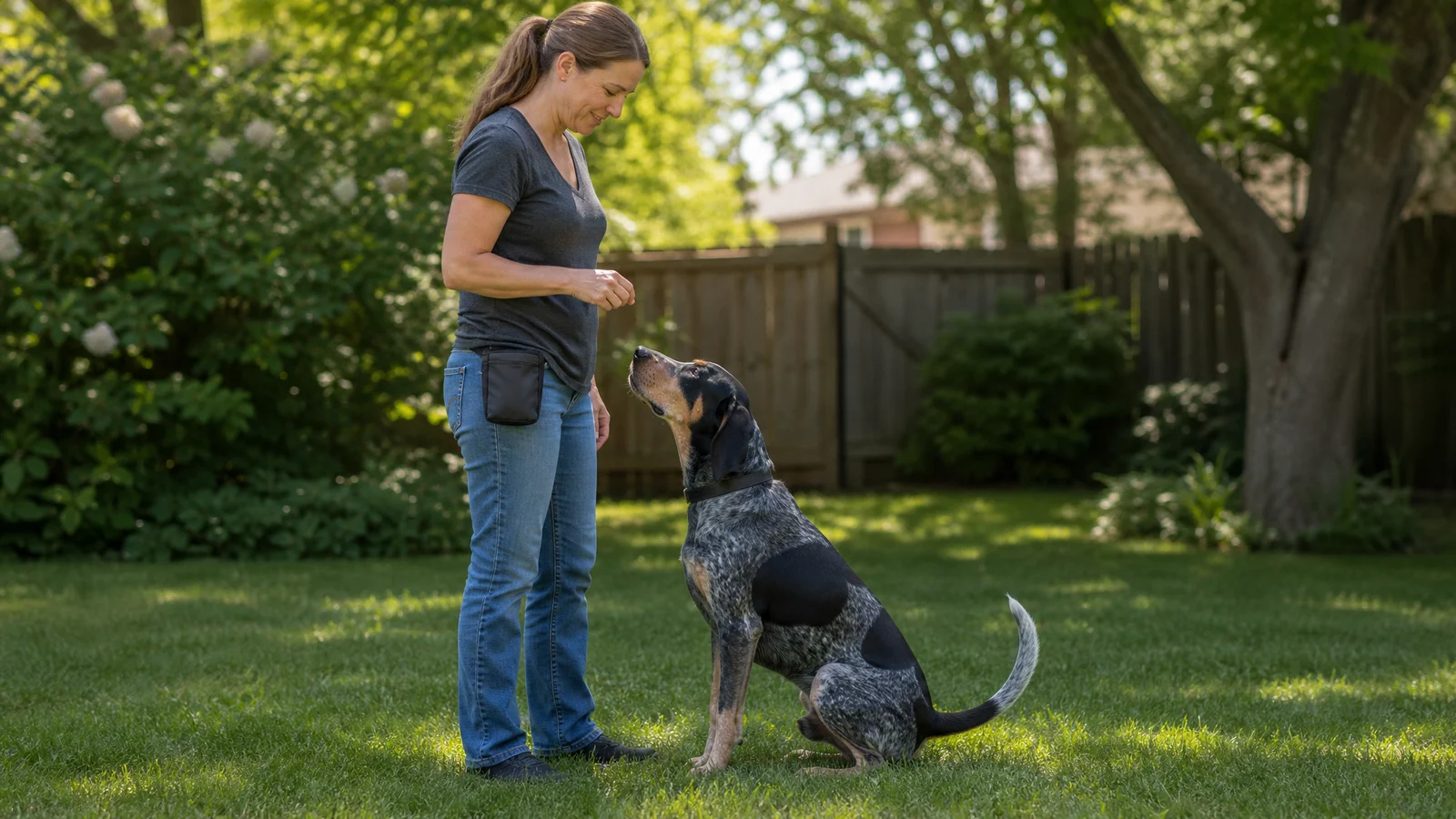
Bluetick Coonhound training works best with brief, treat-based sessions that pay for attention and end before your dog loses interest. The breed is described as devoted, smart and tenacious, with trainability rated 4 of 5, so a clear reward deal earns cooperation where pressure mostly produces a dog who tunes you out.
Smart means a Bluetick works out fast what pays. Tenacious means they repeat it, whether that is a sit or a howl that got your attention. Add a nose built to follow a trail for hours, and anything that competes with scent has to be planned for. We have trained this breed for many years, and that planning is the heart of what we teach.
We'll walk you through reward timing and marker words, then treats that beat a hound's nose, scent-friendly sessions, the first cues in order, fixes for common stalls, and a two-week plan.
Reward Training Basics
A Bluetick who sits at once in the kitchen and stares blankly on the sidewalk has not forgotten the cue. The sidewalk simply paid better. If your dog performs at home and fails outside, the problem is the deal, not the dog's memory. You cannot out-shout a nose, but you can control what pays, when it pays and where you ask.
Early socialization belongs in the foundation, and treats are named alongside it as a useful aid for this breed. Reward calm, curious looks at new people, surfaces and sounds, and let a puppy step away when something feels like too much, in line with advice on rewarding positive or neutral engagement. For the wider picture, see are Blueticks easy to train.
Timing Comes First
If the treat arrives after the dog has already swung toward a smell, you paid for swinging toward the smell. Deliver the reward as the behavior happens, at nose height and beside your leg, so the position itself is what gets paid. A smart hound sorts this out fast, which is good news when your timing is clean and a headache when it is sloppy.
A Marker Word That Sticks
A marker word such as yes pins down the instant your dog does the right thing, even if the food is a second away. Give it meaning first by pairing it with food. Say it, deliver a treat within 3 seconds, and repeat that several times in a calm, quiet place, the same method used for pairing a clicker with food. Once the word reliably predicts a treat, use it for every cue.
Pay for Choices
The tenacious streak helps here. Reward the choices you want, such as a glance back at you, a step away from a smell, or a sit offered with no cue, and the dog repeats them with the single-mindedness they would give a trail. When a choice is hard, like turning away from a squirrel scent, pay far more than usual. If a behavior fades, you are paying too rarely for the effort it costs.
Treats for a Bluetick Coonhound
Some Blueticks ignore plain biscuits but work eagerly for a favorite such as fruit. That fits a breed whose nose does the judging. A treat with little smell loses to the carpet, so aim for small, soft, smelly and quick to swallow, because the dog must finish chewing before the next repetition can start.
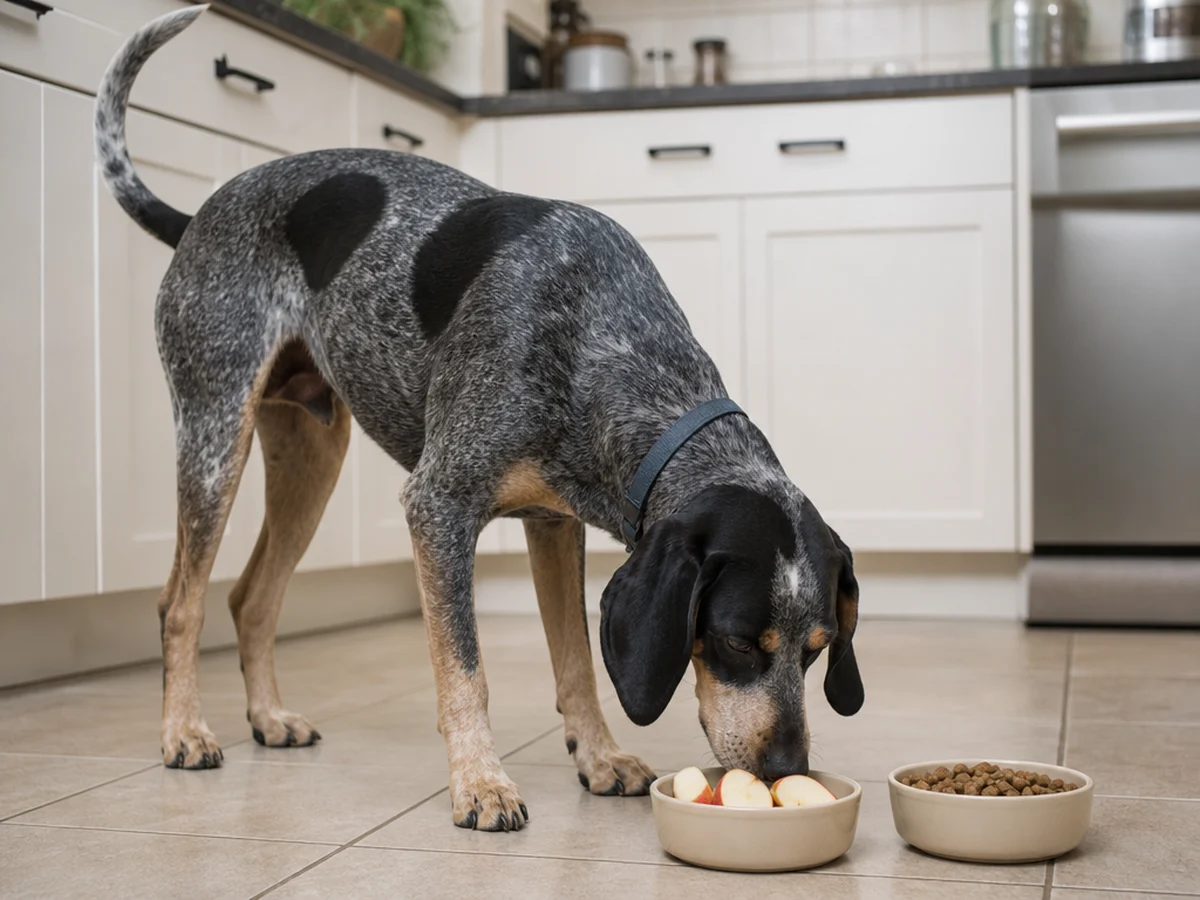
Test several foods in a quiet room before you decide a puppy is unmotivated. If they take a food indoors and refuse it outdoors, the treat is fine and the distraction is too strong. Move farther from whatever is pulling their attention, and the same treat often works again.
Build Treat Tiers
Sort what you find into tiers so the pay matches the job:
- Everyday treats are small, soft and mild, for easy cues in the living room.
- Better treats are smellier or tastier, for new places, longer stays and the first tries at a new cue.
- Jackpot treats are the rare favorite, saved for a hard call away from a distraction or a moment of calm near another dog.
- Life rewards, like a sniff, a door opening or a walk starting, cost nothing and work well on a dog who lives for scent.
Fade Treats Slowly
Once a cue is reliable in several places, pay correct answers less predictably: sometimes food, sometimes a release to sniff, sometimes praise. Make each step small. If accuracy drops, you faded too fast, so pay every time again for a few sessions. Keep the jackpot tier for hard moments permanently, because a hound's nose never stops competing.
This is general information, not a feeding plan. Count training treats as part of your dog's daily food, and check with your veterinarian about amounts, safe treats and any diet questions.
Scent-Driven Training Sessions
A Bluetick walked straight from the car into a new park is usually deaf to treats before the first cue. Start where the nose has little to read, such as a quiet room or a leashed spot in a fenced yard. Open calm, ask for a few easy cues, pay with a release to sniff, and quit after a few minutes while the dog is still keen.
Then let the nose work as the lesson itself. A simple nose work game with smelly treats in open boxes lets them search and reward themselves. If focus collapses mid-session, shorten the next one rather than pushing through.
Bluetick Coonhound Cue Basics
A young Bluetick shows you the raw material for every cue: the head that swings toward a sound, the body that freezes at a smell, the nose that drops to the floor. Teach the cues in this order: name, sit and down, come, then leave it. Each one builds on a habit the dog already has, so you are shaping instincts rather than fighting them.
Name and Focus
Say the name once. The moment the dog looks at you, mark and pay. If the head turn is slow, you are asking in a place that is too busy, so move to a quiet room. Repeating the name teaches that the first call is optional, and a scent hound needs no help treating anything optional as skippable.
Sit and Down
Lure the sit by moving a treat over the nose and slightly back, then mark and reward the moment the rear touches the floor. Lure the down from the sit the same way. Once down is steady, pay for longer stretches on a mat. Blueticks are happy snoozing at your feet, so a mat settle is an easy habit to build and a useful off switch after a sniffy walk.
Coming When Called
A strong prey drive and a nose that can carry a dog out of earshot make this the cue to protect. Practice only inside a secure fence or on a leash or trailing line, and climb a ladder of difficulty:
- In a hallway, say the cue once in a bright voice and mark and pay the second the dog arrives.
- Repeat from room to room, so the word means "come find me" wherever you are.
- Take it to a fenced yard with a light line attached to a harness, at a boring time of day.
- Add a distraction at a distance, such as a strong-smelling patch of lawn, and use your best treat.
- After paying, sometimes release the dog back to sniffing, so arriving never ends the fun.
If the dog does not turn, you started too far away or the smell was too strong. Step back one rung and rebuild.
Leave It
Close your fist around a treat and let the dog sniff and nudge your knuckles. The moment they back off, mark and pay from your other hand. Progress to a treat on the floor under your hand, then uncovered while the dog is on a leash. With this breed's drive, leave it is a safety cue, so practice with boring items first and add tempting ones slowly.
Training Setbacks and Fixes
When a session stalls, resist swapping treats first and find out what the dog is attending to. Most Bluetick stalls trace to a smell, another dog or a bored mind, and each has its own fix. Work out the cause, then change the setup rather than adding volume.
Tuning Out on a Scent or a Dog
If a Bluetick ignores treats near another dog or a passing person, the reward is not weak. The dog is locked on. Some owners describe a fixed stare that no treat can break, and some report a dog who goes wild around other dogs yet stays gentle with people. The breed standard asks for a hospitable temperament, so this is arousal rather than ill will.
Common advice says to be more exciting than the distraction. With a scent hound that often fails, because you cannot out-excite a smell or a fixation. Start far enough away that the dog can still eat and think. Pay the first moment they look back at you after noticing the other dog, and shave the distance down over many sessions. If they refuse food entirely, you are still too close.
Baying, Pulling and Selective Hearing
If the dog bays when left or bored, ask what job they lack. Underemployed coonhounds can develop loud, mournful vocalizing. Add slow, sniff-focused walks, which some owners find leave a Bluetick calmer at home than running does, plus nose games and a chew. Reward quiet moments, and wait for a pause before opening the door so noise never works as a key.
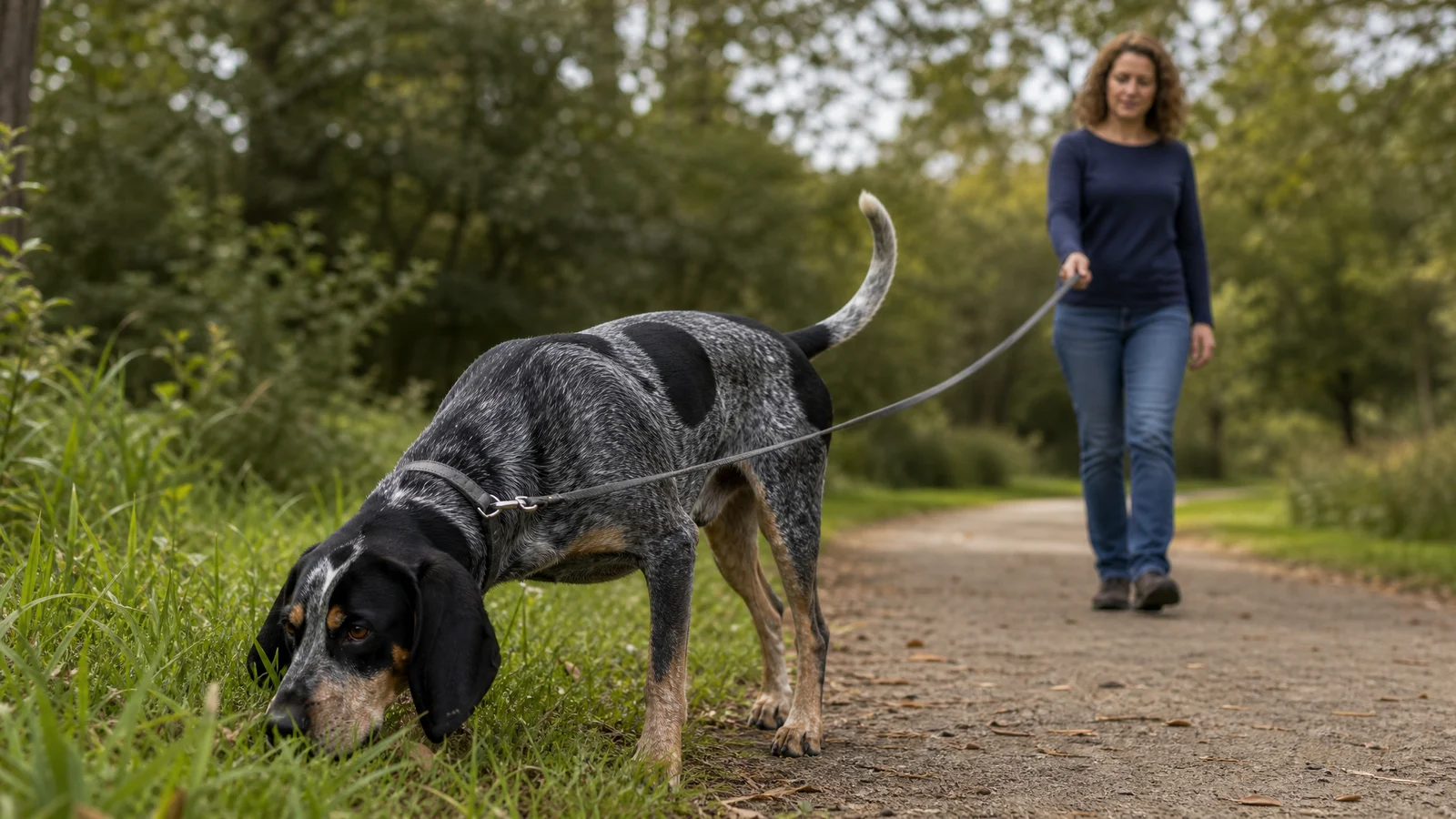
If the dog pulls, they are following a smell, and pulling works whenever it gets them there. Stop when the leash tightens, pay the moment it slackens, and cue regular sniff breaks so staying close earns the sniff. If the dog hears you but does not act, cue once, lower the difficulty and pay for the first quick response.
Some owners find this breed very hard to train, especially an adult adopted with years of settled habits. Progress then comes in smaller steps, and a reward-based trainer can help in person. Regular veterinary visits matter too, since pain or poor hearing can look like stubbornness.
Two Weeks to Steadier Training
A Bluetick who earns a treat, a sniff and a word of praise for the same small act again and again starts to offer that act on their own. Use that pattern across the next two weeks, with a couple of short sessions a day and one slow sniff walk. Week one covers name, sit and focus. Week two covers come and leave it. Adjust the pace to your dog.
- Days one to three: charge the marker word, then pay for the name and for eye contact in a quiet room.
- Days four to seven: add sit and down, finish with a mat settle, and take a slow leashed sniff walk, staying well away from other dogs.
- Days eight to ten: begin come indoors, then on a light line in a fenced space, paying your best treat for each arrival.
- Days eleven to fourteen: add leave it, try each cue in one new place at low distraction, and book a regular veterinary visit.
Later, formal obedience, tracking and agility give this hound structured outlets, and our Bluetick puppy training timeline shows how these skills grow with age. The stubborn streak is real, but it is patient and rewardable. Steady, small, paid sessions outlast it, and consistent little rewards win over the nose.
 Training basicsHow to Leash Train a Bluetick Coonhound Who Pulls
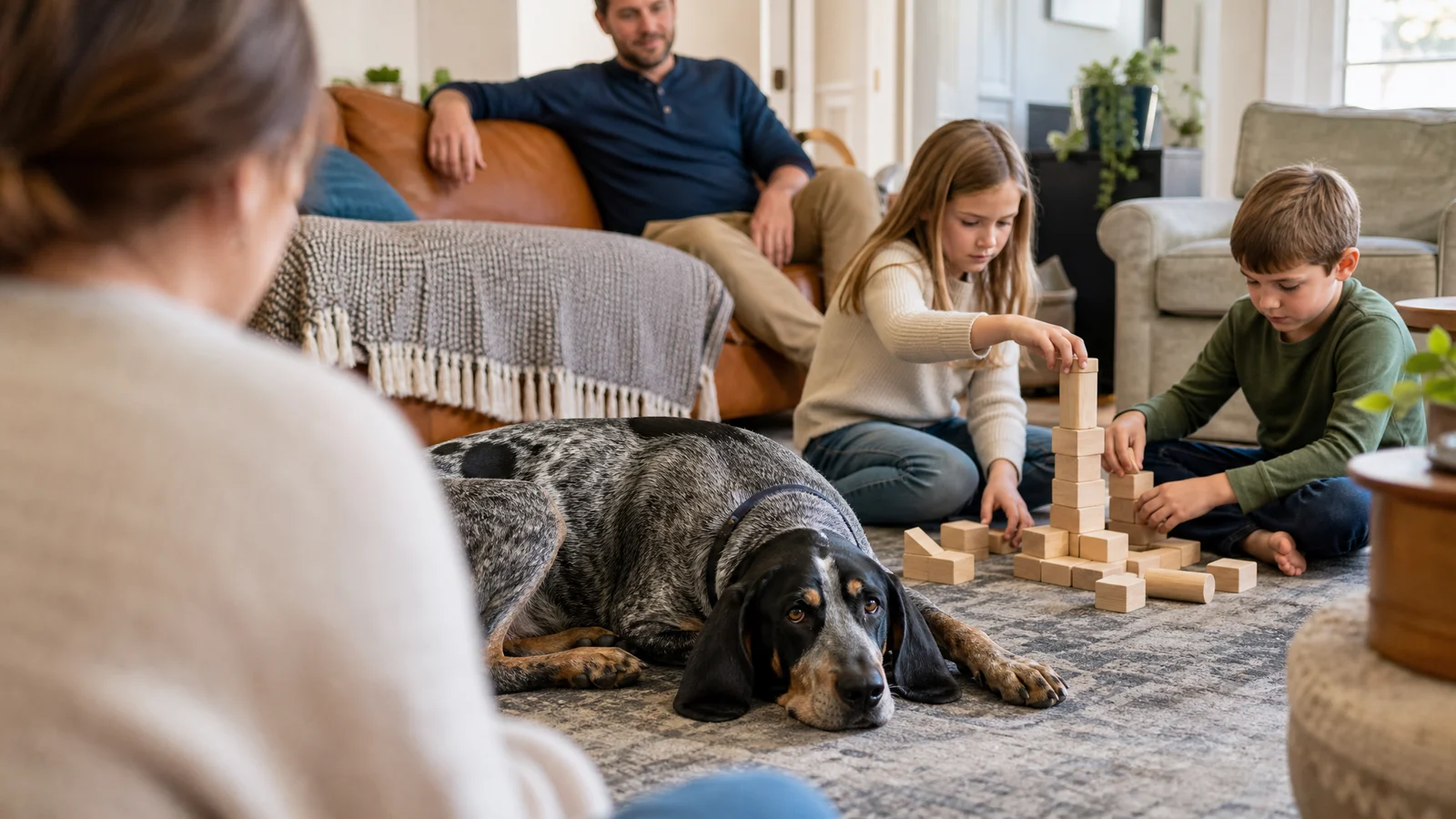 BehaviorIs a Bluetick Coonhound a Good Family Dog?
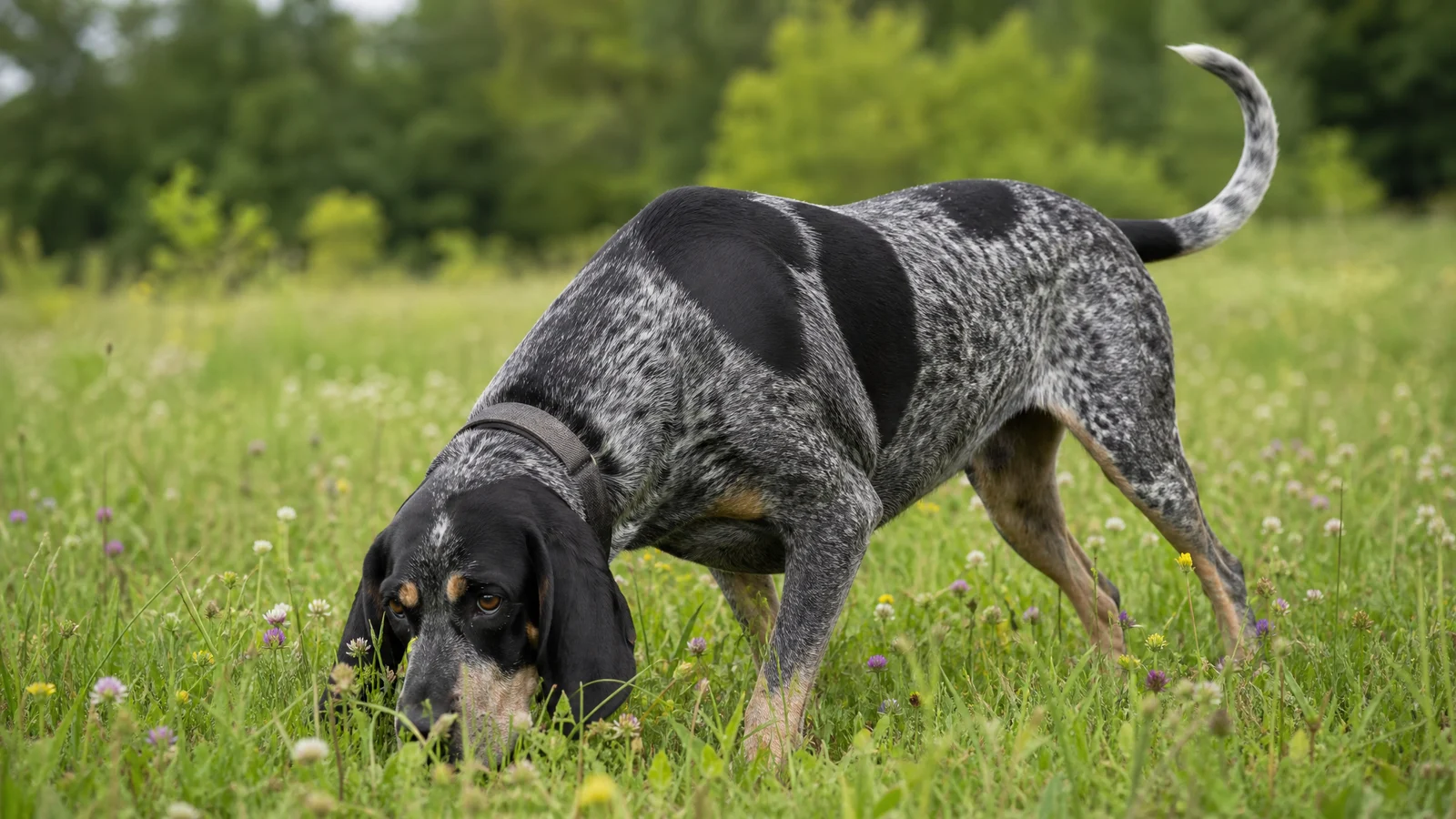 BehaviorSelective Hearing in Bluetick Coonhounds: Making Listening Pay