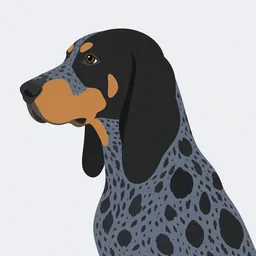
 Bluetick
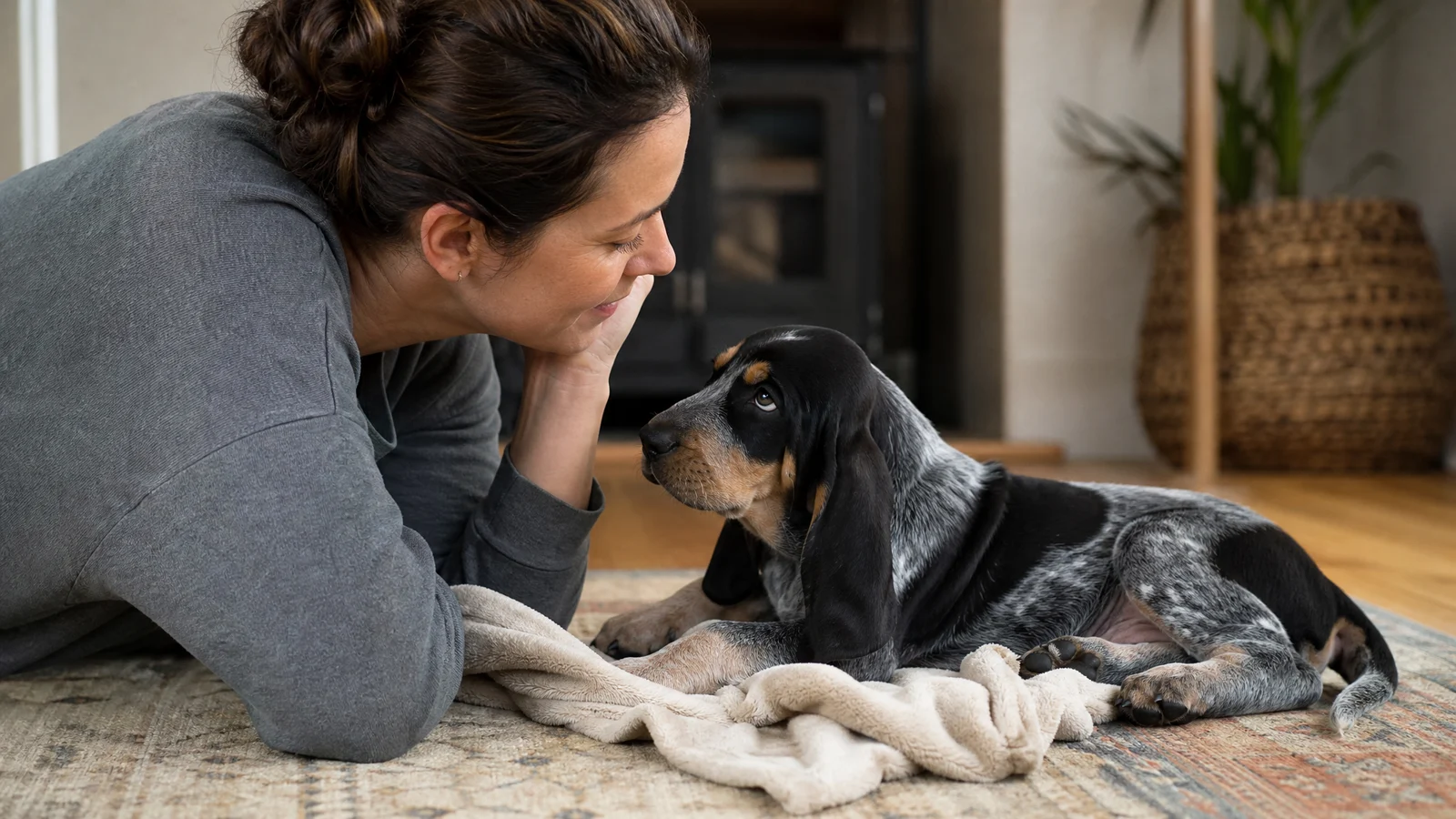
A Bluetick Coonhound puppy is a great companion for an active family, and early socialization and treats help training along. Owners report the fine print: a nose-driven, vocal, slow-to-mature hound whose focus comes and goes, and who may need weeks to warm up before play and bonding show. Adults reach 45 to 80 pounds, so every habit you shape now is one you will live with at full size.
Get this stretch right and you gain an affectionate hound who naps at your feet. Get it wrong and you own a strong, loud dog who follows their nose through every gate. We have trained this breed for many years, and in this article, we'll go through the crate setup, treat ranking, socialization, first cues, puppy class and off-leash decisions in the order you will face them.
Crate and Sleep Setup for Puppy Training
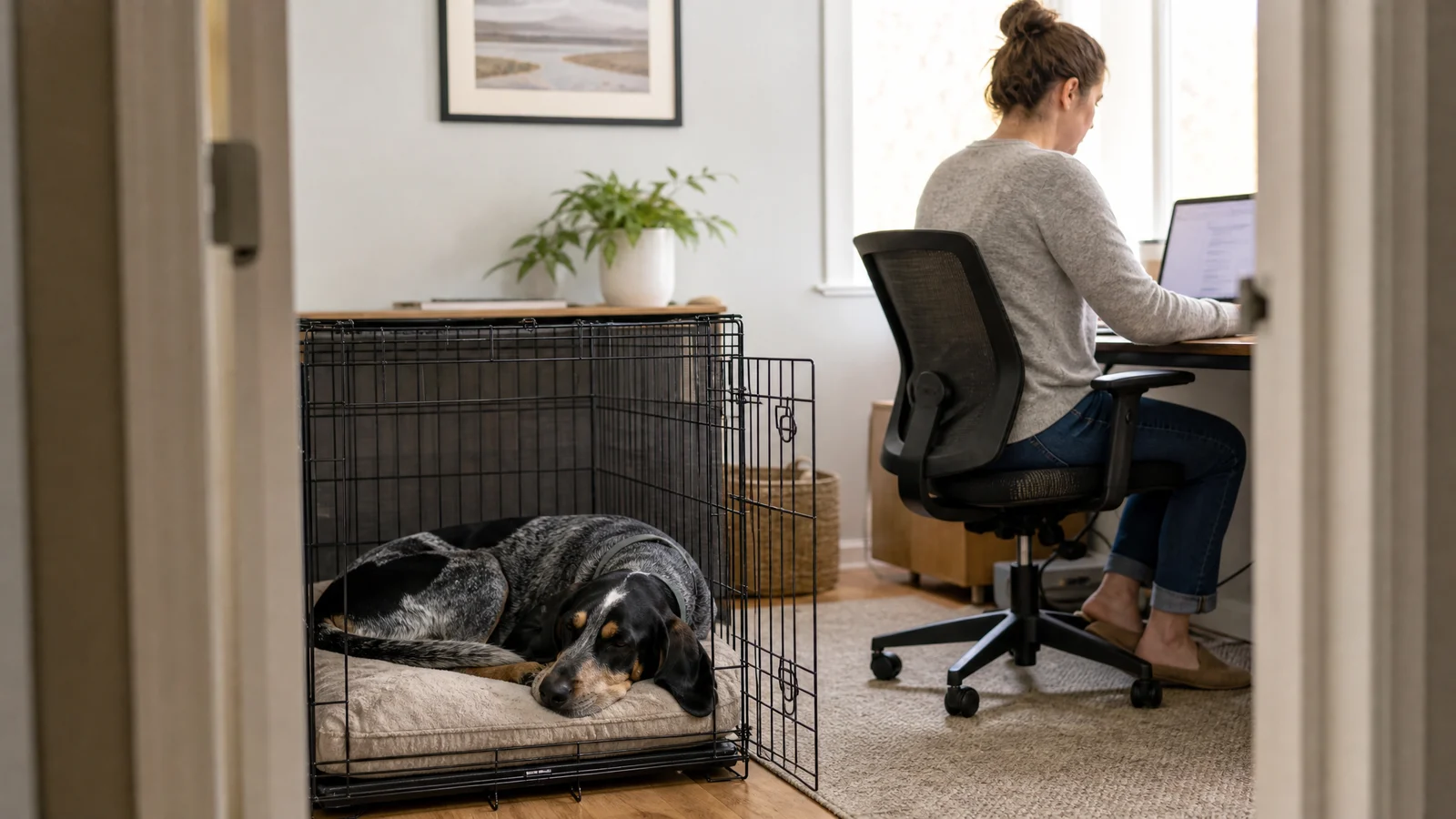
Settle where your puppy sleeps before they come through the door, because the first night sets the pattern. Put the crate in your bedroom or just outside it so your puppy hears you and relaxes. Some owners see a puppy resting quietly in the crate within days, and when a puppy sneaks around and chews at night, overnight crating is a sensible management step. Make the crate the best spot in the house and the rest follows.
- Feed meals inside the crate with the door open, and toss in a treat whenever your puppy wanders in on their own.
- Close the door for short stretches while you are home, then work up to leaving the room. Pay for quiet moments, because a hound's voice carries and noise that earns attention gets repeated.
- Use a gated pen for daytime hours when you cannot watch, stocked with chews and a bed so it feels like a place to rest.
- Plan potty trips after waking, meals and play, plus a last trip before bed.
Your choice: a crate beside your bed at night, a gated pen by day, and a door that stays open whenever you are home to supervise.
Puppy Training Treats That Compete With Scent
Your treat has to beat the nose, and the nose often wins. Reward-based training follows one loop of cue, marker and reward: you ask, you say the marker word at the instant of success, and you pay. Many owners find a Bluetick loses interest in food, walks and potty cues whenever another dog or person is in view, and treat preferences vary, so test several foods. So rank your rewards before you need them.
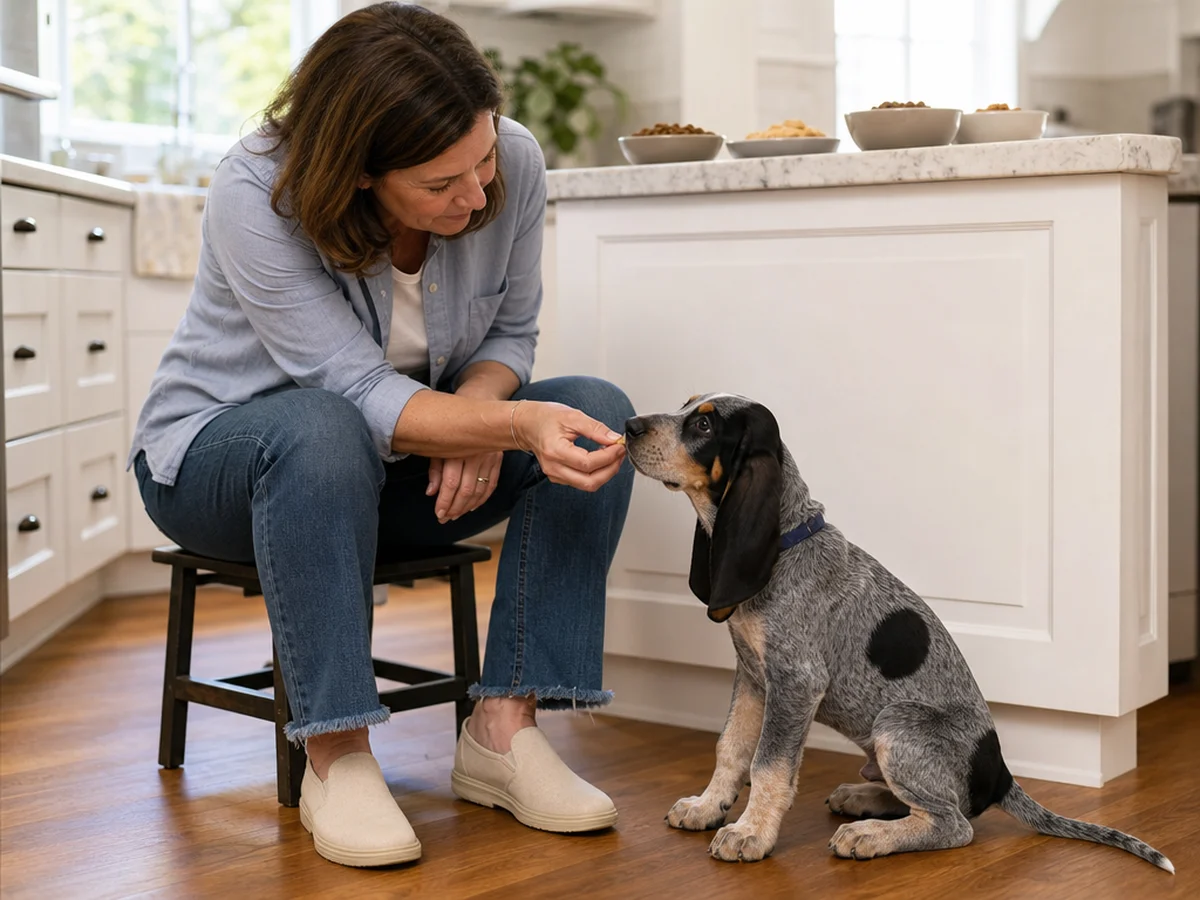
Sort what your puppy will work for into three tiers, and save the best tier for the hardest settings.
| Tier | Food | Where you use it |
|---|---|---|
| Everyday | Part of their regular meal | Quiet rooms at home |
| Strong | Soft, smelly morsels | Yard and quiet streets |
| Jackpot | The rarest food they adore, sometimes fruit or another odd pick | Near other dogs, people and fresh scent |
Audition foods over several days and watch what your puppy truly works for, since picky hounds sometimes go wild for an unusual treat. If your puppy refuses even a jackpot, you are too close to the distraction. Back up until they can think, pay there, and close the gap gradually over many sessions.
Your choice: three tiers, with the jackpot saved for work around distractions and distance treated as part of the payment.
Bluetick Coonhound Puppy Socialization Plan for the Early Weeks at Home
Socialization means calm exposure, not a flood. Reward calm, curious engagement with praise, play and treats, let your puppy back away when unsure, and move at their pace. Some Bluetick puppies need weeks to warm up in a new home, with play and bonding appearing a little more each day, so do not read an aloof first month as a problem.
Other dogs are the tricky part. Some Blueticks fixate on another dog and become impossible to redirect, even for a treat, so if your puppy does, start far away and close the gap gradually. Pay for each glance at the dog followed by a look back at you. People can usually come closer sooner, as long as strangers let your puppy approach first.
Commit to this list every week during the early weeks at home:
- Meet a new calm adult who waits for your puppy to approach.
- Cross a new surface such as gravel, tile or a wobbly board, and pay for bravery.
- Play an everyday sound at low volume and pay while your puppy stays relaxed.
- Watch a calm dog from a long distance and reward looking back at you.
- Take a short, quiet outing, such as a bench at the edge of a park.
Your choice: put that list on the fridge and tick off every item each week.
Choosing Which Puppy Training Cues Come First
Weigh the four starter skills by what each one buys you. Name response comes first because every other cue starts with your puppy looking at you. Settle comes second, since a hound who can switch off is easier to live with and to train. Sit is the easy win that builds your marker habit.
Recall comes last and stays at close range at first, because a recall you protect is one you can use later. Bluetick puppies often progress slowly but steadily, sometimes faster than expected on certain skills, so skip the comparison charts.
- Name: say it once, then pay the moment your puppy turns toward you.
- Settle: reward lying down on a mat, and pay again for staying there calmly.
- Sit: lure with a treat, mark the sit, and pay right away.
- Recall: call only toward good things, first indoors, then in the yard, with a jackpot at the end.
The step-by-step Bluetick rewards guide covers the mechanics of each. Your choice: name, settle, sit, recall, in that order over the first weeks at home, in short sessions that stop while your puppy still wants more.
Puppy Class Without Overloading Your Bluetick Coonhound
Ask your veterinarian when your puppy is ready for group settings. Pick a reward-based class run as a calm, small-group session, where treats, praise and play build good feelings about learning. A Bluetick who warms up slowly yet can dig in their heels needs a quiet room with space between dogs, not a free-for-all. Ask to watch a session first, and look for small groups and an instructor who lets puppies take breaks.
Overstimulation shows up as refusing treats, a fixed stare at another puppy, frantic mouthing or heavy panting. When you see it, turn your puppy away, step back, and give them a break in the hall or car. Rejoin only after they take food again, and end the night early if they do not.
Your choice: a small reward-based class where you sit at the edge, work at a distance and leave early without apology.
Puppy Training Through Bluetick Coonhound Adolescence
As your puppy moves into adolescence, expect some selective hearing and a scent pull that feels stronger. A recall that worked in the kitchen may vanish outside. That fits what their temperament means in practice: affectionate at home, intensely focused on a trail. Should you tighten up or repeat the basics? Repeat them. Go back to short sessions, raise the value of your rewards, and shrink the distance to distractions.
Keep exercise sensible while the body finishes growing. Many owners find sniff-focused walks leave a hound calm at home, while hard running can leave them harder to settle. Favor free play on soft ground and sniffing walks over long, repetitive runs, build up gradually, and keep regular vet visits so your veterinarian can check growth.
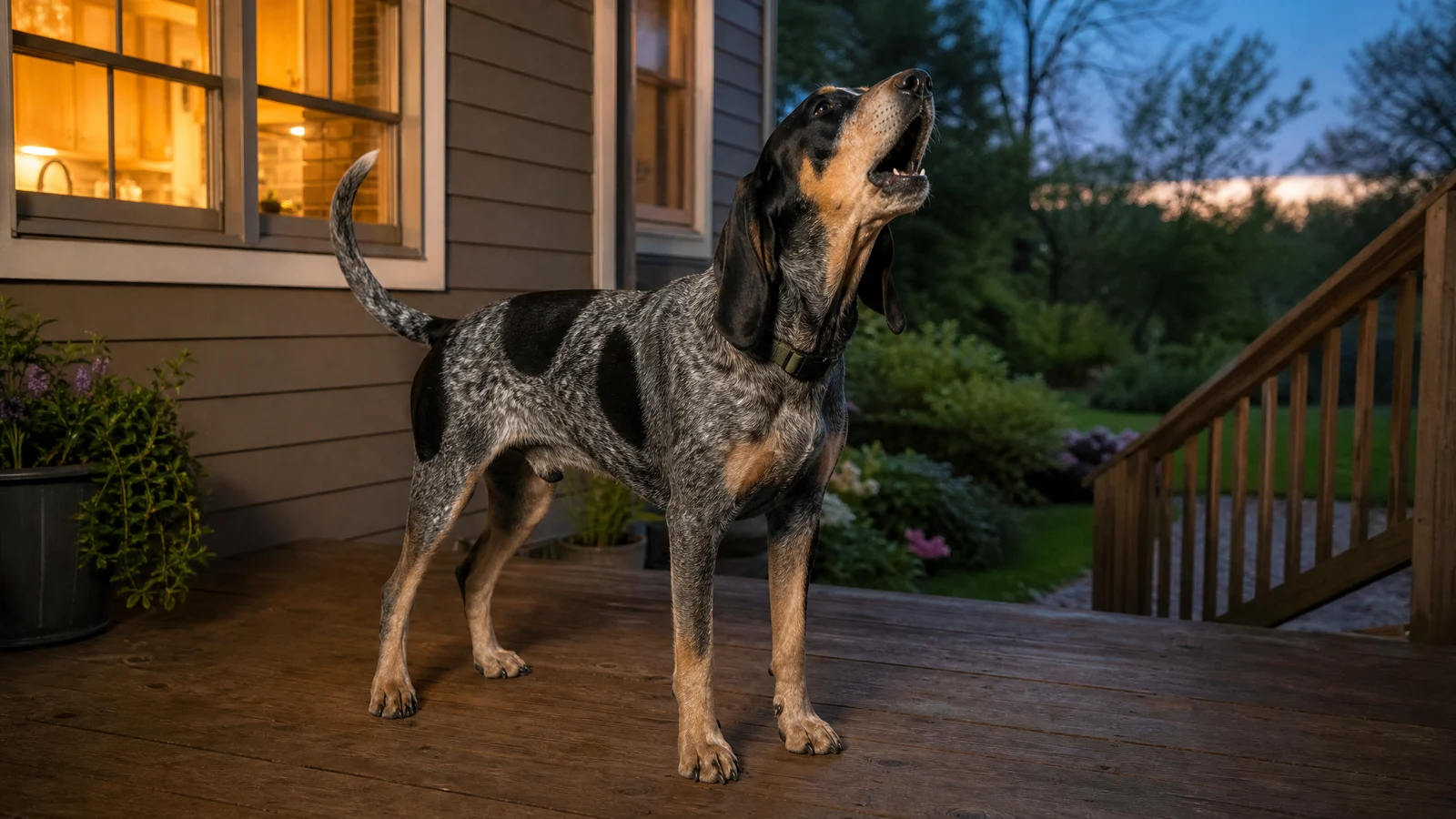
Give the nose a job before your teenager invents one. Hide treats around the yard, lay scent trails, or try tracking or agility. Underemployed hounds often turn to loud, mournful vocalizing.
Your plan: the same cues, the same rewards and the same household rules every day, with no new demands until the old ones come back reliably.
Deciding on Off-Leash Freedom After Puppy Training
Common advice says a dog with a good recall can earn off-leash trust. We disagree for this breed. A recall that works at home says little about a recall against a fresh trail, and a scent hound with strong prey drive can go deaf to you in seconds. Build freedom in steps, and move up only after your puppy succeeds many times at the current one.
- Start in a fenced yard with sturdy gates and checked latches, with free sniffing and play.
- Move to a long line in open spaces without distractions, paying for every check-in.
- Add real distractions, such as another dog far away, and use jackpot rewards.
- Repeat in a securely fenced area away from other dogs.
Your choice: the fenced yard and the long line are your Bluetick's freedom levels, and unfenced off-leash time stays off the table. Check local leash laws too, since rules vary.
Long-Term Bluetick Coonhound Manners Need Steady Upkeep
Plan for a hound who matures slowly. With a life expectancy of 11 to 12 years, most of your time together is adulthood, and the habits you set now carry through it. Habits are easier to shape in a puppy than to change in an adult, so expect a longer, more patient process with an adopted adult.
Expect the nose and voice to stay. The breed standard describes a free tonguer on trail, so shape the voice with rewards for quiet and daily outlets, but do not expect it to vanish. Expect the nose to stay strong as your dog matures. New lessons give way to upkeep: short practice sessions, a sniffing walk, a long line where needed and tight fences.
If training stalls, a reward-based professional can help, and some owners report lasting results. Even then, the results depend on practice at home. Steady, rewarded habits are what carry your Bluetick through adulthood.
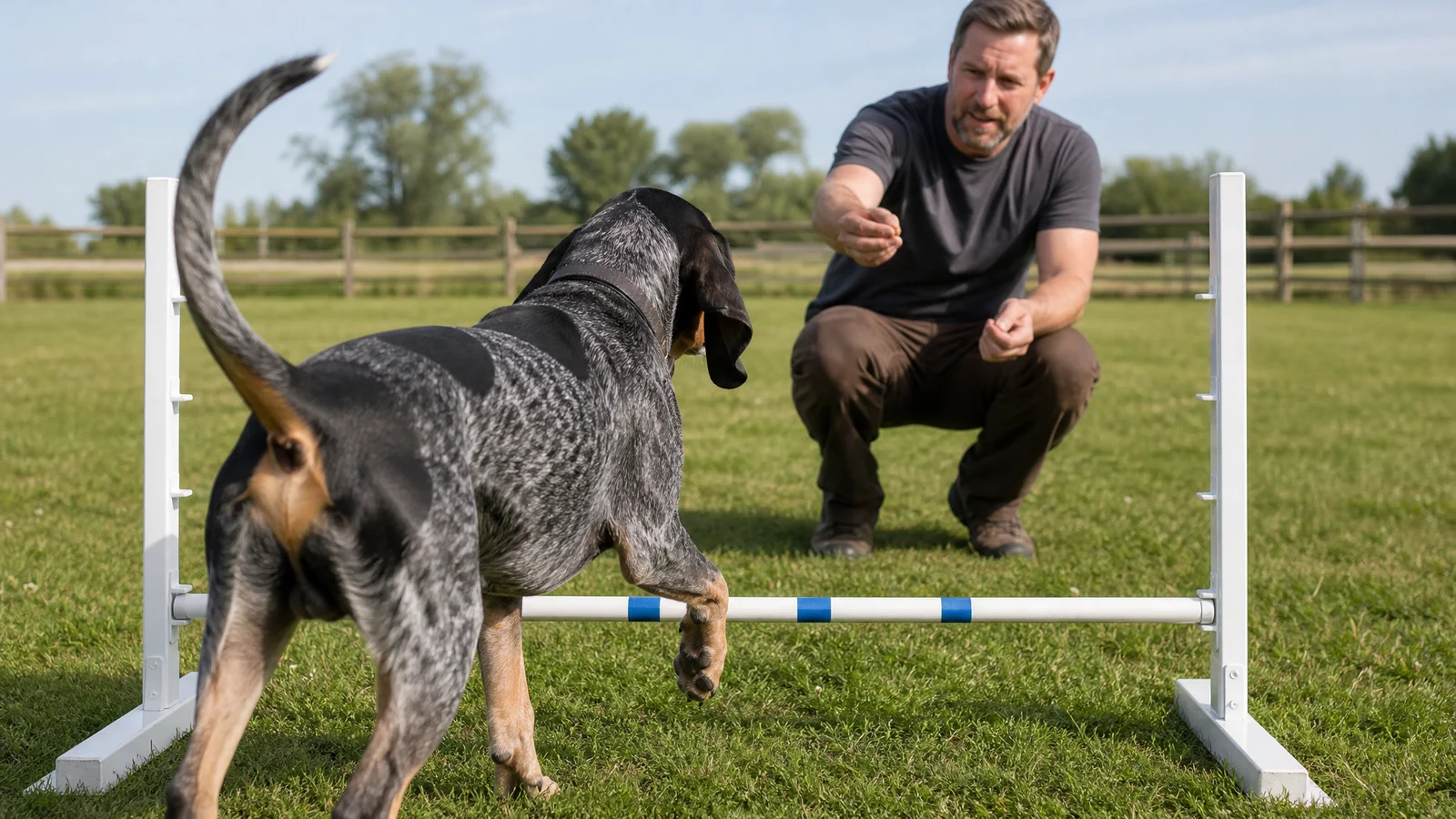 Exercise and jobsBluetick Coonhound Sports and Jobs: Agility, Tracking and More
 BehaviorBluetick Coonhound Howling: Why They Bay and How to Quiet Them
 Training basicsCrate Training a Bluetick Coonhound and Preventing Separation Anxiety