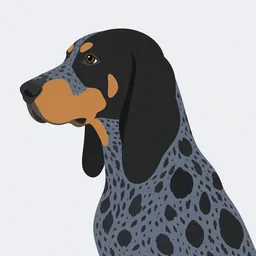
 Bluetick
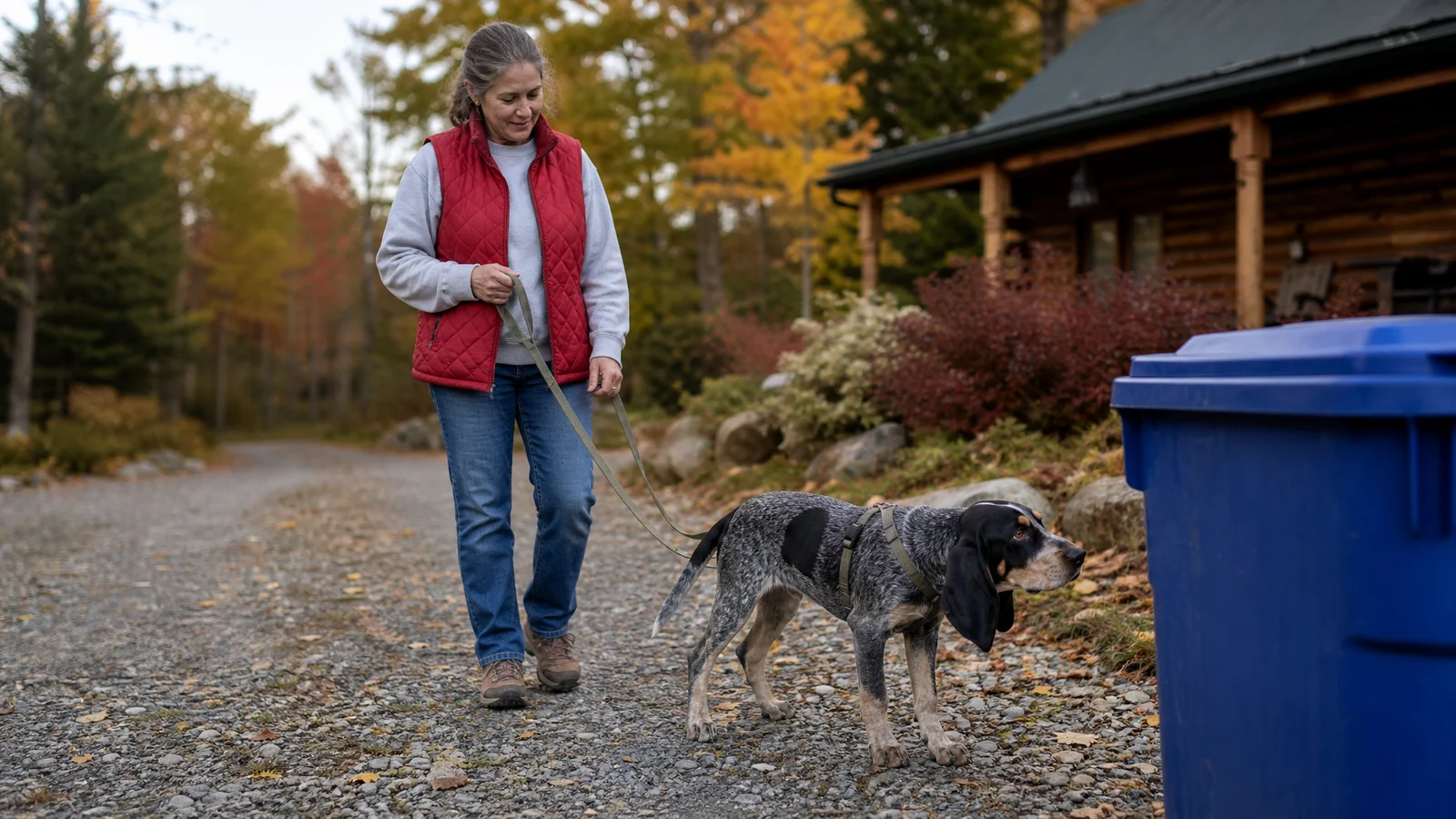
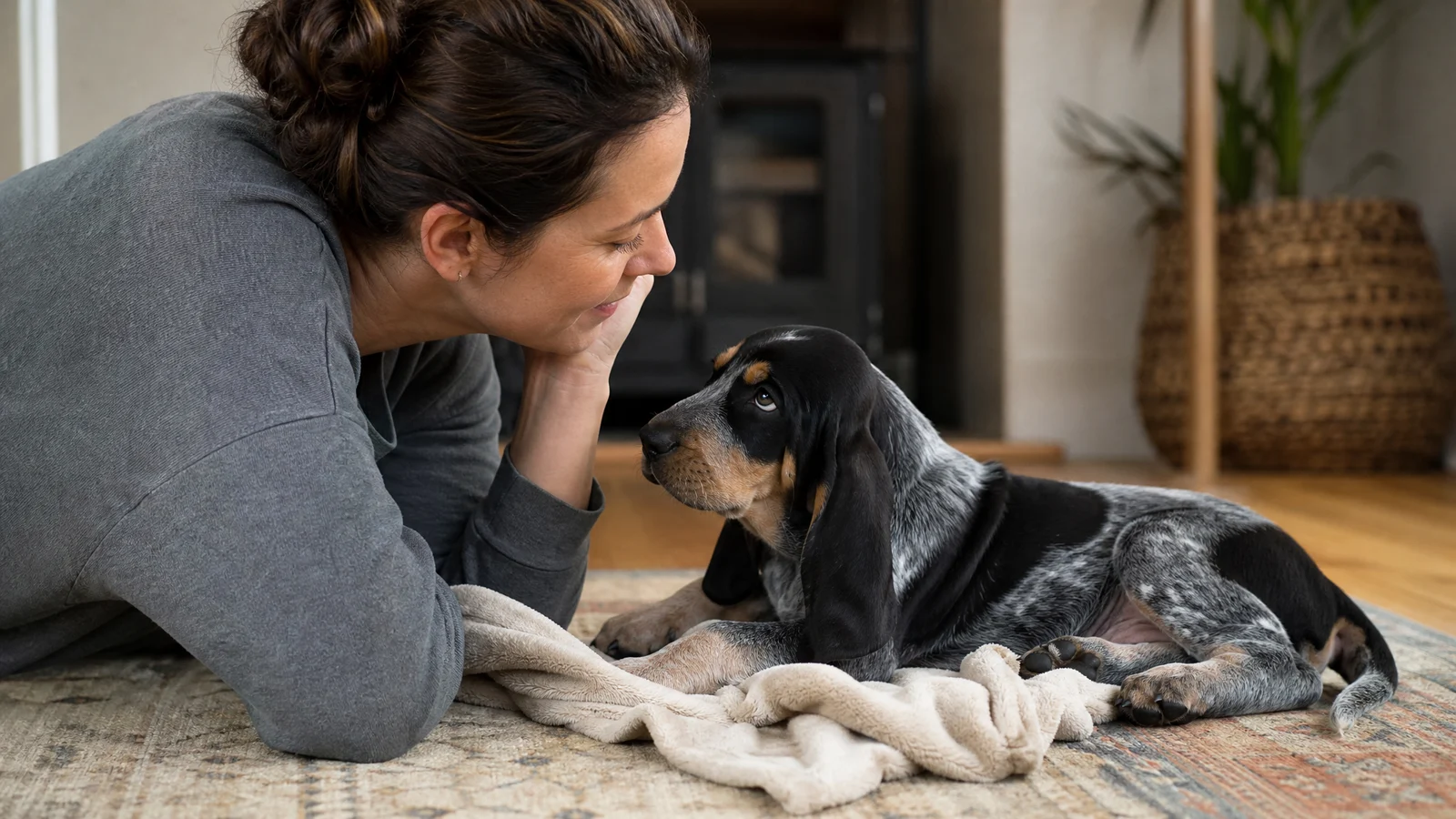
A Bluetick is friendly with other dogs and a little more ambivalent with strangers, and these months are when that mix can start to show up in how a puppy meets the world, whether that is a visitor at the door, a neighbor's dog or a new kind of floor. Owners who spot the first signs early have more choices than owners who spot them late.
Add an energetic, trainable hound with a nose that argues with every cue, and the usual wobble of this age can look bigger than it is. Below, the reaction to new things comes first, because it is the change you can least afford to miss.
How a Bluetick Coonhound Puppy Reads Something New
A puppy who hangs back from a new person is not doing anything this breed would not do. What matters is the pattern. Does your puppy look, settle and come back for a treat, or do they stiffen and try to leave?
The American Animal Hospital Association cautions in its life-stage guidelines that exposure without evaluating the puppy's response may increase problem behaviors through sensitization instead of positive socialization, and that puppies generally do not "outgrow" their problems. That makes your puppy's reaction, not the number of new things seen, the measure of a good outing.
So keep meetings short and let your puppy set the distance. Pay for looking, for a loose body and for sniffing the air, and end the meeting while it is still going well. Ask the other person to stand still and let your puppy come over or not, without reaching over the puppy's head. Our Bluetick puppy socialization guide lays out people, dogs and places in order.
Timing is one reason we run meetings this way. The Animal Humane Society notes that the sensitive period of socialization typically ends around 4-5 months and that, starting around 5 months, a dog may start to interpret anything unfamiliar as a threat. Its answer is to take the dog out of the situation and ask for a different behavior, such as sit, rather than punish the reaction.
Signs Worth Reading During a Meeting
These are the signs we use to judge a meeting, and they come from your puppy's body, not from what the stranger does or how the greeting looks to the people watching it:
- Keep going: a loose body, a look back at you, a sniff of the air and a willing treat.
- Add distance: a stiff body, a turned head, hiding behind your legs or any try at leaving.
- Call it a day: barking, lunging or bolting away from what your puppy sees.
Whichever line your puppy lands on, finish with something they did well and pay for it, so the next meeting starts from a point you can repeat instead of one you have to repair.
Puppy Freedoms to Hold Back Until a Bluetick Coonhound Matures
Watching reactions this closely makes the case for leaving a few freedoms on the shelf for now. Crowds and dog-heavy outings come first, dog parks included, since a puppy there cannot choose who comes over. In a busy place it is hard to see how your puppy is responding, and a quiet meeting you can watch gives you better information than a lively one you cannot.
Off-leash freedom in open places comes next. Blueticks have a strong prey drive, and a recall that works in the living room is a long way from one that works in a field, so the long line stays on wherever scent could win. We lean toward small, dull introductions and a long line for now, and the Bluetick puppy training timeline shows how the calendar around this stage fits together.
Keep regular vet visits on the calendar, and mention it to your vet if your puppy's reactions change suddenly or seem out of proportion to what happened, since a puppy who suddenly hides or lunges may need more than training.
Two Routine Snags in a Puppy's Day
Both of these tend to turn up once outings become part of the daily routine, and neither needs a new method, only a small change to something you already do. That is why the answers stay short.
How Do I Handle a Leash-Chewing Puppy?
Leash chewing is often spare energy or excitement looking for somewhere to go. Stop walking, stand still and wait until the mouth lets go, then pay and walk on, so letting go is what moves the walk forward. If it keeps happening, ask for a few paid steps of loose walking at your side before the next stretch.
Can My Puppy Skip the Night Trip Yet?
VCA Animal Hospitals says that at 4 months a puppy may still need to go out every 4 hours or so, and that as they approach 6 months you may find your puppy is finally able to make it through the night without a potty break.
Let your puppy's own pattern, not a date, decide when to drop the trip, and keep the schedule in our Bluetick potty training guide steady until then. If your puppy still cannot hold it, or the pattern changes suddenly, ask your vet.
Why a Puppy's Known Cues May Seem to Vanish
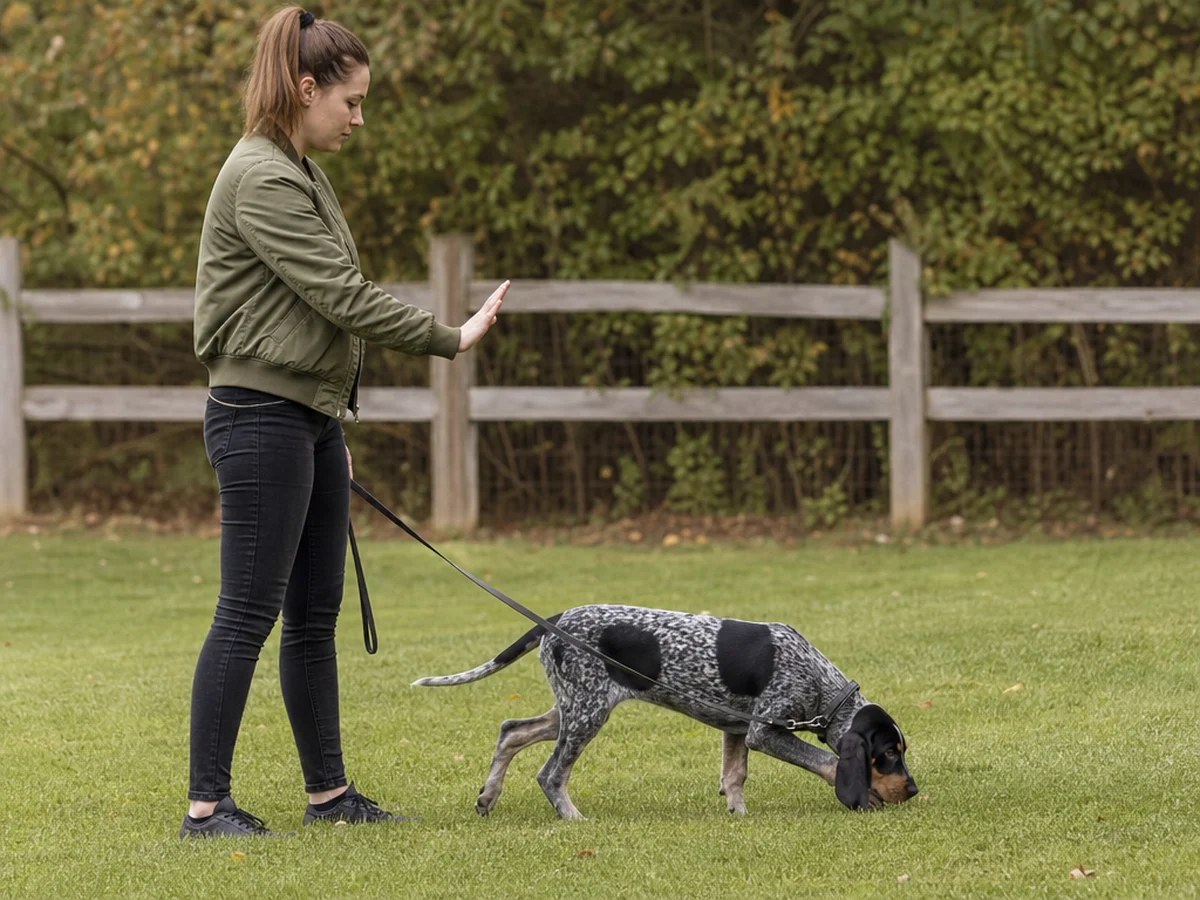
Known cues are the other thing these months test, and with a scent hound the trouble often has a smell attached. A sit that was easy in the hallway has to compete with everything the yard has been saying since morning.
That is ordinary enough that Cornell's veterinary college expects it: most puppies hit adolescence around 6 months old, but it can start later, and hormones and lack of self-control may have made them "forget" what they knew. So we treat these weeks as a time to ask for easy versions of old cues and to pay quickly when they come.
As people who live with scent hounds, we also let a short sniff be part of the pay. Mark the cue, hand over the treat, then give your puppy a moment at the spot that was pulling at them. That keeps the nose and the cue on the same side, and our Bluetick recall training and Bluetick leash training guides carry the long line and loose-leash steps so this page does not have to.
If a cue still fails after you have made it easier, the spot is probably too busy for it, so move somewhere quieter instead of asking again, because repeating a cue teaches your puppy that the first ask is optional.
What Your Puppy Needs First in a Crowded Week
When the week gets crowded, two things deserve your time before anything else. The first is one short, quiet meeting with something new, at a distance your puppy can handle, because it is the only way to learn how this particular puppy is taking the world right now. The second is one easy cue paid with a sniff, because a Bluetick who finds that listening pays in the currency they care about most keeps offering it.
If only one of them happens, make it the meeting. A cue can be asked for again tomorrow, but you can only read a reaction while it is happening.
 Puppy trainingBluetick Coonhound Puppy at 3 to 4 Months: Teething and Mouthing
 Training basicsAre Bluetick Coonhounds Easy to Train? What Their Temperament Means
 Puppy trainingBluetick Coonhound Puppy Training Timeline: 8 Weeks to 2 Years