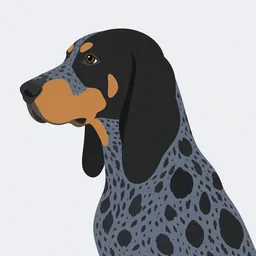
 Bluetick
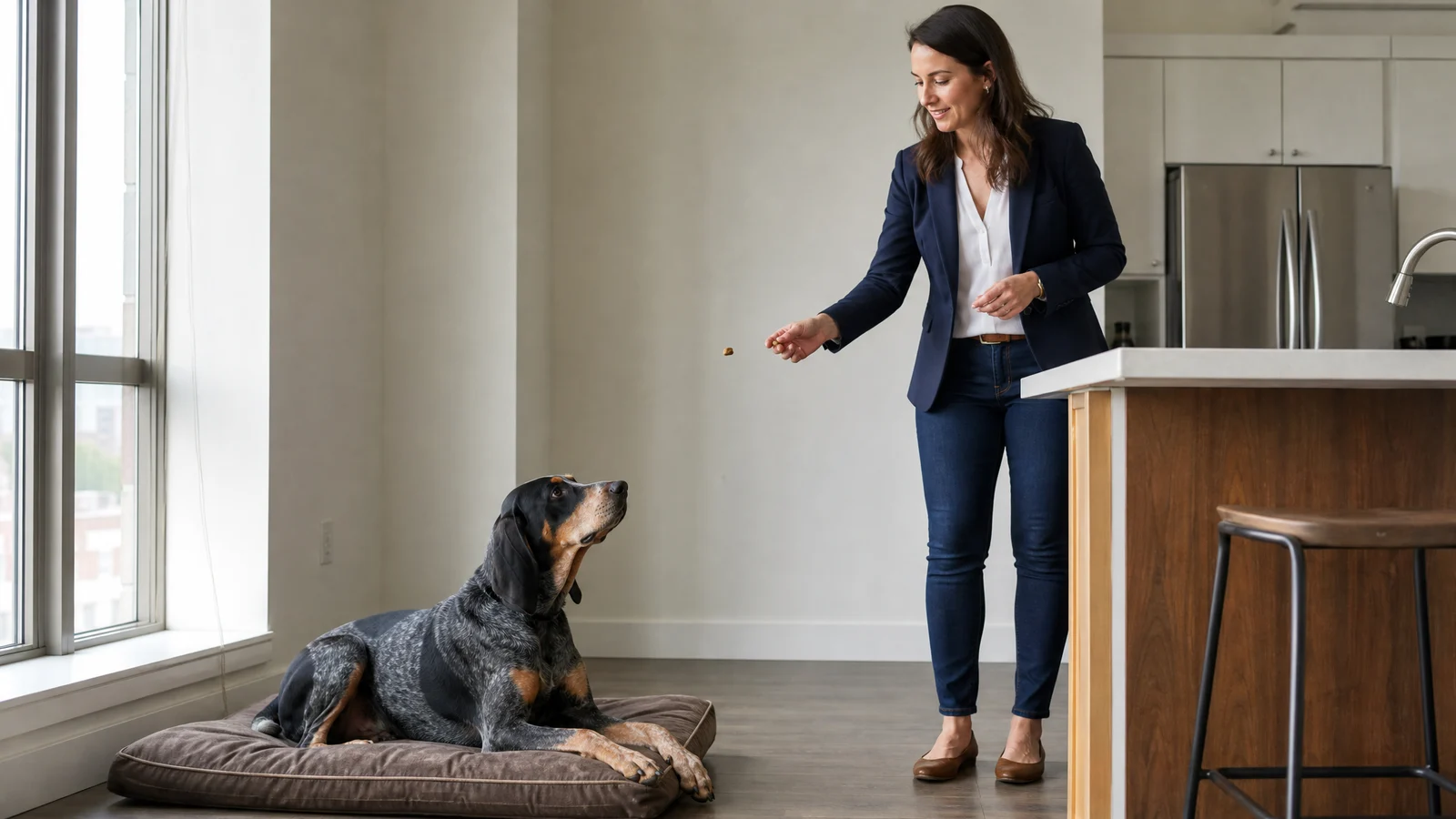
How long until a Bluetick Coonhound stops baying at every footstep in the hallway? Dogs vary, but plan on several days for a quiet cue to start clicking, several weeks of steady practice before hallway noise loses its grip, and patience through adolescence into adulthood, when the habits you rewarded early finally hold up in busy places.
The timeline matters because Blueticks rate Barking Level 4 of 5 and Energy 4 of 5, and their baying, bawling, chopping voice can be cacophonous to some ears, though coon hunters call it the music of the night. Apartment walls turn that glorious trait into a neighbor problem fast. Handled well, the same hound is a sweet, affectionate roommate who happily snoozes at your feet.
This article looks at training a Bluetick Coonhound for apartment life one symptom at a time, so you can match what you hear to its cause and start a reward-based fix this week.
Training Quiet Around Hallway Noises
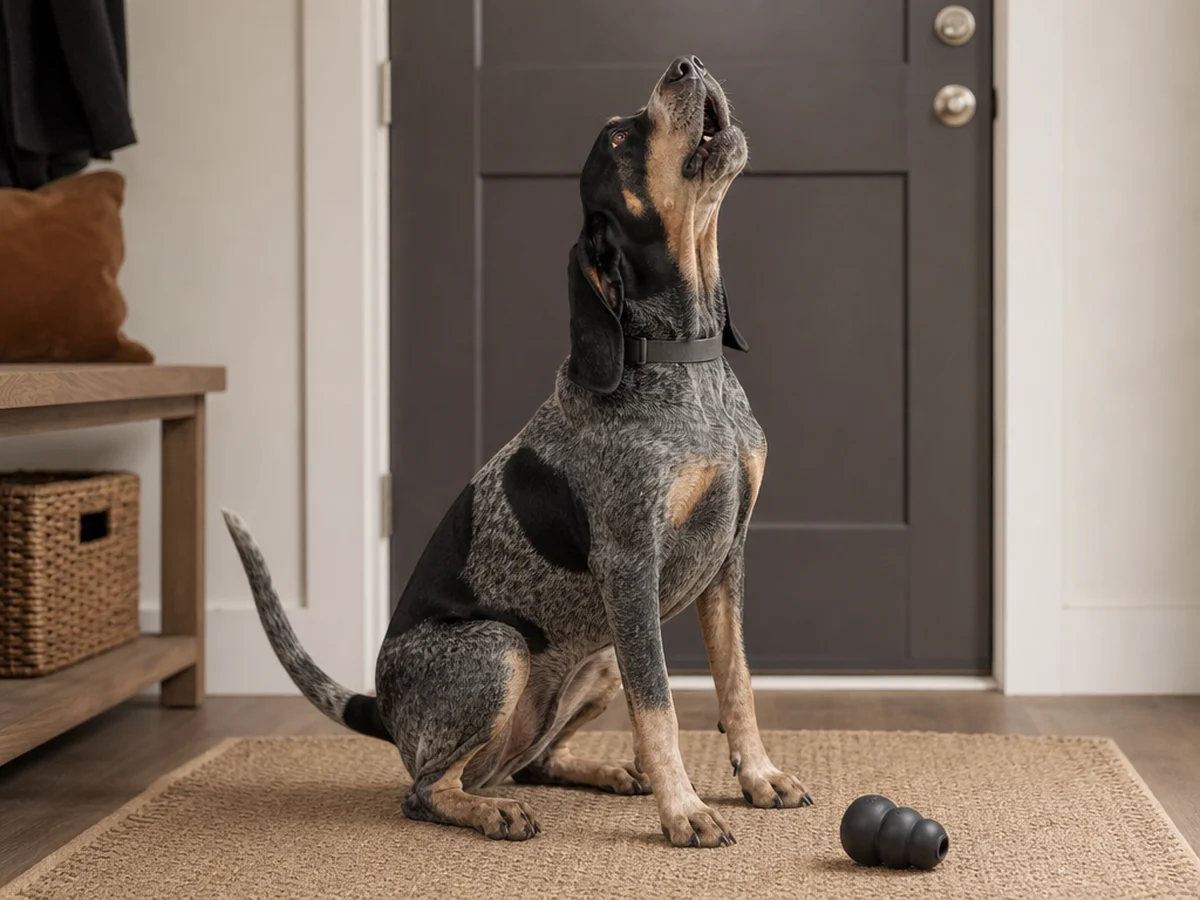
Footsteps, a key in a lock, the elevator chime: to a Bluetick, each one is a fresh trail worth announcing. The breed standard calls for a free tonguer who gives voice on the trail, so this is a built-in reflex and not a manners failure. With a watchdog rating of only 2 of 5, what you hear at the door is usually excitement rather than guarding.
That shapes the fix. Waiting them out rarely works, because the sound is the very thing they were bred to produce, so give the hound a better job: the pause. Catch the brief silence after the first woof and pay it generously, every single time.
Build the Quiet Cue
Here is a sequence that builds a Quiet cue that holds up beside a real hallway. Practice the steps in order so the word reliably predicts the pause.
- Start with a mild, controllable sound, such as a tap on the door or a recording of footsteps, played softly enough that they notice but stay quiet. Mark and treat each moment of silence.
- Raise the volume until they do bark, then wait for the first pause, say your marker word and treat. You are paying for the pause, not the bark.
- Once pauses come reliably, say quiet calmly just as the pause arrives, then follow with a steady stream of tiny treats. Over several days or more, the word comes to mean silence.
- Stretch the silence by a breath at a time before the treat arrives, then move the practice to the real hallway with a friend knocking.
- Keep a treat jar by the door during busy hours, such as when neighbors come home from work, so you can pay for quiet as it happens.
The cue itself may click within several days, but real hallways take weeks, because the sounds are unpredictable and your reward has to compete with the thrill of the trail. After many years of working with this breed, we find that paying for pauses beats any amount of hushing, and that rewarding the dog who stays quiet on their own matters as much as cue practice.
Bluetick Coonhound Training for Departure Baying
Baying at your departure is the next symptom the walls broadcast, and it has two common roots. Blueticks crave affection and are deeply devoted to those who provide it, so a closing door is a big event. Add Energy 4 of 5 with nothing to do, and you get what the AKC describes: neglected, underemployed coonhounds with no outlet for hardwired impulses can develop loud, mournful vocalizing that disturbs the neighbors.
Telling Excitement From Boredom
Watch the minutes before you go. If whining and pacing begin while you are still reaching for your keys, arousal is driving the baying, and your departure routine needs to get duller. If the baying starts after the apartment has gone quiet, boredom is the likelier cause. Dogs need plenty of exercise, activities and company, and a hound short on those may fill the hours with noise.
Both causes respond to the same principle: make leaving uneventful and make calm profitable. Rewarding natural calm during the day shows a clingy hound that quiet, not noise, is what earns your attention.
Short Absences With a Chew Prop
Begin with absences so brief the hound has no time to build up to baying. Step out, return before the first whine and reward the quiet. Lengthen gradually, mixing very short departures in with longer ones so the pattern stays unpredictable.
Hand them a stuffed chew or a treat-filled puzzle toy just as you leave, and pick it up when you return so it stays special. Skip the emotional goodbye and the hero's welcome, since both raise arousal. A sniffing walk beforehand gives a nose-driven dog something to digest while you are gone, so pair every absence drill with exercise first.
Settle Training for Evening Pacing
The same dog who bays by day can turn into a pacer by night, circling the living room as if hunting for a scent line. The breed is perfectly capable of calm, since Blueticks enjoy snoozing at their owner's feet, but a hound with Energy 4 of 5 rarely finds the off switch alone. You have to teach the mat as the place where calm pays.
With adaptability rated a moderate 3 of 5, they do best when the evening runs in the same order each day. Walk, then a chew, then the mat teaches the sequence, and soon they start winding down before you ask. Build the mat routine in steps, keeping each one easy enough that the hound succeeds almost every time:
- Lay a washable mat down and treat any paw or glance toward it, tossing each treat onto the mat.
- Next, reward them for stepping onto the mat, then for sitting, then for lying down, always placing the treat on the mat.
- Once they lie down, deliver treats at a slow trickle and watch for a relaxed hip, then mark that softer posture.
- Stretch the time between treats, then add small distractions such as you crossing the room, the television or a neighbor's door.
- Add a cue word, move the mat to where you spend your evenings and finish with a chew on the mat.
Keep early sessions short and end while the hound is still succeeding. If they hop up and pace, quietly guide them back to the mat with a treat on it and try again. A short, sniffy walk before the routine makes the settle far easier to earn.
Why Does My Bluetick Coonhound Bay at Neighbors?
A hound's ears pick up far more through a shared wall than yours do: a television, a voice, a dog next door, a dropped pan. Because they cannot see the source, the sound becomes a mystery to investigate and a perfectly good reason to announce.
What Sets Them Off Through the Wall
Blueticks are social dogs who score a full 5 of 5 as good with other dogs, and the breed standard describes a hound willing to be hospitable to people and dogs around them. A neighbor's barking dog may feel like an invitation to join the chorus.
Boredom adds fuel. A hound with no outlet fills the silence with their own voice, so a dog who bays at neighbors all evening is often telling you the day held too little to do.
Masking the Noise and Rewarding Quiet
Start with the environment. Run a fan, white noise or quiet music near the shared wall, and move the bed or mat to the quietest corner. Soft rugs and a closed door between the dog and the wall help too.
Then teach the response you want. When a wall sound starts, treat the moment they lift their head and look at you instead of baying, then pair it with your quiet cue. Over time, a thump next door becomes a signal to check in with you for a treat.
Bluetick Coonhound Exercise That Calms Indoor Zoomies
Indoor zoomies, where the hound launches off the couch and skids around the apartment, are what unspent energy looks like in a dog with Energy 4 of 5. Daily needs run from one to two hours for some breeds, with working breeds needing significantly more. A quick lap around the block won't cover a breed whose famous lines were described as able to run a trail 30 hours at a stretch.
Walks That Use the Nose
Long leash walks, with plenty of time to sniff, serve a scent hound better than a hard sprint. Pushing for more miles alone isn't the answer for a dog with this stamina. Give the nose a job as well, because underemployed coonhounds find their own outlet, usually a loud one.
Use a leash or a securely fenced yard every time, since a strong scent drive and strong prey drive can pull a Bluetick away from you in seconds. Let them pause and read the sidewalk, and treat them for checking back in with you.
Scent Games for Rainy Days
Scatter treats across a rolled towel or a clean floor and let the hound work them out. Hide treats around the apartment for a find-it game, starting with easy spots and getting trickier. Finish every game with a mat settle so the excitement lands in calm.
If you share your apartment with a cat or other small pet, keep these games in separate rooms. Our guide to living with cats and small pets explains why prey drive needs planning.
Can Rewarded Quiet Training Beat a Bluetick Coonhound's Voice?
Rewarded quiet works, with honest limits. Trainability Level 4 of 5 says these hounds learn well when the pay is good, but Barking Level 4 of 5 says the voice never disappears. The realistic goal is fewer, shorter and softer episodes, not a silent dog, and a hound who still bays at a passing siren but settles when you ask is a success.
Progress is rarely a straight line. Expect good days, setbacks when a new noise appears and slow gains in busy hours. Keep paying for pauses and keep exercise steady, because a bored hound will test every cue you have built.
Some situations call for more than home practice. Choose support that protects both your hound's welfare and your neighbors' peace.
- Bring in a qualified reward-based trainer if progress stalls after weeks of consistent daily practice.
- Ask for help if baying while you are gone looks like panic rather than boredom, because that needs a different plan.
- Keep regular vet visits on the calendar, and book one if their vocal habits change suddenly.
- Talk to your neighbors early: tell them you are training, ask which hours bother them most and share a way to reach you.
For more on why this breed bays in the first place, see our guide to Bluetick howling and baying. It explains what the voice means before you work on changing it.
Apartment Training Starts With One Rewarded Settle
A Bluetick was bred to give voice and cover ground, and an apartment asks for neither. Quiet comes from meeting those needs on purpose: sniff-heavy exercise, scent games, a mat to settle on and treats for every pause. Repeated daily, those small rewarded moments teach a devoted, tenacious hound that calm is another way to earn your attention.
Start with a single step today. Before the next walk, ask your hound to go to the mat, wait for a calm settle and reward it. One repetition is enough to begin, and tomorrow's walk will be easier for it.
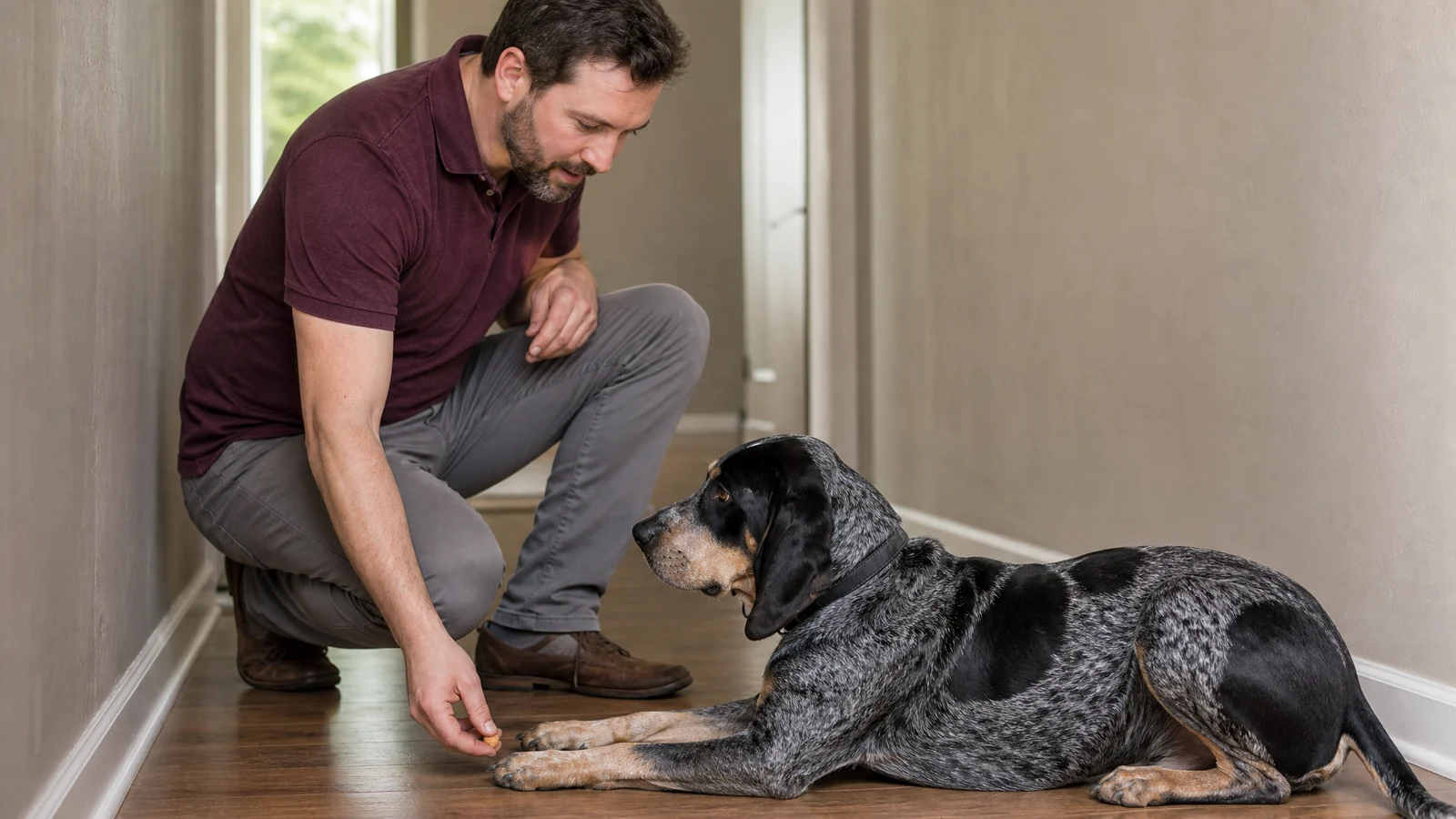 Training basicsTeaching Sit, Down and Stay to Your Bluetick Coonhound
 Training basicsWhat Treats and Praise Work Best When Training a Bluetick Coonhound?
 Training basicsLeave It: Managing Your Bluetick Coonhound's Off-the-Charts Prey Drive