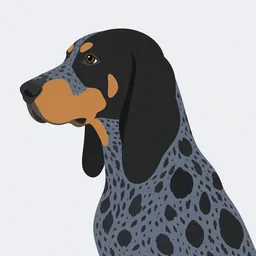
 Bluetick
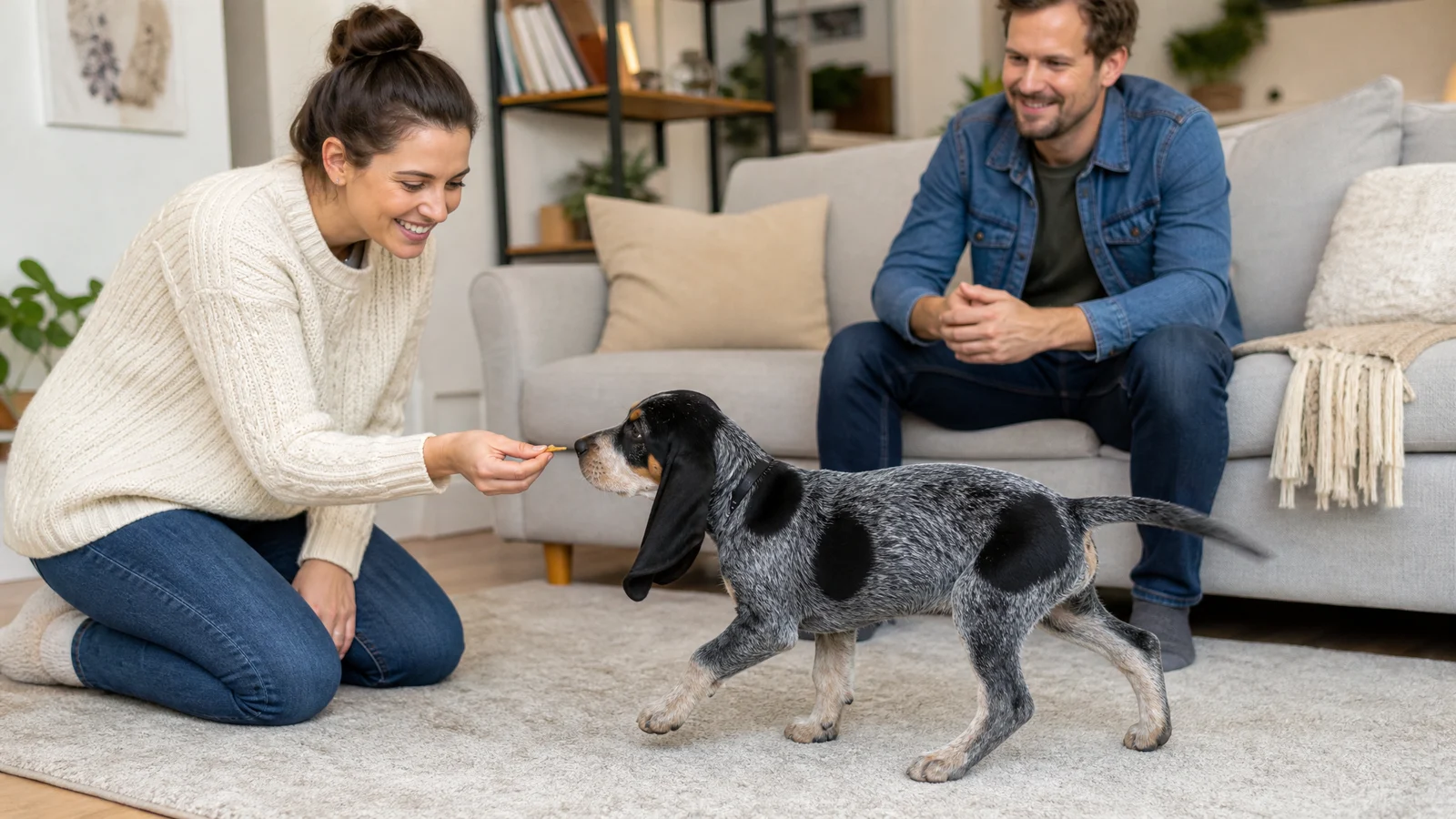
Some Bluetick Coonhound puppies stroll toward a visitor with a loose, wagging body, take a treat, and drift back to their bed once the hello is over. Others bark from behind the sofa, freeze at the edge of the room, or hide the moment a stranger's voice carries down the hall. The gap between the two usually traces back to the first months, and to whether the world arrived in small, rewarded pieces or in one overwhelming rush.
Bluetick Coonhound puppies start with a social head start. They score a full 5 of 5 for getting along with other dogs, but only a middling 3 of 5 for openness to strangers, so their opinion of new people is still taking shape. We'll walk you through strangers and visitors, then dog meetings, new places, the rewards that make it all stick, and the early signs of a setback, so a hound with a big voice and a bigger nose grows into a settled adult.
Puppy Training With Visitors
A 3 of 5 for openness sits at ambivalent on the scale, neither delighted nor suspicious, so a stranger could land anywhere from welcome to worth a second look. A watchdog rating of only 2 of 5 says these hounds were never built to guard the door. Some puppies may hang back and watch, while others may turn noisy as the bell rings, and both can respond to the same plan.
That plan is to let the puppy choose to approach, pay for every choice, and end each meeting while the puppy is still curious. The breed standard asks for a hound who is hospitable to the men and dogs around them and treats extreme shyness as a disqualification, so building confidence early works with the breed. In our many years with these hounds, a few good meetings have always beaten many rushed ones.
Visitors at Home
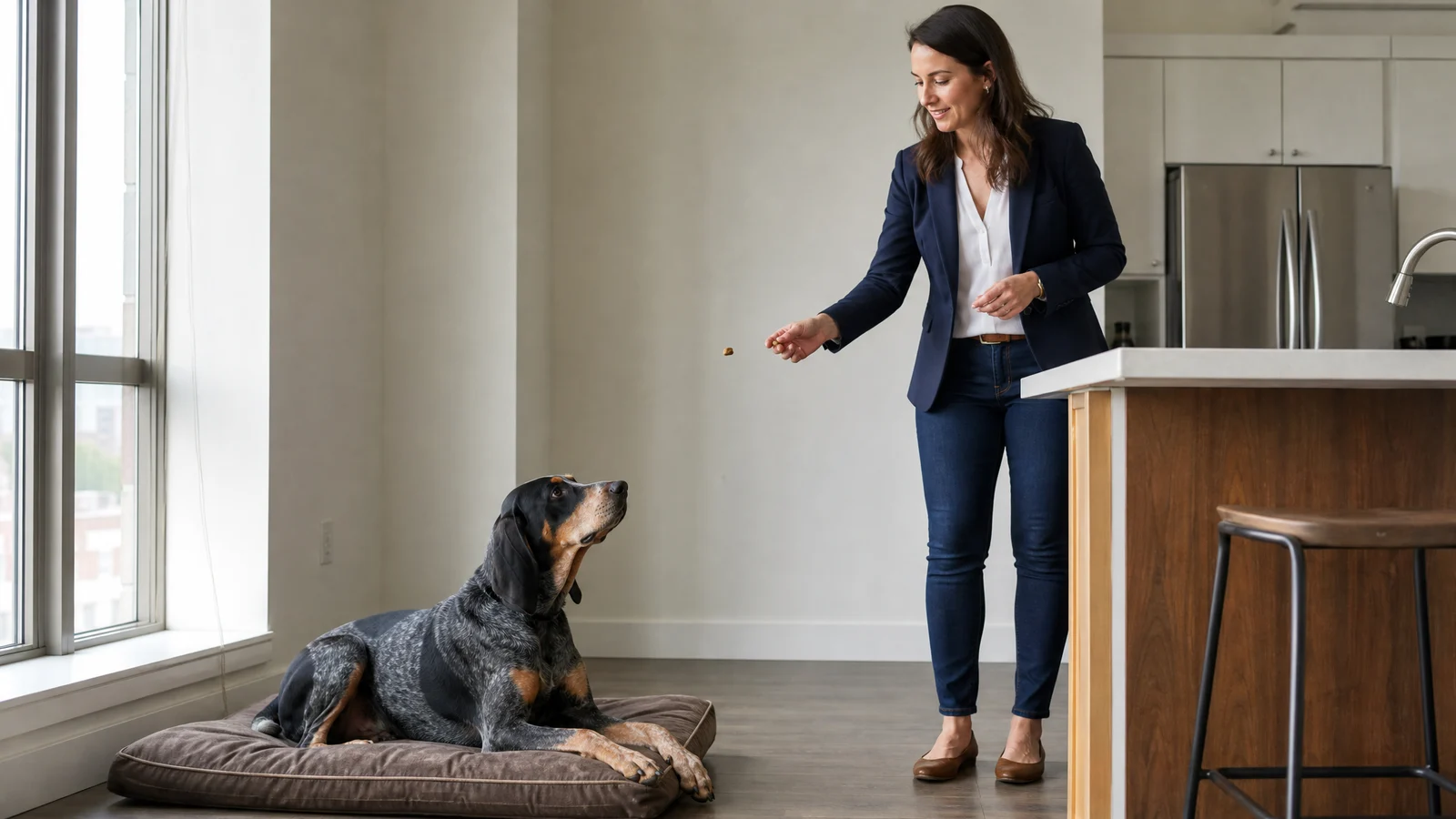
The doorbell is the hardest moment of the day for a hound with this much voice, so start before anyone comes in. Keep a bowl of treats near the door, and when the bell sounds, scatter a few on the floor, because a nose busy with the carpet has less breath left for baying. Let the guest enter only after the puppy has settled behind a gate or on a leash, and give each visitor the same short script, at the door or by text beforehand:
- Ignore the puppy at first and let them come to you.
- Offer a treat low on a flat palm, or toss it near your feet, instead of leaning over the puppy.
- Pet under the chin or along the chest for a few seconds, never on top of the head.
- Pull your hand back and see whether the puppy returns for more, which is how they say yes.
- Leave the greeting while everything is still going well.
A reserved puppy may turn away partway through and walk to their bed, which is information and not rudeness. Let them go, keep the bed where they can watch from a distance, and never let a guest reach into it, because a puppy who is allowed to leave tends to come back sooner than one who is followed.
Strangers Outdoors
Outside, people move faster, loom larger and carry things, so begin on a quiet sidewalk at a calm hour, at a distance where the puppy notices a passerby without stiffening. Say the marker word as the puppy looks, drop a treat, and let them sniff the ground afterward. As long as the puppy keeps eating, the distance is right, and closer comes later over days of practice.
Vary the cast as you go, with hats, umbrellas, bikes and delivery people, because a puppy who has only met one kind of stranger assumes the rest are different. Leash reactivity is relatively common and can look like barking, pulling or lunging, and passing strangers are a frequent trigger, so keep the leash loose and the treats flowing.
Children and Puppies Together
Young children score 3 of 5 for this breed, which the scale labels as with supervision, so keep an adult within arm's reach for every meeting. Have the child sit down on the floor and toss treats low and softly instead of grabbing or hugging, and let the puppy decide when the game ends. A child who learns to stay calm and predictable becomes one of the best people a puppy can meet.
Bluetick Coonhound Puppy Training Around Other Dogs
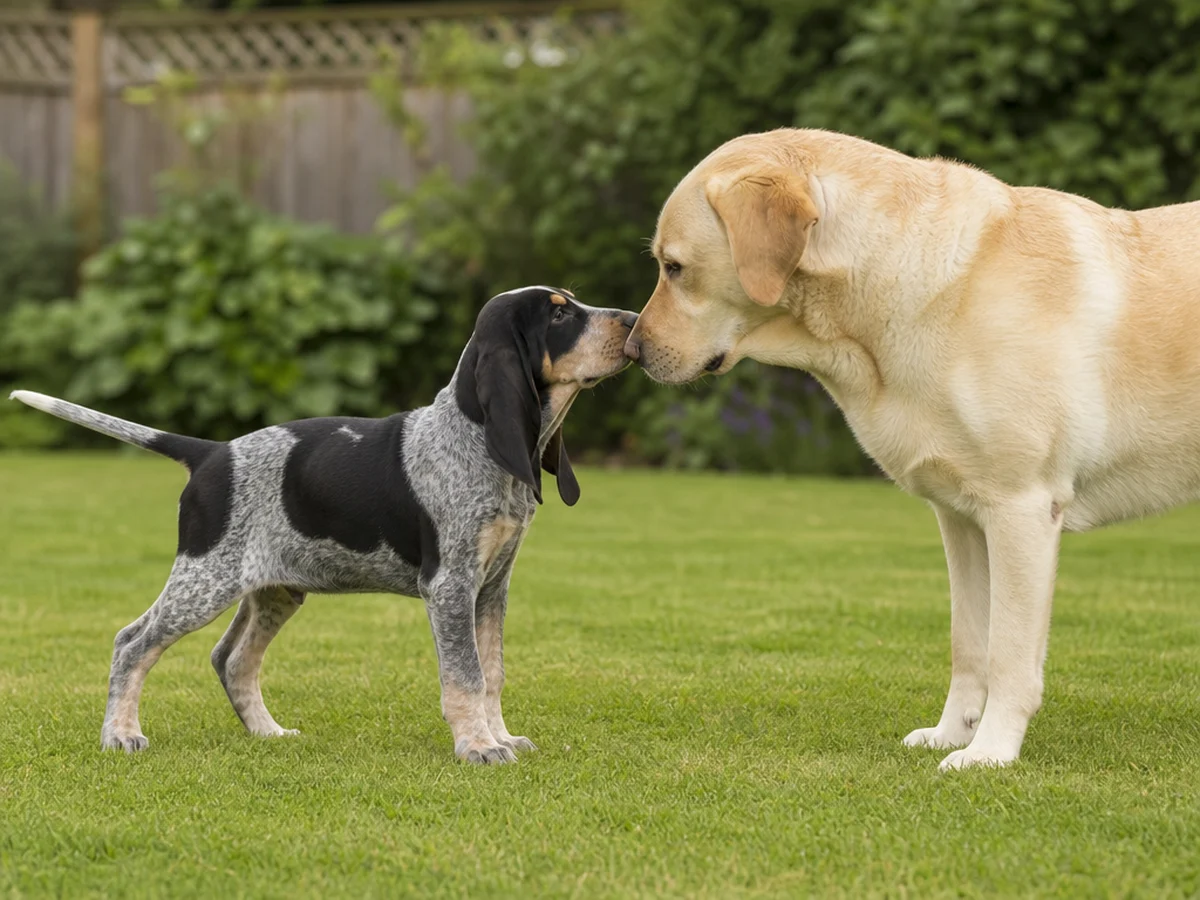
The breed's record with other dogs is a friendly one, and 5 of 5 suggests your puppy will likely be glad to see a steady adult. Friendly is not the same as polite, though, and an easygoing hound can turn overeager, hauling toward every dog on the sidewalk and bawling with frustration when the leash says no. The plan is to choose calm partners and keep each meeting short, so greetings stay a pleasure instead of a habit of lunging.
Picking Calm Partners
The best first friend is a healthy, vaccinated adult you know, patient with puppy manners, such as an easygoing neighbor's dog. Meet on neutral ground like the quiet side of the building, allow a brief sniff, then walk on and reward the puppy for checking back in with you. Walking side by side suits a nose-driven hound especially well, because the ground offers plenty to investigate and nobody has to stare.
A crowded dog park is the wrong classroom at this age. The advice to let them work it out on their own sounds sensible, yet a puppy cannot choose their company there, and one rough encounter can color how they feel about dogs for a long time.
Puppy-Class Setups
A good puppy class can supply several well-matched dogs in a controlled space, if you choose it carefully. Look for small groups, puppies of similar size and age, a quiet corner where your puppy can retreat, and an instructor who relies on reward-based methods. Ask to watch a session before enrolling, and ask your veterinarian which vaccines the class requires.
Inside the class, treat it as a place to practice calm, not a place to play flat out. Pay your puppy for looking at you with other puppies nearby, and step out for a breather whenever the room gets loud.
Rough Play and When to Stop
Play with a friendly adult is often noisy, with bawling and chasing, and the skill lies in stopping while it is still good. Watch for a stiff or frantic body on your puppy, or for the adult starting to look away, then call the puppy to you, give a treat and a short rest, and release them again only if both dogs look relaxed.
If the puppy cannot settle, a brief time-out on their bed does the job without any drama. Playfulness in this breed is moderate, so a puppy who leaves on a high note tends to remember the other dog fondly.
Puppy Training in New Places
New places are a matter of order more than courage, and the order runs from quiet and familiar to busy and strange, one change at a time. A scent hound meets every new room nose first, which is a gift you can use if you let the sniffing happen before you ask for anything. A sensible ladder for the first weeks looks like this:
- The lobby and hallway of your own building, with a treat for each calm look at a door, a mailbox or a passing neighbor.
- The car, starting with short drives to nowhere and a treat before and after, then trips that end somewhere pleasant.
- The veterinary clinic on a day with no appointment, where the puppy hops on the scale, gets treats from the staff and heads home, so the building predicts good things before any exam happens.
- A pet store that allows puppies, entered at a quiet hour and left before the puppy is spent.
- Busier streets and outdoor seating areas last, once the puppy stays loose around crowds from a distance.
Let the Nose Finish
Smells deserve patience at every rung. The nose that locks onto a dropped crumb or a hydrant is the same one that follows a trail, and pulling a hound away mid-sniff only makes the place feel tense. Allow a short sniff, ask for a glance at you, mark it, and reward by letting the puppy return to the smell. Prey drive in this breed is described as off the charts, so the leash stays on for every outing.
You will hear that a puppy should see nothing of the world until every shot is done, but the best window for learning about surroundings runs from 3 to 14 weeks, and it does not wait for the calendar. Carry the puppy through the lobby, invite calm visitors and healthy, vaccinated adult dogs home, and ask your veterinarian where paws may touch the ground. Regular vet visits through puppyhood keep that advice current.
This is general information, not medical advice. Your veterinarian knows your puppy's vaccination status and the risks in your area, so check with them about which places and which dogs are safe before the vaccine series is complete.
Rewards for Bluetick Coonhound Puppy Training
Early socialization and treats can be very useful aids in training this breed, and a scent-driven pup makes that easy to believe. A hound who will follow a trail for hours will certainly work for something that smells good, which turns every introduction into a chance to be paid for calm behavior. This is reward-based training at its simplest, since a dog given something they love for a behavior is more likely to offer it again.
Treats Worth a Detour
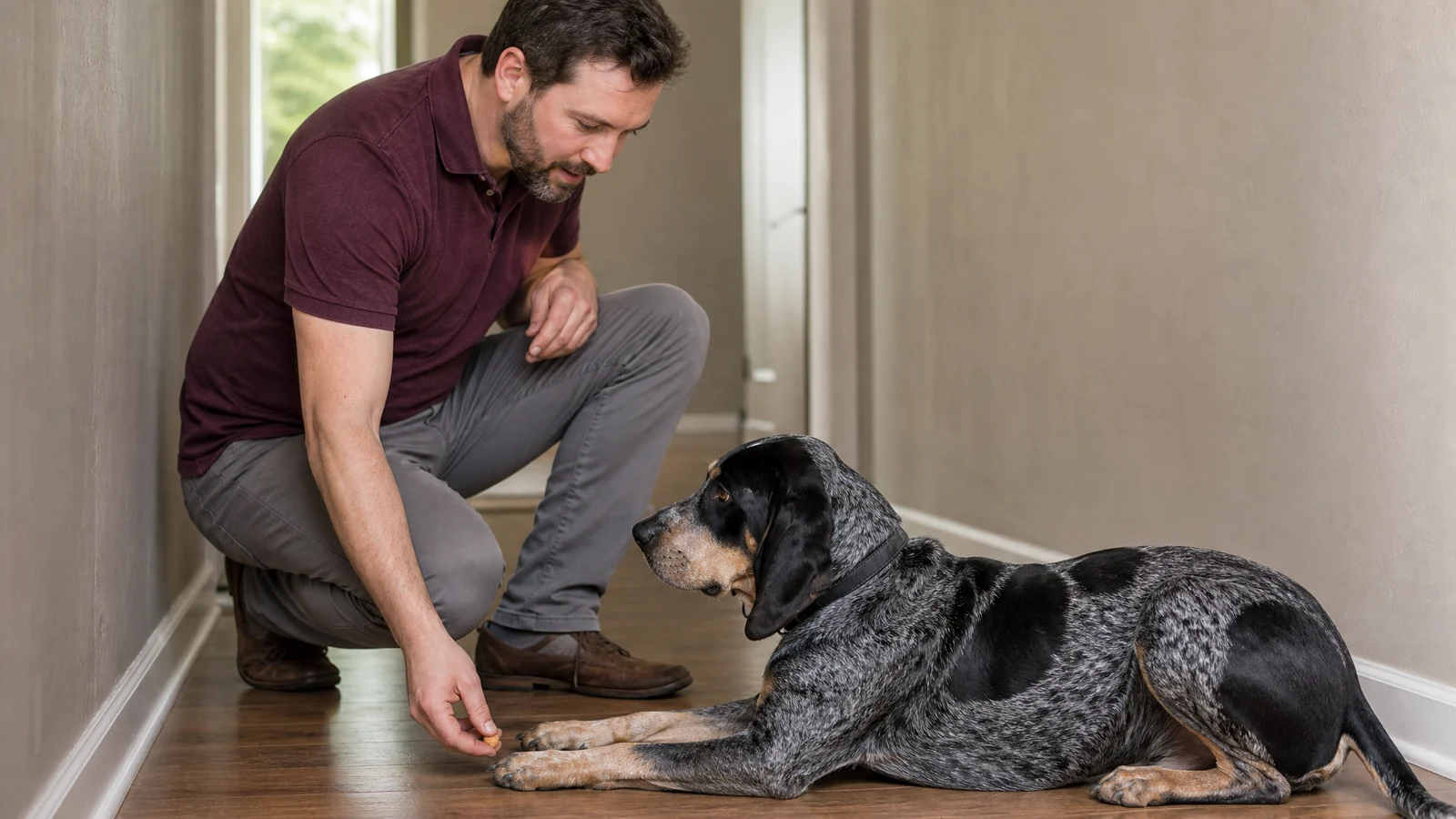
Choose treats that beat the smells around you. Small, soft, strongly scented morsels will outrank the daily kibble when a lobby is full of interesting floors, and it helps to save your best ones for socialization outings only. Mark the instant the puppy looks at the person, dog or sound with your marker word, then deliver the treat promptly, because timing tells the puppy exactly which choice earned it.
Distance does as much work as the treat. If the puppy takes food and stays loose, you are at the right distance, and if they sniff the ground, stare or refuse, you are too close. Praise and a quick game of tug can join the menu on easy days, but food remains the most reliable currency for a nose-led hound.
Ending Sessions Before the Pup Tires
Short sessions beat long ones. Plan one or two outings or introductions a day, ideally after a nap and before a meal when treats mean the most, and stop while the puppy is still taking food eagerly. Early signs of fatigue include frantic sniffing, mouthing, whining, slower treat-taking and a sudden urge to wander off.
Afterward, let the puppy rest. These hounds also enjoy snoozing at your feet, and the quiet hours after an outing are when the lesson settles in. A puppy who always ends on a win comes to expect the next introduction with interest instead of dread.
Puppy Training Setbacks
Even a well-paced plan has a rough week, such as a puppy who freezes at a man with a large umbrella, bays at the delivery person, or spins in circles over a neighbor. None of that is failure, only a signal to back up, and the earlier you read it the less backing up is needed. Look for these signs that a puppy has had enough or is worried:
- A still body with a low tail, fixed eyes or a hard stare at the person, dog or object.
- Turning away, hiding behind your legs or retreating to the bed.
- Refusing a treat they would normally take at once.
- Barking or baying that starts sharply and keeps climbing instead of fading.
- Yawning, lip licking or a sudden burst of frantic sniffing in a quiet setting.
Respond to Stress Signals
When you see them, add distance until the puppy can eat again, then reward calm looking without pushing toward the scary thing or fussing loudly over them. A frozen puppy is not being stubborn, and confidence that arrives at their own pace lasts longest. If the puppy still refuses food, end the session calmly and offer something much easier later in the day.
Voice deserves its own reading. With a barking level of 4 of 5, noise can mean worry, but it can also mean excitement or frustration, so ask what the puppy is doing right before it starts. If it is fear, add distance and feed as the stranger appears so the person starts to predict food.
If it is excitement, ask for a settle, scatter treats on the floor so the nose goes down, and keep the greeting short. Rebuilding trust never needs forced contact, only more good meetings than bad ones.
Bring in help when the puppy stays frozen across many sessions, refuses even favorite treats, or lunges or growls at people and dogs they already know. Choose a trainer who uses food, play and praise, and have your veterinarian check any sudden change in behavior.
Common Bluetick Coonhound Socialization Questions
Once the first introductions go smoothly, the questions that follow are usually about time, mouths and what else to teach alongside the greetings. If you want to know how long this takes and where socialization fits among other skills, the Bluetick puppy training timeline breaks it into weeks. If friendly hellos turn into teeth on every hand, our Bluetick mouthing guide covers how to redirect it with rewards.
Every answer comes back to one idea for a devoted, affection-hungry, nose-led hound. Short, rewarded, well-paced introductions in the early months shape the dog you live with, far more than one big outing or a late scramble to fix a worried adult.
Keep each meeting small, pay for calm choices, and schedule regular vet visits so health questions never get in the way of confidence. Your Bluetick Coonhound will then grow into the friendly, settled companion the breed is known for.
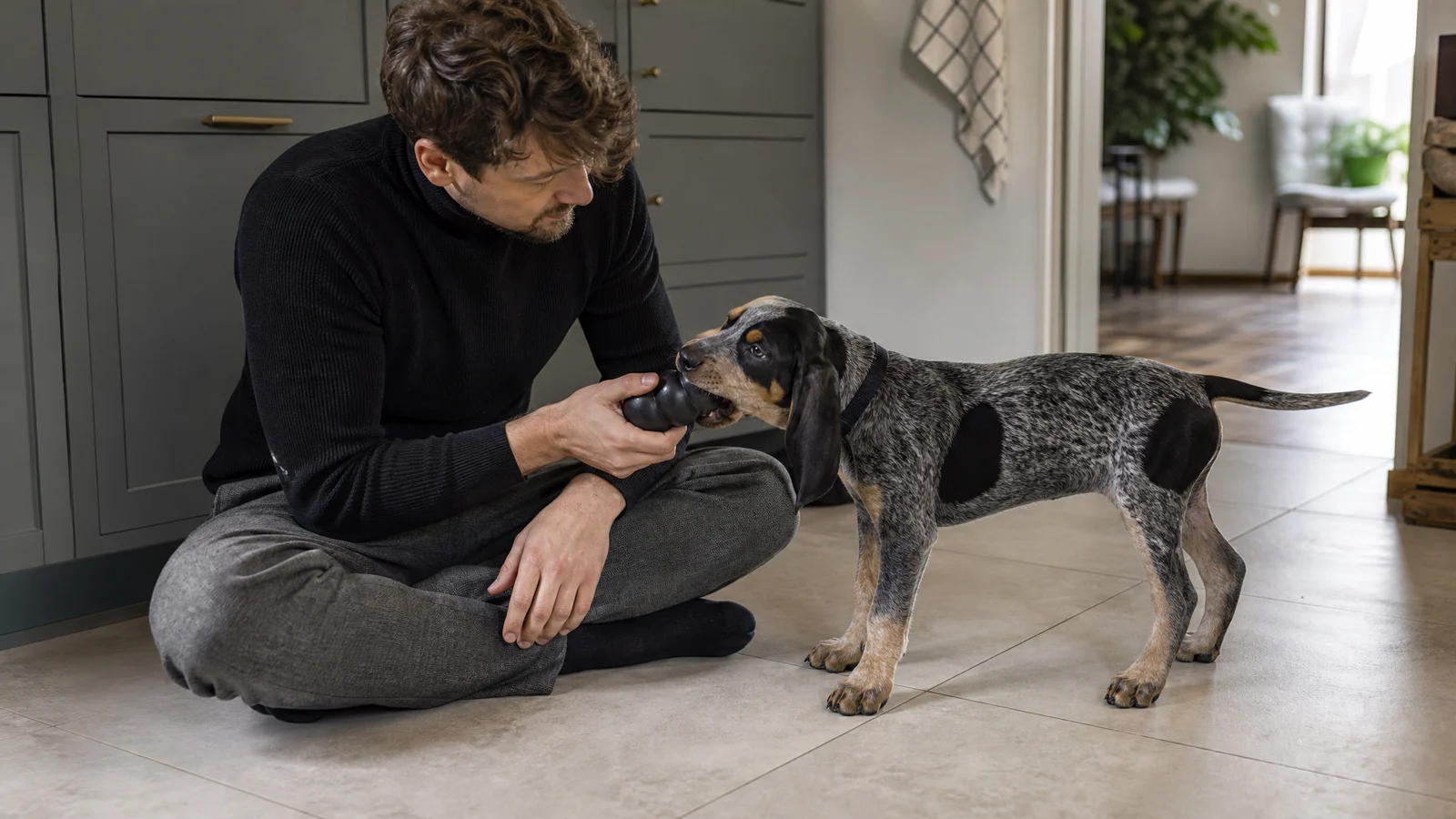 Puppy trainingPuppy Mouthing and Chewing: Redirecting Your Young Bluetick Coonhound
 BehaviorApartment Living With a Bluetick Coonhound: Quiet and Calm
 Training basicsTeaching Sit, Down and Stay to Your Bluetick Coonhound