 Bluetick
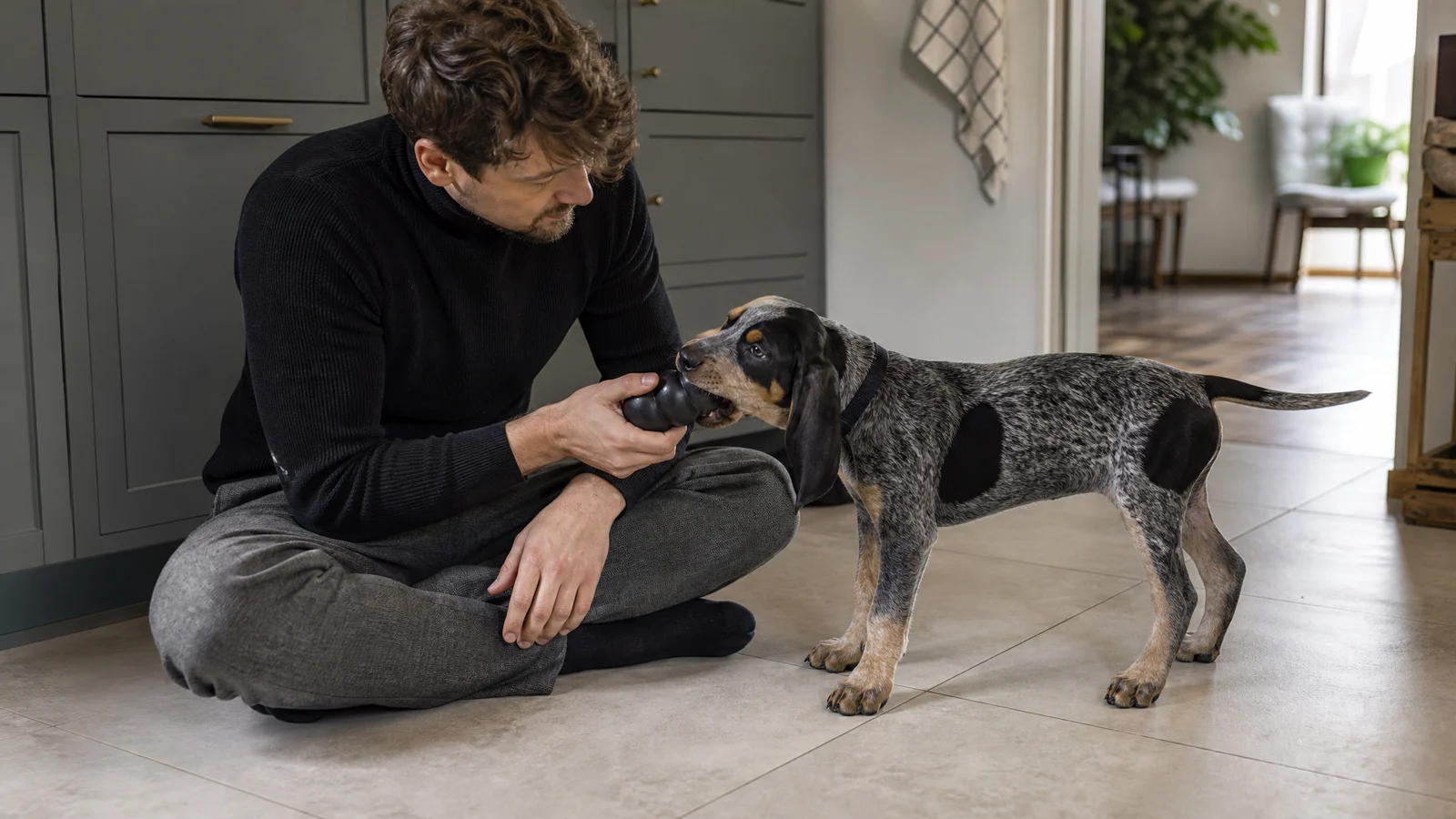
Nearly every puppy explores the world with their teeth, and a Bluetick Coonhound is no exception. Most young dogs ease off as they mature, so the useful question is whether your puppy's mouthing is a passing phase or a habit that needs more of your attention.
The timing matters for a breed rated 4 of 5 for energy and 3 of 5 for playfulness. A young hound with that much fuel pours it through their mouth, and handled badly the habit hardens into rough play and ruined furniture. Handled well, it becomes the devoted, affectionate companion the breed is known to be.
Read on for how to read your puppy's stage, the swap that does most of the work, why this breed mouths so much, how to reward calm, which chews hold up, why punishment backfires, and a two-week plan.
Normal Mouthing in Bluetick Coonhound Puppy Training
Mouthing is how a puppy learns about the world. Playful mouthing is normal at this age, so the first job is to stop worrying and place your puppy on the calendar.
At about 8 weeks, mouthing is mostly exploration and play. Between 3 and 5 months, adult teeth push through and sore gums make chewing feel good, so biting and chewing usually peak together. Toward 6 to 8 months the sharpness fades, though an excitable hound may still grab sleeves when wound up. Puppies vary, so treat these as ranges and not deadlines.
Puppies also learn bite inhibition, which means control over how hard they bite, from the feedback they get. Littermates end the game when a bite hurts, and now that lesson is yours to teach. When play pauses the instant teeth touch skin, a puppy learns that softer mouths keep the fun going.
A few signs go beyond ordinary puppy play. Stiffening or growling over a toy or bowl, or mouthing that spikes when one spot is touched, may point to pain or a deeper problem. Book a visit with your veterinarian first in that case, and keep regular checkups anyway so your vet can watch the teeth change. Our Bluetick puppy training timeline shows how mouth manners fit among the other skills.
Trade Skin for a Chew Item in Puppy Training
The core skill is a swap. Instead of fighting the mouth, you hand it something legal and pay for taking it. A marker word, meaning a short, consistent word such as yes that pinpoints the instant your puppy did the right thing and a reward is coming, makes the swap easy to read. Trainability is rated 4 of 5 for this breed, so most puppies pick the game up fast when you repeat the same steps every time.
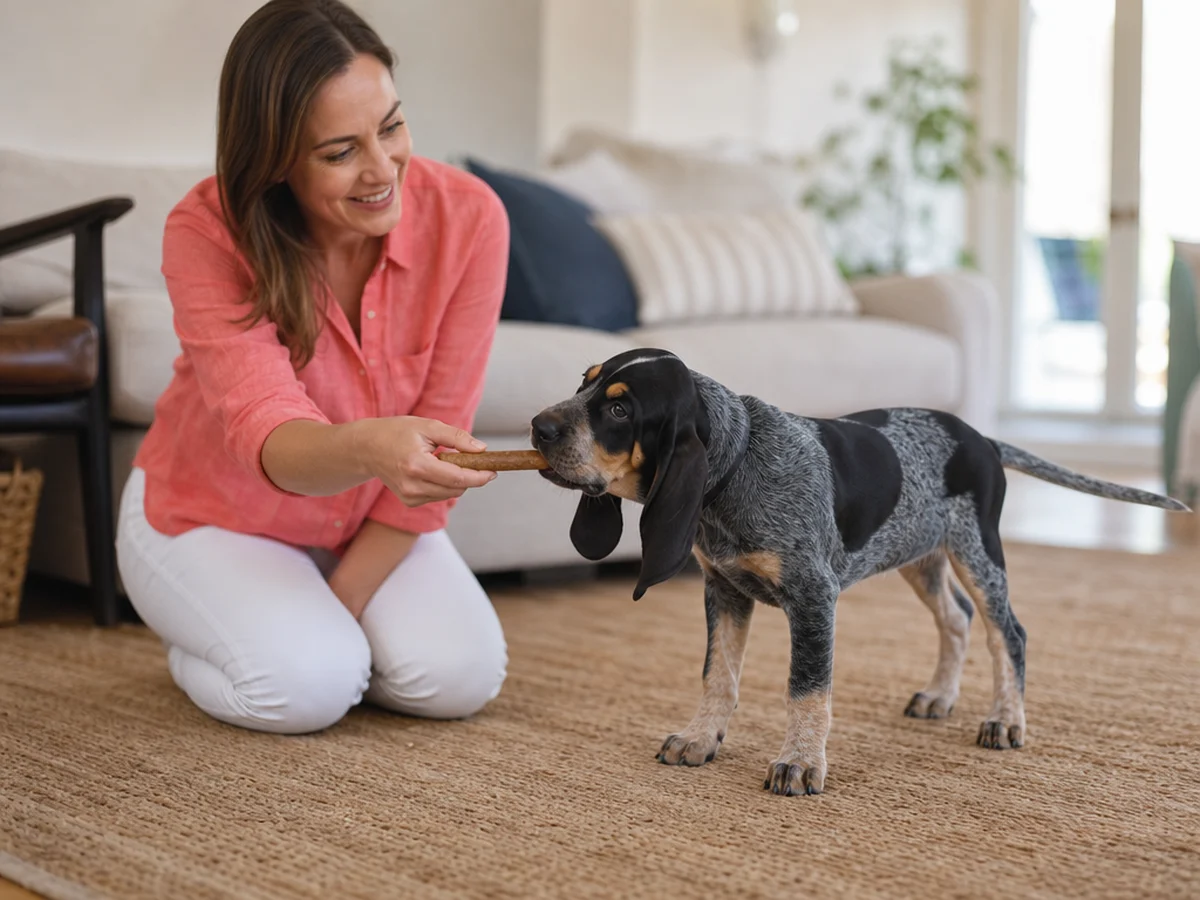
- Carry a chew item in your hand or pocket during play, so a legal target is always a second away.
- When teeth touch hands or clothes, go still and quiet and let the game pause for a few seconds.
- Offer the chew item, and the moment the puppy bites down on it, say your marker word and praise.
- If the puppy lunges back in harder, step away or guide them to a pen with a chew for a brief time-out, then rejoin when they are calm.
- Raise the bar over the weeks. At first, react only to hard bites, then later to any teeth on skin.
Trade, don't grab. A common habit is to pull whatever is in the puppy's mouth straight out, but pulling items from a dog's mouth can teach a puppy to guard their treasures or to dash off whenever you need something back. Show a treat, let the puppy drop the item, praise, and hand over the treat.
Everyone in the house has to play by the same rules. Consistent responses from everyone teach faster than any single trick, and a mouth that is allowed with some people keeps trying with all of them. Supervise children closely, because the breed's rating with young children is a middling 3 of 5, meaning time together should be supervised.
Why Does a Young Bluetick Coonhound Mouth so Much?
Part of the answer is the nose. Blueticks are scent hounds, and a young scent hound's mouth tends to follow wherever the nose leads, tasting and testing whatever turns up at floor level. That is a reasonable explanation, not a measured fact, though it matches how shoes, table legs and sleeves become targets so quickly.
The rest is fuel. With energy rated 4 of 5 there is plenty to spend, and playfulness at a moderate 3 of 5 means play is not constant but is easy to start. Mouthing hands is a cheap way to burn energy, and it pays well because it gets an instant reaction from you. Squealing and flapping hands can add to the excitement, so going still usually works better.
Exercise changes the picture more than most owners expect. These dogs were bred as hunting dogs and benefit from plenty of exercise, and neglected, underemployed coonhounds with no outlet can develop problem behaviors. In a puppy, unspent energy often shows up in the mouth first. An overtired puppy also tends to bite harder, so end play before things fall apart.
Calm Mouthing Earns the Best Puppy Training Rewards
Dogs repeat what pays, and it is easy to react only when the mouth hurts. Flip that around. Watch for the quiet moments and pay for them, because calm is the behavior you want more of.
- Licking your fingers or taking a treat softly, with no teeth on skin.
- Lying beside you chewing an approved item instead of roaming for something else.
- Settling after a play burst without needing a second round of mouthing.
- Meeting a visitor politely, with all paws on the ground and no mouthing.
Rewards have to beat the competition, and for a hound, the competition is smell. Praise alone is often outbid by a good scent, so use small, soft, strong-smelling treats and practice first in a quiet room. Early socialization and treats are both very useful with this breed, and our guide to socializing a Bluetick puppy covers calm greetings in more places.
In our many years of working with this breed, the puppies who learn gentleness fastest are the ones paid for it often. Mark soft behavior in the moment, hold the treat down near the puppy's chest so they stay grounded instead of jumping, and let the praise be quiet. A shrieking celebration can wind a hound up again.
Which Chew Items Suit a Hard-Chewing Puppy?
A hard-chewing puppy needs items that hold up and are safe to swallow in pieces, or better, never come apart at all. The table below compares common options, and the same checks apply to all of them: match the size to your puppy, supervise at first, and throw away anything cracked, shredded or small enough to swallow.
| Chew type | Best use | Watch for |
|---|---|---|
| Firm rubber toy | Everyday chewing and stuffed treats | Pick a size too large to swallow and keep several in rotation. |
| Chilled or frozen rubber toy | Sore gums during teething | Offer during the evening wind-down, when a puppy needs to settle. |
| Frozen wet washcloth | Short, supervised chewing | Cheap and easy to replace. Take it away once it frays. |
| Knotted rope toy | Interactive play with you | Use together, then put it away so strands are not swallowed. |
Rotation does a lot of quiet work. A toy that has been out of sight for several days feels new, and a puppy picks the new thing over the chair leg more often. Keep two or three items out and swap them regularly.
During teething, expect the chewing to climb, and expect a puppy who was learning to be gentle to seem to slide backward. That is the sore-gum effect, not a failure of your training. Block access to furniture with gates and closed doors when you cannot watch, and mention any reluctance to eat or a visibly sore mouth at your next regular vet visit.
Punishment Backfires in Puppy Training for Mouthing
It is tempting to answer a painful bite with a harsh reaction, but this works against you for two reasons. First, it raises arousal, meaning how revved up the puppy is, and a revved-up hound mouths harder. Second, it damages trust. Punishing chewing can make a dog scared of you and teach them to chew when you're not there.
For a breed that is affectionate and craves attention from the people they love, a puppy who learns to fear your hands loses the very bond you are trying to build. Some puppies also read a loud reaction as a fresh round of play, which hands the habit a bigger reward than before.
Calm tools do the job without that cost. Stop the game, offer the chew, wait a few seconds, and use a pen or gate for a short reset if your puppy gets too revved up for learning. Management helps just as much. A puppy who cannot reach the sofa leg cannot rehearse chewing it, and every rehearsal makes the habit stronger.
Daily Puppy Training for a Gentle Bluetick Coonhound Mouth
A Bluetick Coonhound puppy with high energy and a loving, contact-seeking nature will use their mouth until you offer something better. The aim is not to remove the mouthing but to steer it, one small, paid-for choice at a time. A two-week plan makes that concrete.
In week one, build the setup. Put a chew item in every room the puppy uses, set up a pen or gates for the times you cannot watch, and practice the freeze, offer and mark routine every time teeth touch skin. Rotate the chews each day, trade instead of pulling, and get the whole family following the same steps.
In week two, add rewarded calm. Mark and treat soft mouths, quiet chewing and relaxed settling, and add a daily sniff walk or a treat-scatter game so the energy has somewhere to go. Note each evening whether the bites came less often or lighter, and raise your standard a little as they do.
If you stay steady, the sharp puppy teeth of the 3 to 5 month peak give way to the calmer months ahead. These are devoted, smart and trainable dogs whose mouths follow their energy, so exercise, scent games and consistent rewards give the chewing a safe place to land. Keep up regular vet visits, stay patient through teething, and the puppy who gnawed on your sleeve grows into a hound who greets you gently.
 BehaviorApartment Living With a Bluetick Coonhound: Quiet and Calm
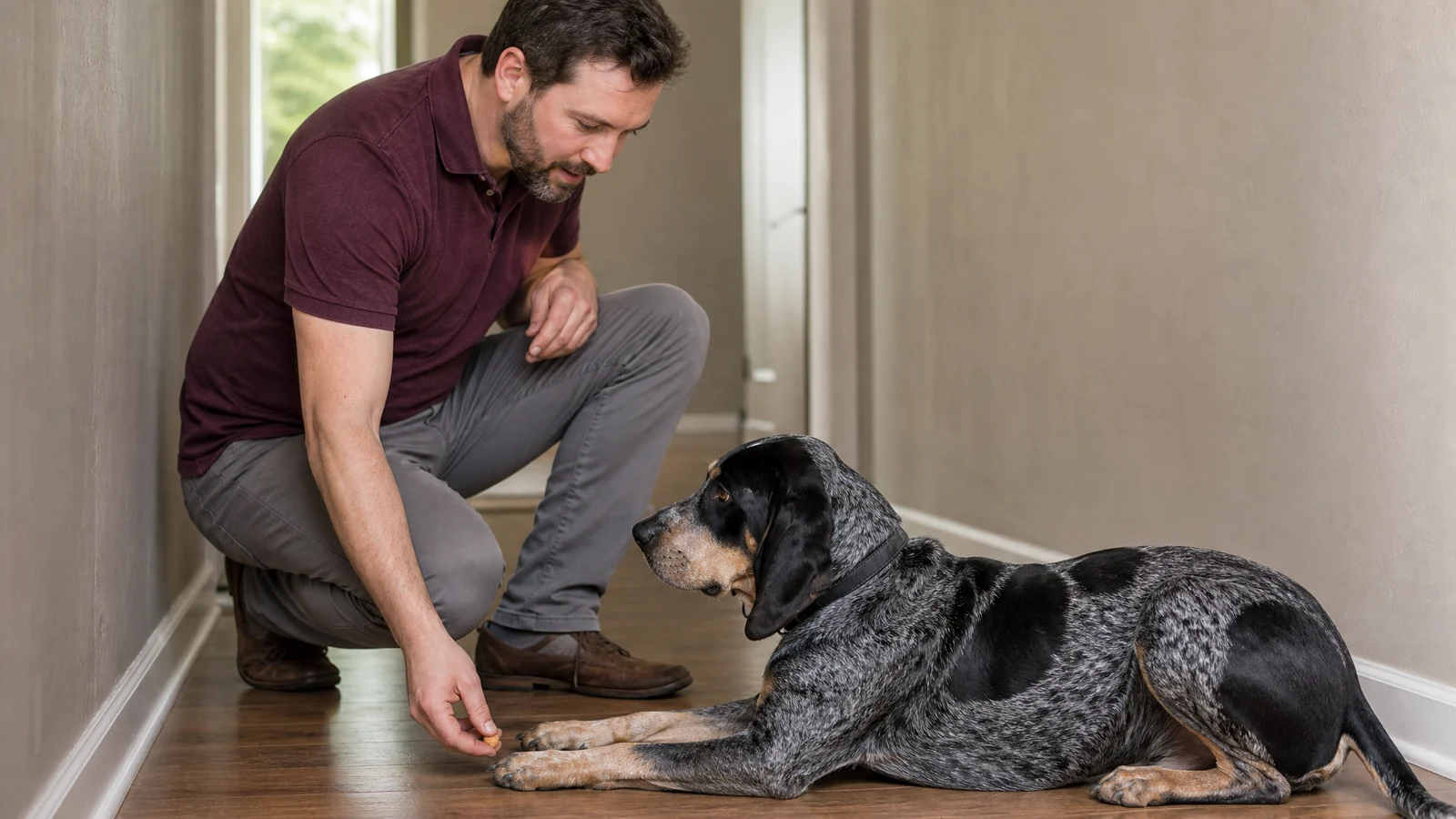 Training basicsTeaching Sit, Down and Stay to Your Bluetick Coonhound
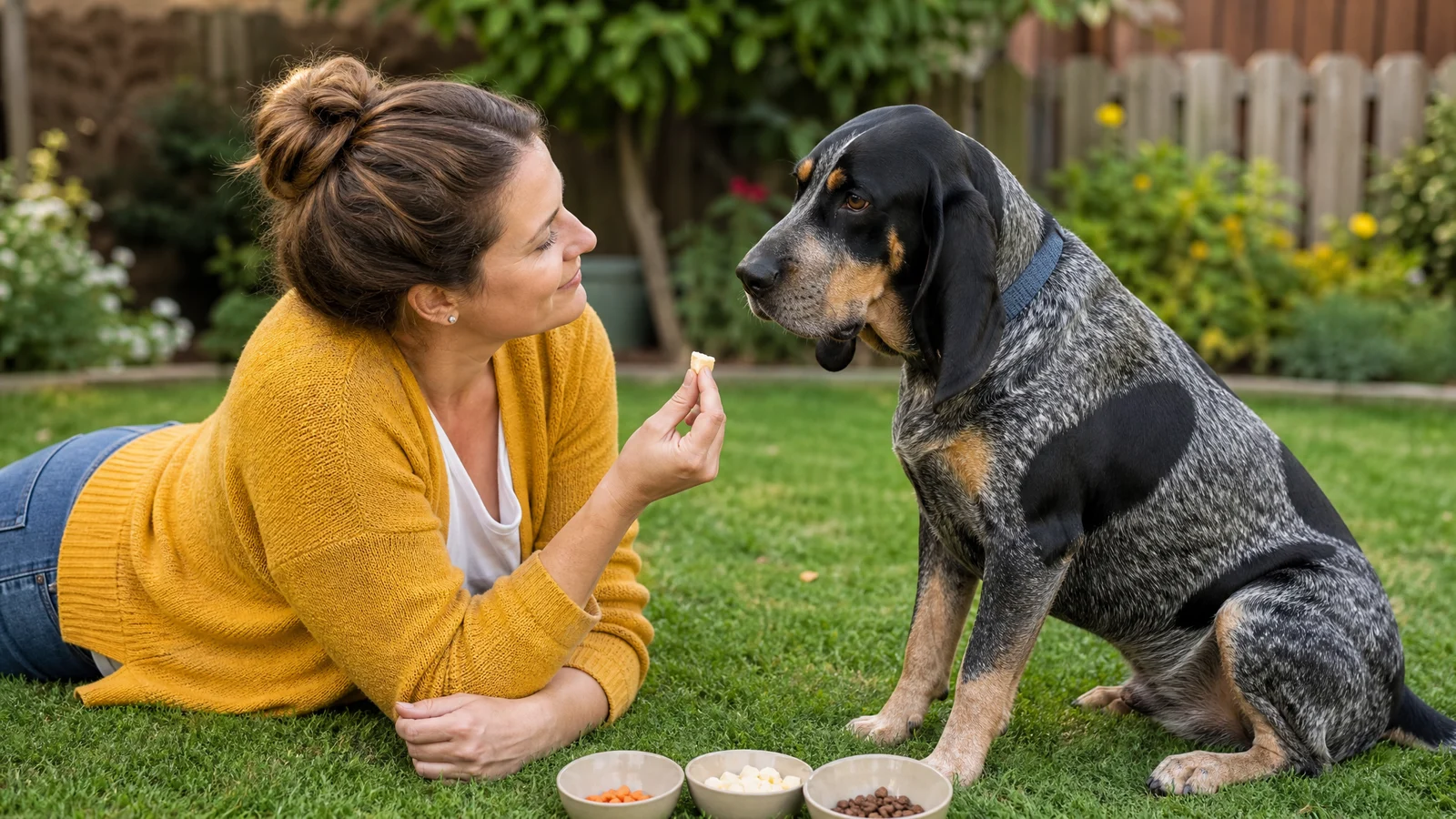 Training basicsWhat Treats and Praise Work Best When Training a Bluetick Coonhound?