 Bluetick
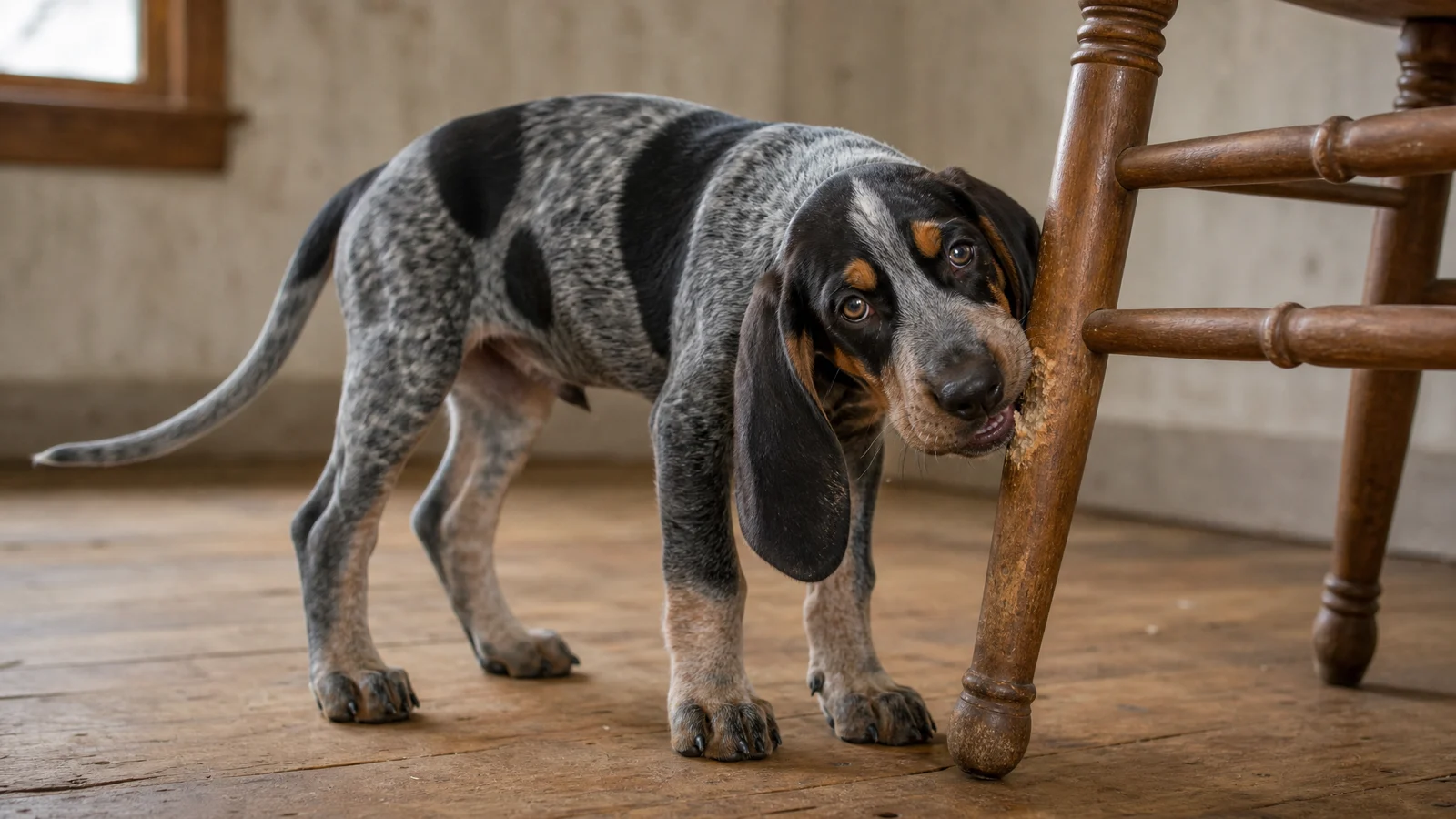
If your Bluetick puppy is around three months old, you are probably less worried about whether the chewing is normal than about how long it lasts and what will be left standing when it ends. The honest answer is months, not weeks, and the mouth is busy for good reasons: sore gums, the curiosity of a young hound, and plenty of energy with nowhere else to go.
Everything below stays inside this one window of puppyhood, so the plan is simple enough to hold in your head. Give the mouth good things to do, pay your puppy for choosing them, and manage everything else until the adult teeth have settled in.
Bluetick Coonhound Puppies and the Teething Months
Knowing where your puppy sits on the calendar turns an endless-feeling problem into a stretch with a far edge. Texas A&M's veterinary school places the juvenile stage between 3 and 6 months, when puppy teeth fall out, adult teeth come in by 6 to 7 months, and puppies start testing limits. Its advice for the chewing is to offer soft rubber toys, balls or stuffed toys and to skip anything with small pieces that could be swallowed.
Those dates describe puppies in general. We have no Bluetick-specific teething dates to offer and would rather say so than invent a calendar, so treat 3 to 4 months as one part of a longer stretch rather than its start or its end.
What we can say about Bluetick Coonhounds is that they are energetic, trainable and playful. A puppy like that is rarely chewing only because of sore gums, since the mouth is also how an eager young hound checks out the world. That gives you two jobs: ease the gums, and give curiosity a better target than your sleeve.
Chew-Safe Rooms for a Bluetick Coonhound Puppy This Month
Teething is the cause, but what your puppy actually chews is decided by your floor plan, so the rooms come before any trick. Two halves of that job are worth separating, what your puppy cannot reach and what they can.
Out of Reach
Shoes, remote controls, eyeglasses and books at puppy height will get tested, so give them somewhere else to live for now. A pen, a baby gate or a leash indoors keeps your puppy within sight until chewing the right things is a habit, and that habit is the whole goal of this stretch.
Within Reach
Toys should look nothing like household goods, which rules out old shoes and socks as playthings, or your puppy has no way to tell theirs from yours. Humane World for Animals suggests freezing a rubber toy so the cold soothes a teething puppy, with supervision so no pieces get chewed off and swallowed. A frozen chew is the one most worth having ready on a sore-gum day.
Bluetick Puppy Mouthing When Teeth Meet Skin
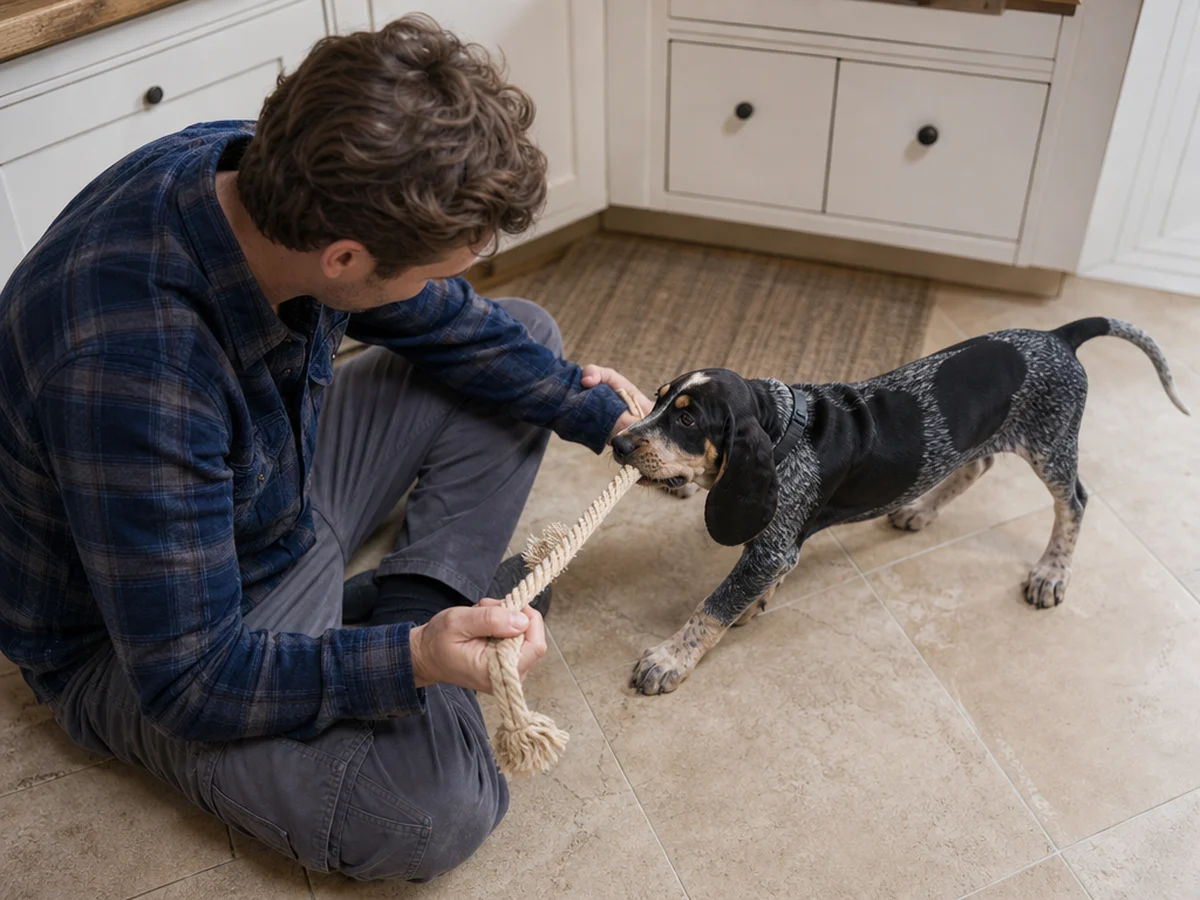
Even in a house set up well, a sore mouth will find a hand or a sleeve now and then, and our Bluetick puppy mouthing guide walks through the swap step by step. At three to four months a bite is often a sore mouth rather than a challenge, so the answer leans toward more to chew and more to do instead of harder rules.
Pay matters here too: when a toy takes the place of a hand, reward the choice with praise or a treat, and our Bluetick treats and praise guide covers what works best for this breed.
Rest and Scent Play in Bluetick Coonhound Puppy Months
A tired mouth gets rougher, which makes rest part of the plan. Short stretches in a crate or quiet pen give your puppy and the household a break, and our Bluetick crate training guide covers making that space a good one.
Give the nose legal work too, because curiosity that has no outlet goes to your furniture. Any of these will do:
- Treat scatter. Toss a small handful of treats across the floor and let your puppy snuffle them up one by one.
- Find the toy. Tuck a favorite toy behind a chair leg or under a towel while your puppy watches, then let them go and find it.
- Puzzle meals. Serve part of a meal from a puzzle toy so eating takes some thinking.
These are games, nothing more. In our experience, a Bluetick puppy with something to do handles the day better than one waiting for the next thing to happen.
Quick Answers on Bluetick Puppy Teething
Some questions only come up once the setup is running, usually just after a toy gets ignored or a game turns rough, so these four answers stay practical. Each one covers something the sections above leave open.
Is Chewing the Same Thing as Mouthing?
They share a cause but need different handling. Chewing is aimed at objects and is mostly a matter of supply and supervision, while mouthing is aimed at people and is mostly a matter of how you respond. Sore gums fuel both, which is why a good chew within reach often prevents the second.
Can I Play Tug With a Teething Puppy?
You can if the play stays gentle, the toy is the only thing in the game, and everything stops the moment teeth touch skin. A puppy who cannot manage that yet needs a calmer game for now, such as following a treat trail across the floor.
Does a Tired Bluetick Puppy Chew Less?
Often, because a bored puppy finds their own entertainment and chewing is a favorite. Mental work counts as much as distance, so a sniffing walk or a puzzle-style meal can tire a hound better than a long march. Our Bluetick exercise guide has ideas that suit this age.
What If My Puppy Ignores the Chew Toys?
Check first that the toy is clearly a toy and not a lookalike for something in the house. Then try a different texture or temperature, such as a frozen one with you watching. If your puppy still goes for you or the furniture, go back to the pen and supervision until the right choice is the easy one.
Your Bluetick Coonhound Puppy Over the Months Ahead
The last question is when you can relax, and the answer follows the calendar rather than one good week. Because the adult teeth are still some months from settled, keep the rooms, supervision and rewards running and ease off one thing at a time. One quiet week proves the plan works, not that the stage is over.
Expect slips along the way. Self-control is still being built at this age, and a job is not the same as impulse control, so aim this month for fewer chewed things and quicker redirects, not zero chewed things.
Keep up routine vet visits, and if anything about your puppy's mouth worries you, call your vet rather than waiting it out. Your vet can look at what a training guide never can. For how this window fits into the rest of puppyhood, our Bluetick puppy training timeline runs from 8 weeks to 2 years.
Tooth Marks Are Part of Bluetick Puppy Teething
A chewed table leg or two is the price of living with a puppy whose mouth is the main way to learn about the world, and it does not mean the plan failed. Stay patient with the mess for now.
What the plan buys you is a puppy who reaches for the right thing a little more often each week, and an owner who stays calm when the wrong thing gets picked. Bluetick Coonhounds are eager and trainable, and that eagerness works in your favor once the gums settle.
 Training basicsAre Bluetick Coonhounds Easy to Train? What Their Temperament Means
 Puppy trainingBluetick Coonhound Puppy Training Timeline: 8 Weeks to 2 Years
 Exercise and jobsBluetick Coonhound Sports and Jobs: Agility, Tracking and More