 Bluetick
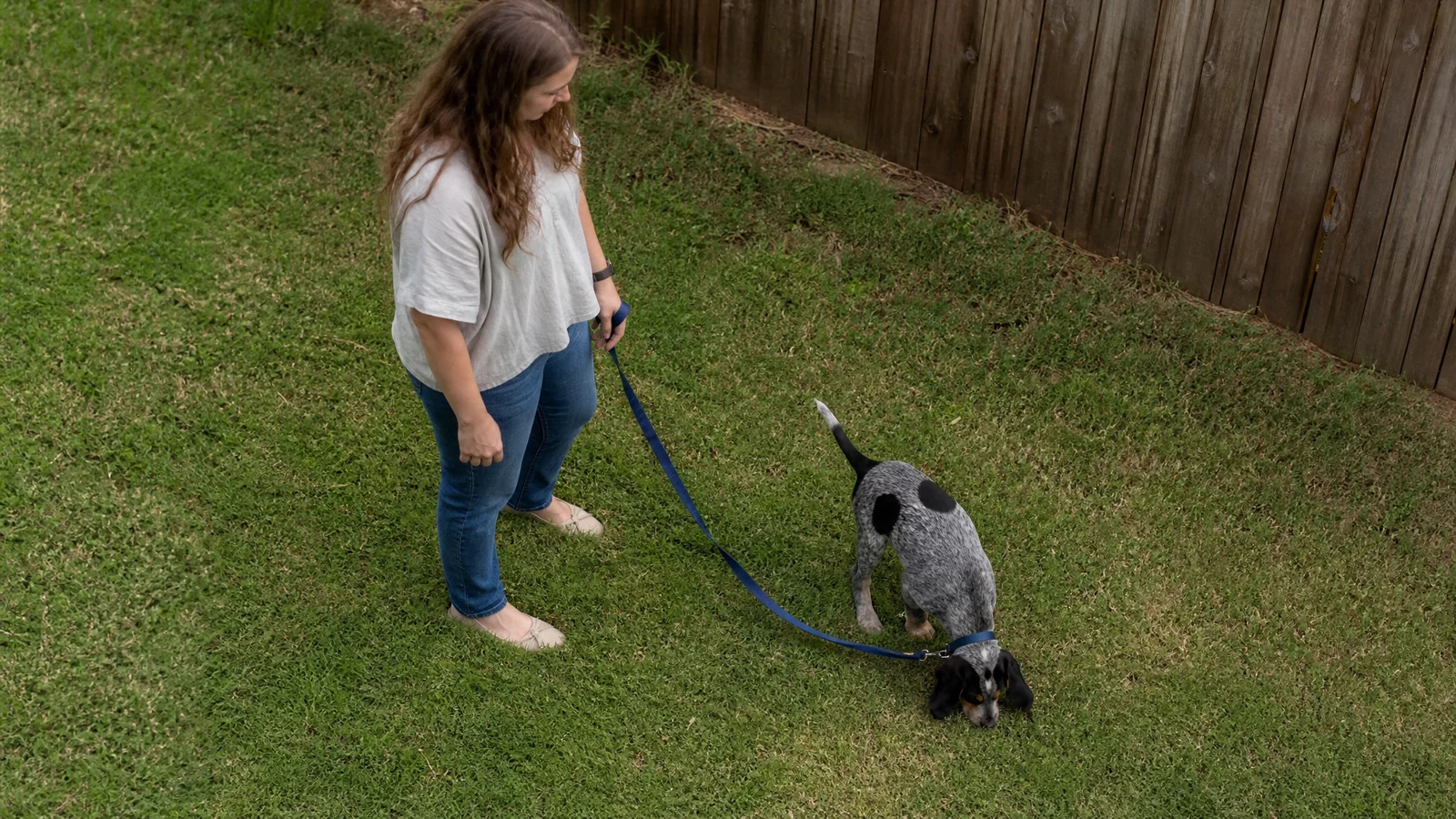
Potty training a Bluetick Coonhound puppy starts with one outdoor destination, close supervision indoors and a reward delivered where the correct behavior happens. The puppy learns through repeated successful trips, not through a response after an accident they no longer connect to the moment.
A young scent hound can become absorbed in outdoor smells before finishing the practical job. Wind, wet ground and a new animal scent may make yesterday’s easy corner feel completely different today. A consistent route and a quiet destination reduce that competition. Thorough cleanup indoors matters too, because an old accident site can remain interesting to a nose even when it looks clean to you.
This guide organizes the toolkit by destination, supervision zone, schedule record, reward delivery, cleanup and freedom map. We will also cover setbacks, health checks and how to tell when the puppy is ready for more access.
Bluetick Coonhound Potty Training Toolkit
The six tools work as one loop. The destination gives the puppy a clear answer, the supervision zone prevents hidden mistakes and the record helps you anticipate the next trip. Each tool closes a gap that another tool cannot cover by itself. Reward and cleanup change what pays, while the freedom map keeps access matched to reliability.
Set up the system before the puppy needs it. Put the leash by the exit, prepare small rewards, choose the outdoor spot and decide which indoor area you can actually watch. Tell every caregiver what counts as supervision and where results are recorded. A plan that requires searching for supplies will arrive too late.
Keep these tools together so every household member follows the same process. A shared setup prevents one person from rewarding outside while another grants freedom after an unfinished trip. Review the pieces before each handoff:
- One outdoor destination reached by a consistent, safely leashed route.
- One small indoor supervision zone with gates or a pen where appropriate.
- One simple record for waking, meals, play, trips, results and accidents.
- Small rewards staged near the exit but delivered at the destination.
- Cleanup supplies ready to remove odor and block access while the area dries.
- A room-by-room freedom map that expands only after repeated success.
Choose a Bluetick Coonhound Potty Destination
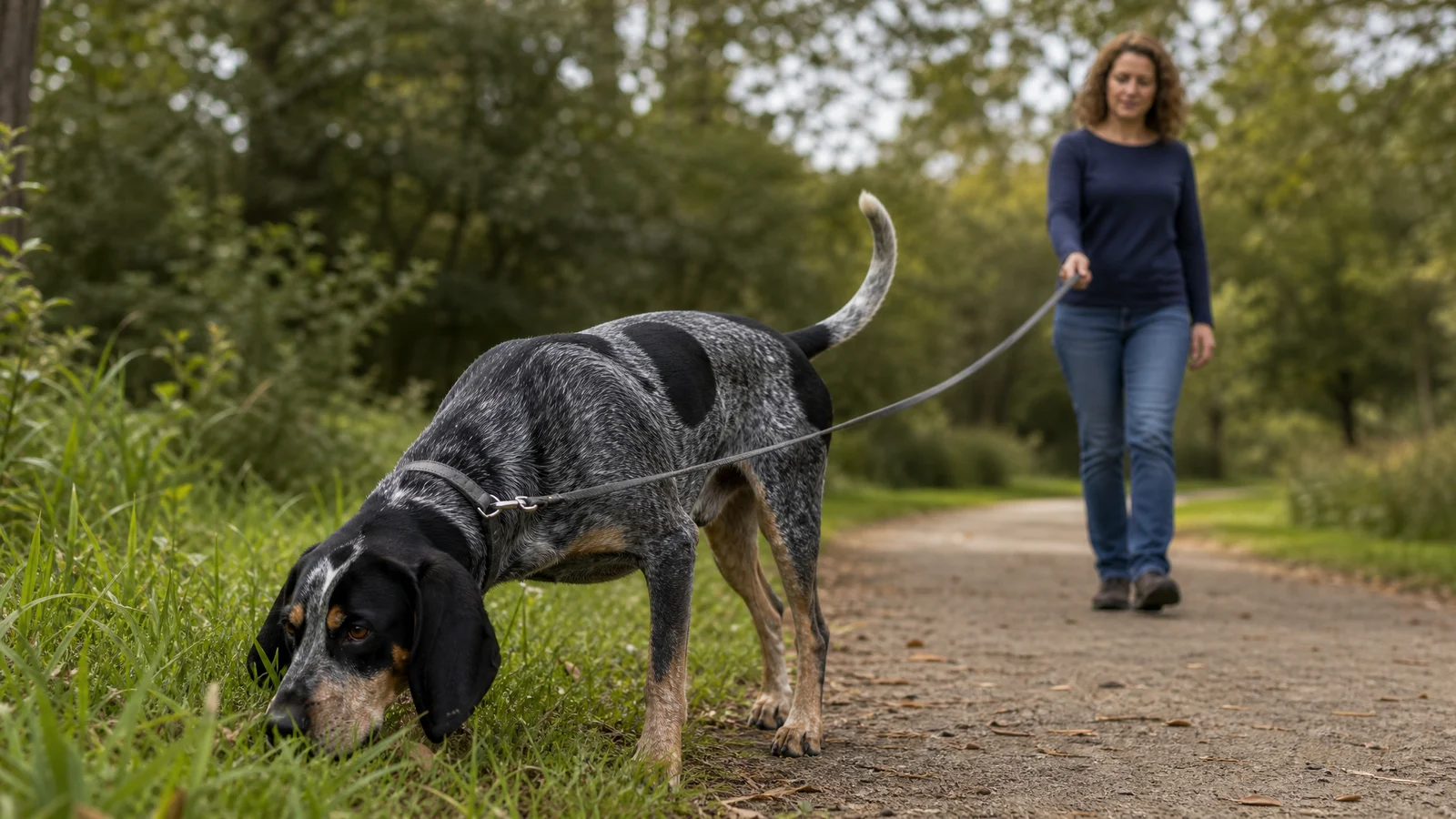
Pick an outdoor spot that is easy to reach in ordinary weather and safe to visit on leash. Check that the route remains usable when the ground is wet, the yard is busy or the usual door is blocked. A boring edge of the yard often works better than the most scent-rich corner. The destination should help the puppy finish, not invite a long investigation before every result.
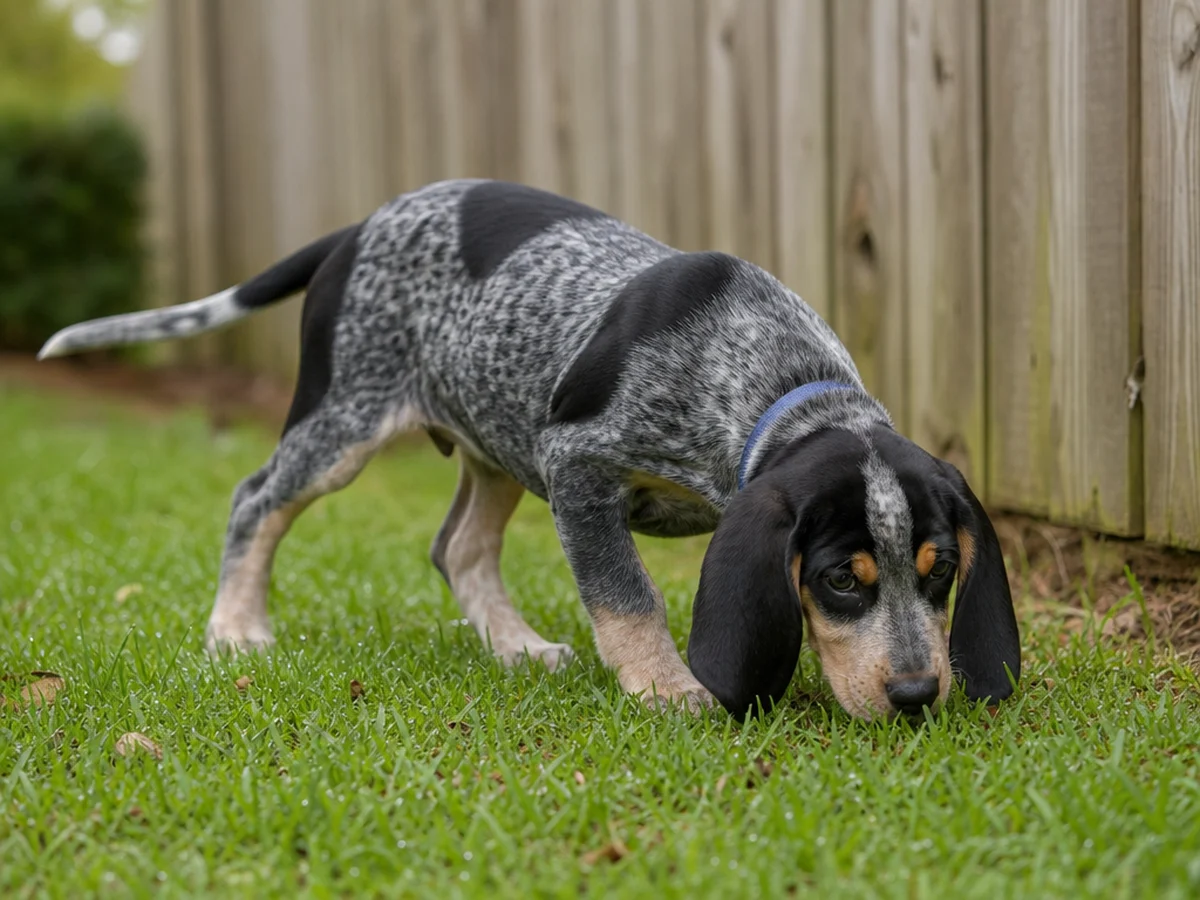
Walk the same practical route and pause without turning the trip into play. Familiar movement reduces choices, which leaves the puppy more attention for the destination and the physical need that brought them outside. Give the puppy enough leash to circle and sniff the immediate area, then stay quiet. Repeating cues can become background noise, especially for a Bluetick whose nose is already busy.
If nothing happens, return to the supervision zone rather than granting full-house freedom. Try again after the puppy has remained close enough to watch. The trip is not a failure. It simply did not earn the next layer of freedom yet.
Bluetick Coonhound Potty Supervision Zone
Direct supervision means an adult can see the puppy's body, not merely hear them somewhere in the room. Phones, cooking and conversation can break that attention, so use the safe zone whenever the adult cannot truly watch. Sniffing the floor, circling, drifting behind furniture or leaving play can be useful signals. The same movements may also mean ordinary exploration, so the response is a calm trip outside rather than alarm.
The zone should be small enough to monitor and large enough for comfortable movement, rest and appropriate play. Place it away from hidden corners and keep the route to the exit clear before each likely transition. Gates, a pen or a leash held by an attentive adult can help. A crate may support rest, but Bluetick crate comfort training remains a separate skill.
If an accident begins, interrupt gently with a neutral sound and move outside. Mark and pay a completed outdoor result. Scolding after the fact can teach the puppy to hide elimination from people, which makes supervision less informative rather than improving house training.
Schedule Records Reveal Potty Patterns
A schedule record replaces memory with evidence. Write down routine events and results in ordinary words, without chasing a universal interval. Patterns become easier to see when every caregiver uses the same terms for a result, distraction and accident. The puppy's pattern can shift with sleep, activity, food, water, surroundings and development, so the record is a live planning tool rather than a promise.
Build a Usable Record
Record entries at the moment, using the same short terms across the household. The table below is a template, not a sample puppy or a fixed schedule. Add rows whenever the puppy's routine produces useful information.
| Event | What to Record | Next Decision |
|---|---|---|
| Waking | Rest ended and the puppy became active | Go directly to the destination |
| Meal or water | What routine event occurred | Supervise closely and prepare the next trip |
| Play or training | Activity began or ended | Offer a destination trip after the transition |
| Outdoor trip | Result, distractions and reward | Choose supervision or mapped freedom |
| Accident | Location and what happened just before | Clean, reduce freedom and revise the next trip |
Read for sequences rather than isolated mistakes. If accidents follow a particular transition, move the outdoor trip earlier in that sequence. If the puppy becomes too distracted at the destination, simplify the route or choose a quieter spot instead of assuming stubbornness.
Deliver Potty Training Rewards Outside
Mark the completed behavior while the puppy is still at the destination, then deliver the reward there. Waiting until you return to the kitchen can pay for coming indoors rather than for eliminating outside. Reward-based training uses a cue or marker and reinforcer to teach the wanted choice.
The reward should matter to the puppy and be easy to deliver. Food is practical, but praise and a brief chance to sniff can add value. Keep the pieces small enough for quick delivery so the puppy stays connected to the location and the completed behavior. Early training with treats suits this breed, yet reward preference remains individual, so watch what produces an eager return to the routine.
Do not always end outdoor access the instant the puppy succeeds. If elimination predicts an immediate return indoors every time, a puppy may delay finishing to preserve outside time. On suitable trips, reward first and allow a short, safe sniff before returning through the normal route.
Potty Training Cleanup Resets Indoor Scent
Cleanup has two jobs: remove the mess and make the location less informative to the puppy's nose. It also protects the record from a misleading repeat, because returning to one scented spot can look like a schedule failure. Block access while you work and follow the product directions for the surface. The goal is thorough odor removal, not a stronger household fragrance layered over the site.
Move the puppy to a safe supervised area before gathering supplies. That choice prevents repeated investigation and keeps human frustration away from the dog. The accident is data for the schedule record, especially the location and the event that came before it.
Once the area is dry, change the setup if the location stays attractive. A gate can remove access, or a resting mat and supervised calm activity can give the space a different use. Management prevents rehearsal while the destination habit becomes stronger.
Map Freedom After Potty Training Success
A freedom map is a floor plan with access earned by demonstrated reliability. It makes household decisions visible, so access does not expand simply because one adult feels optimistic after a good morning. Begin with the supervision zone and the direct path to the exit. Add one manageable area only when the puppy has succeeded repeatedly and adults can still observe meaningful signals.
Add Rooms Without Guessing
Open the next room after a successful outdoor trip, then watch actively. New carpet, hidden corners and furniture create a different context even inside the same home. The puppy has not generalized the rule until they can choose the right destination from that area too.
If an accident occurs, clean it and shrink the map without drama. Return to the last reliable zone, revise the schedule record and create more successful trips before expanding again. Less freedom is temporary information management, not punishment.
Overnight access follows the same logic. Choose a safe rest setup that matches the puppy's current reliability and need for trips. Our Bluetick training guide explains how consistent cues and reward timing support skills across rooms.
Potty Training Progress and Health Checks
Progress looks like more successful destination trips, clearer signals and a growing ability to move through mapped rooms without accidents. The puppy also returns to the routine willingly, which shows the destination and human presence have not become worrying. Setbacks can follow routine changes or access that expanded too quickly. Return to the tools instead of treating one mistake as proof that training failed.
A sudden change in frequency, effort, comfort or previously reliable house training deserves veterinary advice. Keep regular vet visits on the calendar and bring the schedule record, because the pattern can help the veterinarian understand what changed. Training should not be used to explain away a possible health issue.
Reward-based teaching also protects welfare. Training with rewards makes wanted behavior more likely, while welfare research links less reward-focused methods with more stress behavior. The practical standard is a puppy who stays willing to eliminate in your presence.
Choose the destination today, stage the leash and reward, and draw the first supervision zone on your freedom map. Those simple tools turn the next waking, meal or play transition into a planned success. Keep the first goal narrow: one clear route, one watched indoor zone and one well-timed reward can teach more than access to the whole house.
For a nose-led Bluetick puppy, consistency of place and payment makes the rule easier to find. Repeat that clear pattern before adding rooms, distractions or a more flexible route.
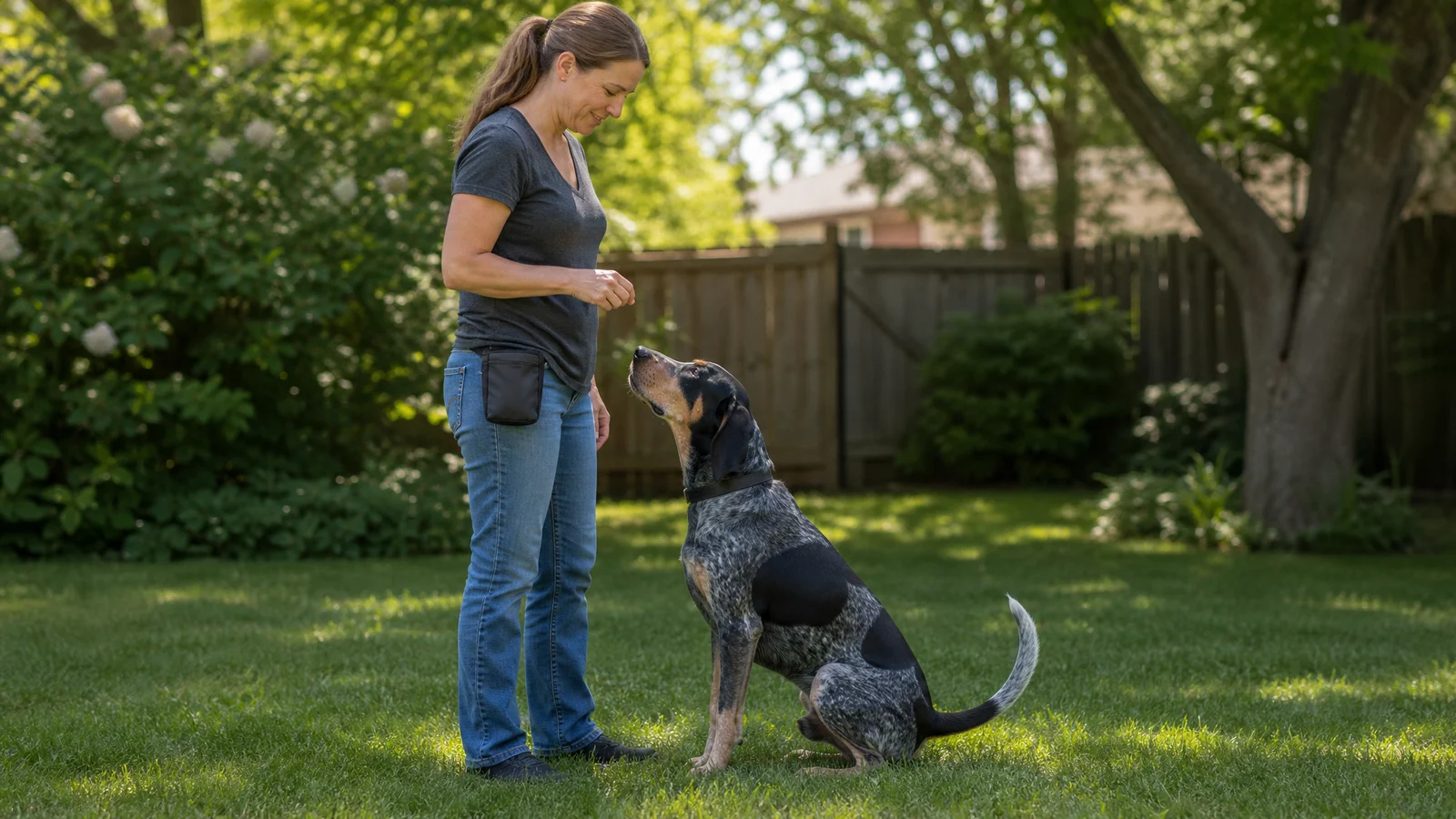 Training basicsHow to Train a Bluetick Coonhound With Rewards, Step by Step
 Training basicsHow to Leash Train a Bluetick Coonhound Who Pulls
 BehaviorIs a Bluetick Coonhound a Good Family Dog?