 Bluetick
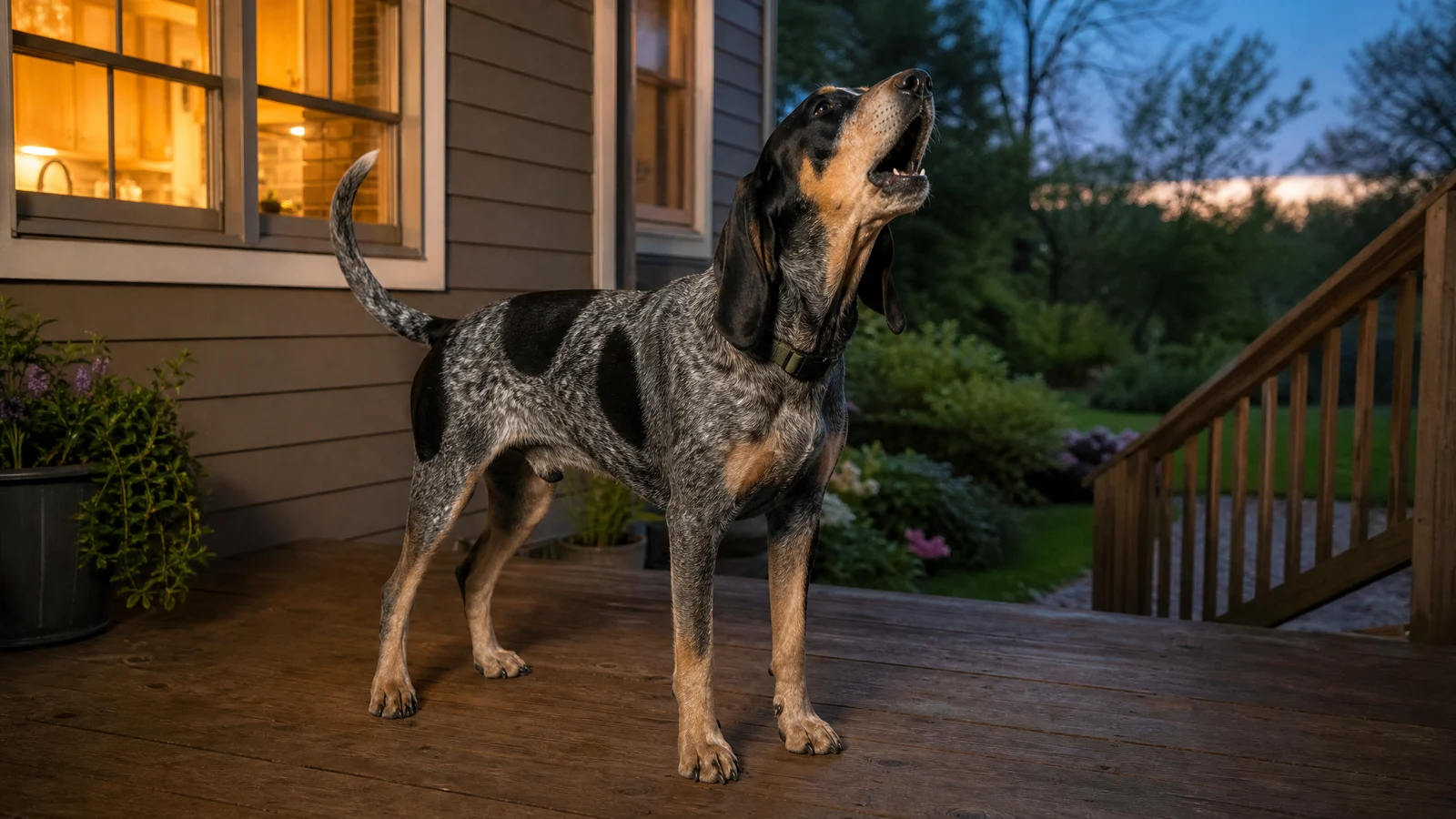
Owners often describe the same dusk: a Bluetick Coonhound planted at the back door, head high, pouring a long bawl at a squirrel, an empty street, or something only their nose can read. Inside, the family winces, and next door a porch light clicks on. The dog is not misbehaving. A scent hound is using the voice they were built to use.
When that voice has no outlet, it tends to grow louder and more mournful, and the cost lands on your neighbors, your sleep and a dog who never learns to switch off. Handled early and calmly, the same voice becomes something you can shape. Read on for how to spot what sets the howling off, log a week of episodes, meet the nose's needs, teach a quiet cue and rehearse it around real triggers.
Spotting What Sets Off Bluetick Coonhound Barking
The first stage is noticing, and it costs nothing but attention. Howling rarely starts from zero, and there is almost always a build-up in the moments before. Catching that build-up gives you something to work with later.
Watch the head and nose. A lifted head, a nose working the air, a stiff stance at a window or fence, or a sudden freeze on a walk usually comes before the voice. Many owners report that their dog starts baying the instant the wind carries a wild animal's scent, even when the animal is as far off as a quarter mile.
Arrival points are another common trigger. Plenty of owners find that stepping out of the car somewhere exciting, such as a trailhead or the woods, sets off intense baying that turns every head nearby. The pitch varies a lot from dog to dog, and some owners describe a higher, more frantic voice than others hear from theirs.
Not every loud episode means the same thing, so learn to separate them by context. These are the patterns worth telling apart:
- Baying with a working nose and fixed attention usually points to scent or arousal, and it tends to stop when the trigger is gone or out of reach.
- Long, mournful howling in the evening or while the house is quiet often points to boredom or unspent energy, especially after a day with little to do.
- Howling that starts as you leave, along with pacing, drooling or frantic attempts to escape, points to distress about being alone and needs a different approach.
- Loud barking at other dogs can mean opposite things. One dog howls, lunges and keeps looking back after the other dog has gone, while another is simply inviting play and quiets once they can sniff.
If the noise is aimed at visiting kids or dogs, our guide on whether a Bluetick is a good family dog covers that side in more depth.
Why Does Barking Come Naturally to a Bluetick Coonhound?
Before changing anything, it helps to know what you are asking of the dog. The voice is not a flaw that crept in. It is part of what the breed was shaped to do, and that moves your goal from silence to control.
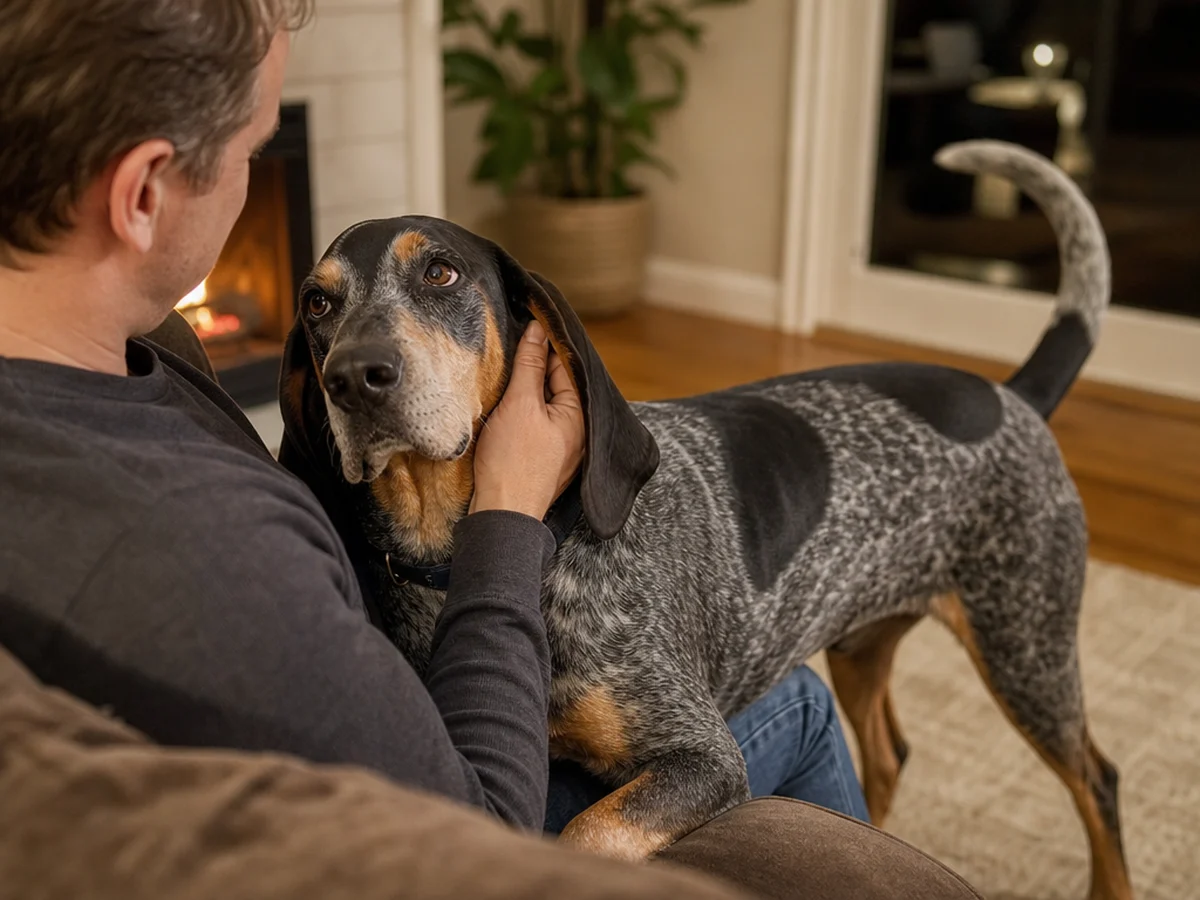
The AKC rates this breed 4 of 5 for barking, where 5 means very vocal. The breed standard actually calls for a free tonguer on trail, with a medium bawl or bugle voice when striking and trailing, which may change to a steady chop when running and a steady coarse chop at the tree. The result is a baying, bawling, chopping sound that some people find cacophonous and coon hunters call the music of the night.
The voice comes attached to a nose and a body to match. These hounds are described as relentless and single-minded on a trail, and one famous line was remembered for picking up a week-old trail and running it for 30 hours at a stretch. At home the same dog is often sweet, affectionate and happy to snooze at your feet, which is why the switch to full voice can startle new owners.
Common advice says to ignore barking until it stops. With a hound whose baying is paid for by scent and excitement, ignoring alone seldom changes much, because the trigger itself is the reward. The plan below works on the causes and teaches a better habit in its place.
Logging Barking Episodes for One Week
The second stage is recording. A planner's instinct is to measure before acting, because a week of notes tells you whether you are dealing with scent excitement, boredom or something else. It also keeps you from rebuilding your routine around a guess.
What to Note Each Time
Keep a notebook or phone note within reach and fill it in as soon as the noise ends. Quick, rough entries beat detailed ones you never write. Each entry should answer a few simple questions:
- What time was it, and where was the dog: indoors, in the yard, at a window or in the car?
- What happened just before, such as a sound, an animal, a visitor, your departure or nothing you could see?
- Did it sound like a trail bay or a long mournful howl, and how long did it last?
- How much exercise and sniffing had the dog had that day?
- What did you do, and how quickly did the dog settle afterward?
How to Read the Log
At the end of the week, look for clusters. Entries bunched around dusk or late evening usually mean the day's outlets fell short. Entries tied to one window, door or yard corner point to a trigger you can manage by changing what the dog can see or reach.
Look at your own responses, too. If attention, a treat or an opened door followed most episodes, the howling may be paying off in a way you did not intend. If entries cluster around your departures, treat that as a separate problem and bring the log to your veterinarian.
Regular vet visits are worth keeping for a hound of any age, since pain or illness can change a dog's voice and habits. A sudden shift in how or when your Bluetick vocalizes deserves a checkup before any training plan.
Can Exercise and Work Quiet a Barking Hound?
Often, yes, though not in the way most people expect. Neglected, under-employed coonhounds with no outlet for their hardwired impulses can develop loud, mournful vocalizing that disturbs the neighbors. The third stage is to meet those needs on purpose rather than hoping the dog wears out.
Energy for this breed rates 4 of 5, and the nose is the real job. A Bluetick is happiest with something to do, and for them that means following a scent. Mental stimulation sits at a moderate level, which suggests the kind of mental work matters more than the amount.
Here is the trade-off many owners miss. Slow, sniff-focused walks tend to leave a Bluetick calmer at home than running does, and hard running can leave some dogs harder to settle. Letting the nose work seems to satisfy the dog in a way speed does not, which also keeps vocal excitement down. Faster exercise builds fitness, and fitness raises what the dog asks of you tomorrow.
A workable daily rhythm leans on the nose and then on rest:
- Give at least one long leashed outing where the dog leads the pace and sniffs freely instead of marching beside you.
- Add a scent game at home, such as scattering treats in grass or hiding them around a room, shortly before the time of day your log shows trouble.
- Use play only in a securely fenced yard, because scent and prey drive can override attention quickly outdoors.
- Finish with calm downtime on a bed or mat so the dog practices winding down.
Increase the load gradually, and expect the change to build over weeks rather than overnight.
Teaching a Bluetick Coonhound a Quiet Cue
The fourth stage is teaching, and it works best after a good day of sniffing. A satisfied Bluetick can think, while one still wound up cannot. Begin in a calm room with small, soft treats, and pick a moment with mild noise but no major trigger.
The approach is to split the skill into tiny pieces and pay for every piece in order, which is the basis of marker-based training. One familiar method has you calmly say the cue while the dog barks, then prompt silence with a steady stream of tiny treats. The quiet cue typically takes several days or more to sink in, so plan on that timeline or longer with a hound.
- Watch for a natural lull in the noise, however brief. The instant it happens, say a short marker word like "yes" and follow it with a treat.
- Repeat until the dog begins to pause on purpose, looking to you for the reward.
- Lengthen the pause gradually before you mark it, so the dog learns that a longer stretch of quiet earns the payment.
- Once the dog stops reliably, say "quiet" just before the pause, then mark and reward.
- Add an alternative behavior, such as going to a mat or carrying a favorite toy, and reward that choice generously.
Mind the cost of a clumsy start. If you hand over a treat in the middle of a howl to make it stop, the dog can learn that howling produces treats. Reward the pause, not the noise, and if the dog cannot stop, calmly end the game or move them somewhere quieter and try again later at an easier level.
Practicing Quiet Around Real Barking Triggers
The fifth stage is proofing. A cue learned in the kitchen often falls apart at the window, so you rehearse it where it counts, starting with a weak version of each trigger and building toward the real thing. Skipping ahead is the usual reason a good cue stops working.
Start with a doorbell or knock played at low volume, rewarding any quiet, then raise the difficulty slowly over several sessions. For wildlife, practice on leash at a distance where the dog notices an animal or scent but can still take a treat. At arrival spots such as a trailhead, wait beside the car for a calm moment, mark it and reward before the dog heads into the excitement.
Neighbor-friendly management buys time while the training builds. Block the view from busy windows, and bring the dog inside at dusk, when wildlife and passers-by are most active. Keep long unsupervised stretches in the yard off the schedule, since a bored hound outside has the loudest outlet and the biggest audience.
A short, friendly heads-up to nearby neighbors that you are working on it, with a way to reach you, tends to turn complaints into patience. Many Blueticks stay somewhat vocal for life, but owners often report that their dog becomes quieter about it over time with enough sniffing outlets and consistent practice.
Barking Progress and When to Call a Professional
The final stage is judging results honestly. Progress with a Bluetick looks less like silence and more like a dog who uses their voice for a shorter time, settles faster and responds when asked. The lesson of this breed is that the voice is part of the dog, and the noise problem is mostly a need that has gone unmet.
Compare your latest notes against the first week's log, and look for these signs that the plan is working.
Bouts of baying or howling become shorter and less frequent, and the dog pauses at the quiet cue even around moderate triggers. They also settle within a few moments after a trigger passes.
You may notice that evening howling drops off on days with good sniff time, and that walks and arrivals feel less frantic, with more looking back to you.
Some signs call for a professional instead. Contact your veterinarian first, who can rule out medical causes and refer you to a certified trainer who uses reward-based methods or a veterinary behaviorist. Reach out if you see any of these.
Howling that keeps escalating despite weeks of steady work is one reason to reach out, as is panic when left alone, such as drooling, pacing or frantic attempts to escape. A sudden change in voice or behavior with no clear cause also deserves a call.
The same goes for lunging, growling or fixation on other dogs or people, and for formal complaints from neighbors or a landlord that put your housing at risk.
 Training basicsCrate Training a Bluetick Coonhound and Preventing Separation Anxiety
 Exercise and jobsHow Much Exercise Does a Bluetick Coonhound Need? Plus Brain Games
 Training basicsHow to Potty Train a Bluetick Coonhound Puppy