 Bluetick
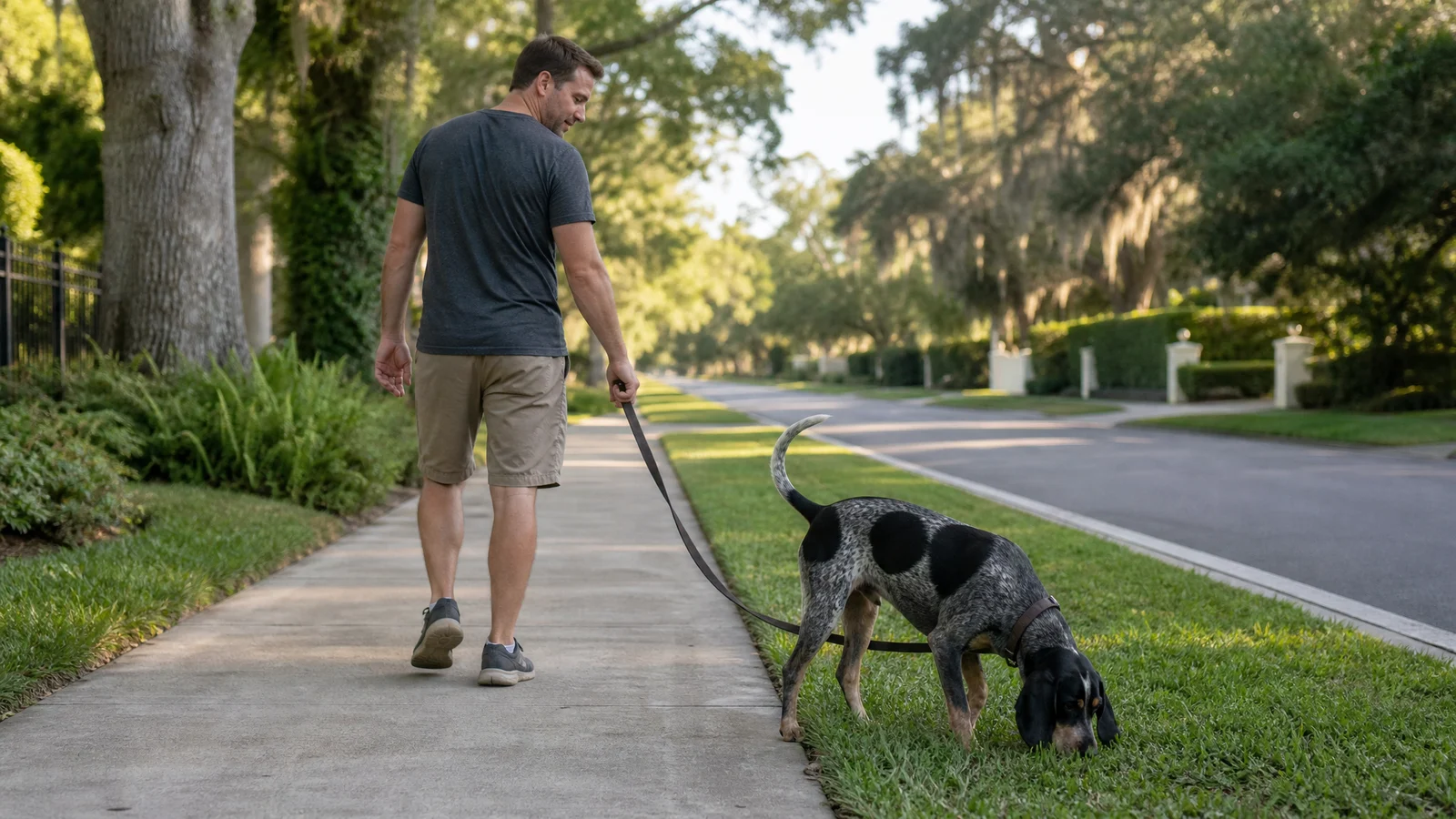
A Bluetick Coonhound needs a dependable pattern of physical movement, scent-led exploration, mental work and recovery, not one universal exercise duration. Age, health, weather, surroundings and current fitness all change what an appropriate day looks like.
The breed brings high energy and a strong prey drive, yet they can also enjoy resting near their people. Our position is that exercise should create a dog who can think and settle. Chasing exhaustion can build fitness without teaching an off switch or showing the dog how to recover around ordinary household activity.
This guide opens with a flexible baseline, then works through four clearly hypothetical case files: an early-shift adult, a school-day family, an apartment household and a home with a senior dog. It finishes with brain games and signs for adjusting the plan.
Bluetick Coonhound Exercise Has Four Functions
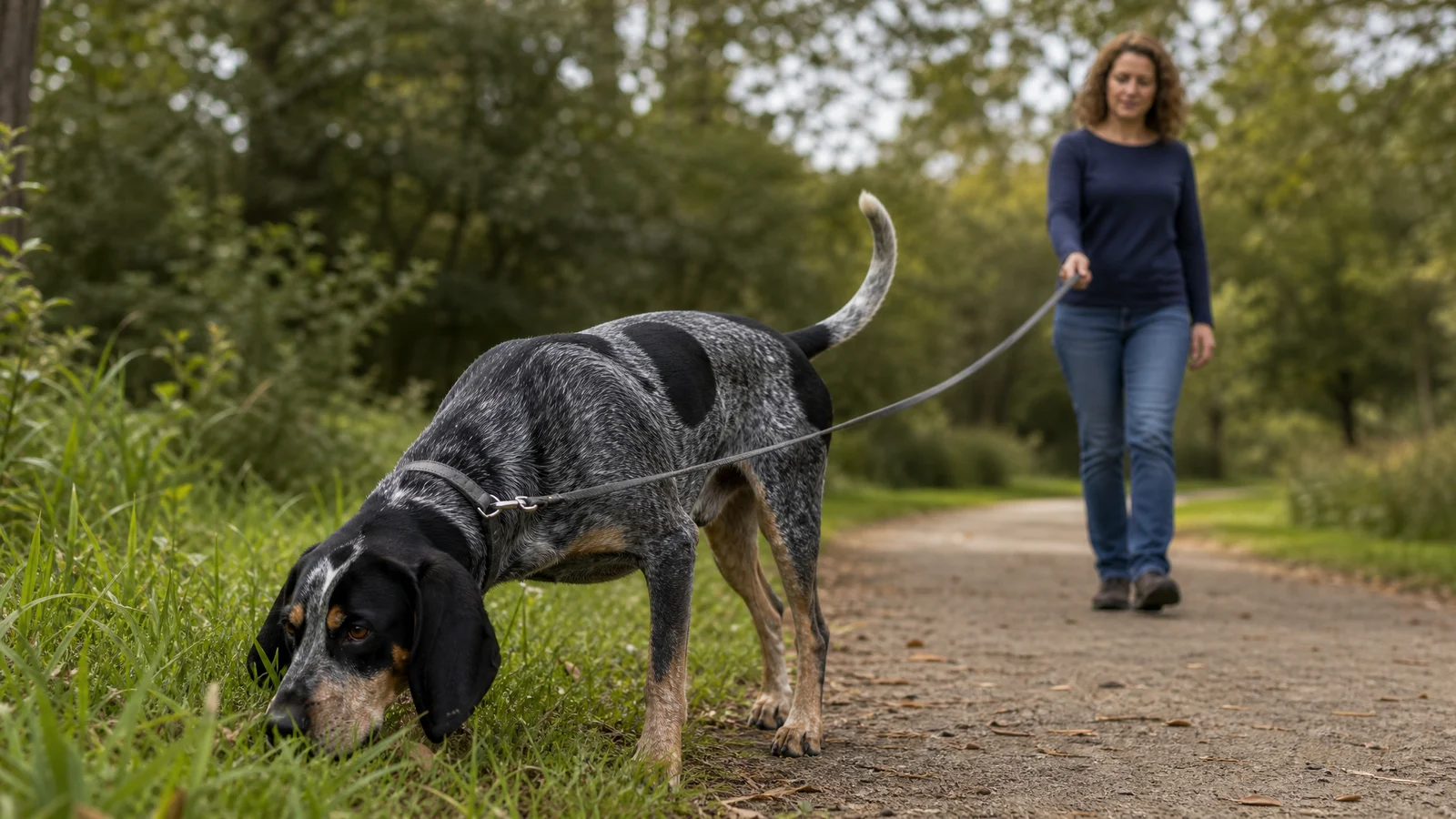
The baseline starts with safe access to movement. Long leashed walks and play in a securely fenced yard fit the breed, while unfenced freedom creates an unnecessary risk for a scent hound with strong prey drive. Secure handling lets exploration happen without turning recall into a safety gamble. The breed exercise guidance supports both leashed walks and enclosed play.
Movement alone is incomplete. Sniffing lets the dog gather information at their own pace, while brief training asks them to turn back toward you. Quiet recovery then teaches the household skill people often miss. A useful routine rotates through those functions instead of repeating one fast activity.
Build from the dog you have today. Puppies need protected growing bodies and shorter experiences, adults need gradual conditioning, and older dogs may prefer gentler outings. Exercise needs vary, so regular vet visits should inform changes for age, health or a sudden drop in stamina.
Use this baseline as a menu rather than a quota. A complete day usually contains several of these elements, arranged around the household. The order can change while each function remains visible:
- A leashed outing with enough slack and time for deliberate sniffing, not only distance covered.
- Movement or play in a securely enclosed area, adjusted to the dog's body and the weather.
- A short reward-based skill session that asks for focus, pauses and easy success.
- A scent puzzle or search that has a clear start, a find and a finished cue.
- Protected rest in a quiet place where nobody keeps restarting the action.
Early-Shift Bluetick Exercise Case File
This first household is hypothetical. One adult leaves early for work and returns later in the day. The plan puts the most substantial outing before departure, when the person has control of the schedule, and reserves a simpler activity for the evening rather than gambling on motivation after a tiring day.
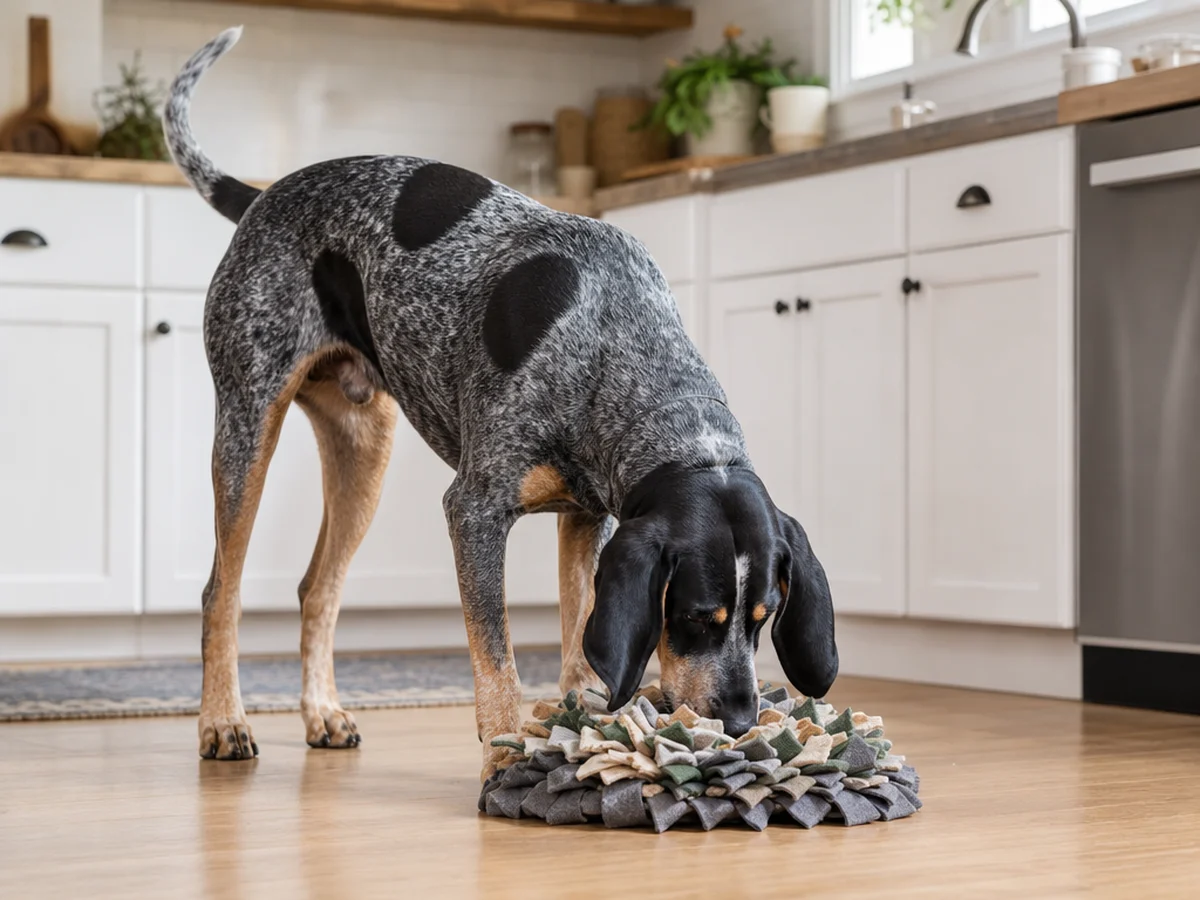
The morning outing mixes steady walking with planned sniff pauses on a leash. Route variety can come from reversing direction or choosing a different quiet block, not from seeking heavier traffic. Back home, breakfast can arrive through an easy food search, followed by a predictable rest period. The aim is not to flatten the dog before work. It is to meet movement and scent needs, then rehearse settling while the household is still calm.
After work, the adult checks the dog's state before choosing the second outlet. Loose posture and an easy greeting may suit a calm neighborhood walk. Frantic pacing may call for a quieter search indoors first, because adding a stimulating route to an already aroused dog can make settling harder.
The case succeeds when the morning plan is sustainable on ordinary workdays. If it depends on perfect weather or heroic effort, it will collapse. A shorter backup route, an indoor box search and help from a trusted walker can keep the pattern intact without pretending every day will look the same.
School-Day Family Exercise Case File
This second case is also hypothetical. A family has school departures, work commitments and an enclosed yard. The risk is assuming access to the yard equals exercise. A Bluetick left outside without a shared task may rehearse scanning, following boundary scents or vocalizing instead of moving in a useful way.
The family divides functions rather than assigning one person the whole exercise burden. An adult handles the leashed outing. A child can help scatter food for a supervised yard search, and another family member can reward a mat settle. Adults remain responsible for the leash, gates and all dog-child supervision.
A written handoff prevents duplicate effort and missed needs. The record can stay qualitative, because exact distances do not explain whether the dog settled. A plain note also helps the family notice whether difficult evenings follow the same kind of day. These entries tell the family more:
- Note whether the outing was sniff-focused, brisk, playful or mostly a training walk.
- Record the dog's focus at the start and whether they could respond to familiar cues.
- Mark which scent game or skill session happened, so the next person chooses a different function.
- Describe recovery as quick, gradual or difficult, including pacing or persistent vocalizing.
- Flag unusual stiffness, reluctance or fatigue so an adult can discuss it with the veterinarian.
The family should protect a quiet finish. A dog who is repeatedly excited by every returning person never practices coming down. Put greetings, food searches and play on cues, then let the same bed or rest area signal that the active part of the evening is over.
Apartment Bluetick Coonhound Exercise Case File
The third hypothetical household lives in an apartment with no private yard. That constraint does not automatically make the home unsuitable, but it makes route choice, noise management and reliable leashed access more important. Every potty trip also exposes the dog to hallway sounds, neighbors and outdoor scents.
The household chooses quieter routes and uses distance from busy entrances so the dog can still eat and respond. Sniffing happens in selected patches instead of at every doorway. If the Bluetick becomes fixed on a scent or animal, the person turns away early and creates space rather than trying to pull attention back from full arousal.
Indoor work carries more of the mental load. Open-box searches, food hidden around one room and brief mat training can happen without pounding floors or racing through shared hallways. Rotate the problem rather than making each search larger, so space does not dictate difficulty. Canine enrichment guidance supports opportunities to smell, chew, play and scavenge, which can be supplied in controlled forms.
The apartment plan also accounts for the breed's voice. Search games should end before frustration rises, and hallway practice begins far enough from activity for quiet success. If everyday triggers create lunging or vocal arousal that cannot be managed safely, a qualified reward-based professional can help redesign routes and setups.
Senior Bluetick Exercise Case File
The fourth case is a hypothetical older Bluetick whose family wants to preserve enjoyable activity. The schedule keeps familiar sniffing routes but allows more choice about pace and distance. A senior can still need meaningful work even when repetitive impact or long outings no longer suit their body.
Footing and recovery become central. The family chooses stable surfaces, avoids abrupt bursts and watches how the dog rises and moves later, not only how eager they looked outside. Familiar routes make those changes easier to notice because the environment stays relatively constant. Excitement can temporarily hide discomfort, so the after-effect belongs in every decision about the next outing.
Scent games can shrink in area while remaining interesting. Food boxes spaced across one room, a toy hidden behind an easy barrier or a choice between two paths still asks the nose to solve a problem. The dog should be able to search without slipping, twisting sharply or becoming frustrated.
Regular veterinary guidance matters whenever mobility, breathing, appetite or recovery changes. The family's job is not to identify the reason. They can record what changed, reduce the immediate demand and bring useful observations to the veterinarian before rebuilding the schedule.
Brain Games Complete the Exercise Plan
Mental work complements physical exercise, but it does not replace appropriate movement. A dog who has only puzzles may still need to stretch, walk and explore. A dog who only runs may return fitter yet no better at pausing, checking in or settling around household life.
Container searches are a strong starting point. Put food in several open boxes in a quiet room and release the dog to find it. As the dog understands the game, leave more boxes empty and vary their positions. Keep the target safe, visible to you and unrelated to wildlife or hunting.
Training can become a brain game when the problem is clear. Ask for a hand target, a turn around an object or a pause on a mat, then reward the correct choice. Alternate active cues with stillness so arousal does not climb through the whole session.
Our Bluetick sports scorecard compares nose work, tracking-style games, rally and agility foundations. Choose one that fits the dog's body and recovery, then keep ordinary walks in the plan rather than treating the sport as a substitute for daily care.
Adjusting Bluetick Coonhound Exercise
Judge the routine by patterns across days. Too little useful activity may show as difficulty settling, repeated attempts to create a job or vocalizing when the household becomes quiet. Those signs are not proof of a single cause, but they justify reviewing whether movement, sniffing and shared work are actually happening.
Too much or poorly matched activity can look like reluctance, stiffness, prolonged fatigue or a dog who stays highly aroused after every outing. A stressed dog may not benefit from being taken into an even busier place. Reactive dog guidance supports management and professional help when walks cannot be handled safely.
Change one part at a time. Alter the route, pace, search difficulty or recovery period while the other pieces stay familiar. That approach tells you what helped and prevents a complete schedule overhaul from hiding the useful detail.
A workable exercise plan leaves a Bluetick ready to engage and able to rest, with safe leash or fence management around the nose. Start from one hypothetical case that resembles your constraints, adapt it to veterinary guidance and your dog's response, and let recovery guide the next adjustment rather than exhaustion.
 Training basicsHow to Potty Train a Bluetick Coonhound Puppy
 Training basicsHow to Train a Bluetick Coonhound With Rewards, Step by Step
 Training basicsHow to Leash Train a Bluetick Coonhound Who Pulls