 Bluetick
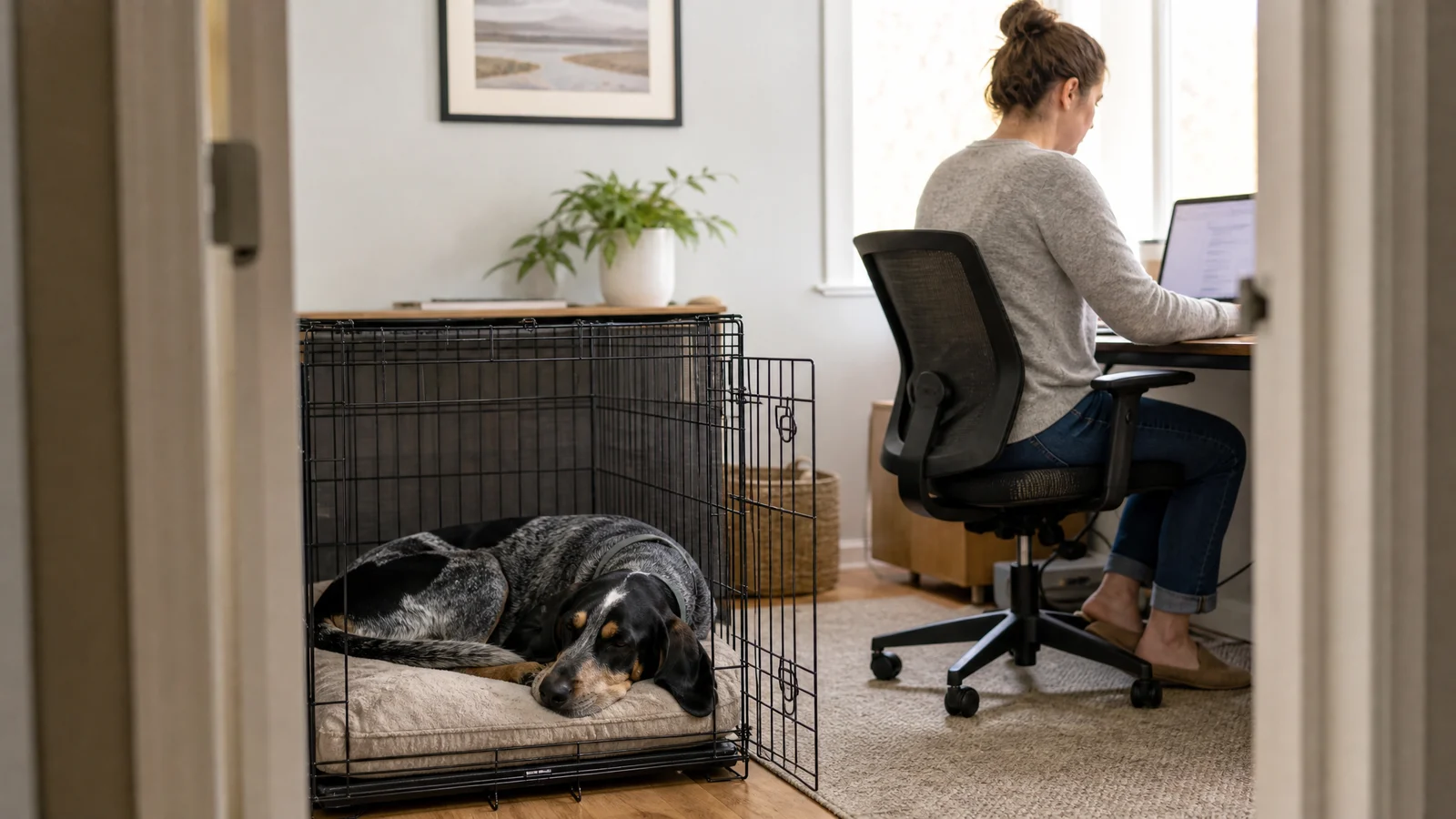
A Bluetick Coonhound may nap happily in a crate while you work nearby. Yet the sound and sequence of you leaving through an exterior door can trigger distress. Crate comfort and coping with absence are different skills. Treating them as one lesson is how calm practice turns into a confinement struggle. The contrast lets you lower the correct demand before worry grows.
We take a three-skill view: teach the resting place, then household separation, then actual departures. The breed's affection and powerful voice make careful observation especially valuable, but no breed description can tell you how an individual dog feels when alone.
This guide contrasts those three jobs, shows how to reward voluntary entry and closed-door calm, then explains departure practice and the signs that call for a safe room, veterinary advice or qualified behavior help instead of more crating.
Three Crate Training Skills to Separate
The first skill is location comfort. The dog chooses to enter, can eat or rest inside and stays loose while the person remains available. The second is household separation, such as resting behind a gate while someone cooks in another room. The third is tolerating a real departure. Train each column separately so success in the resting place does not hide a gap elsewhere.
The table keeps the contrasts visible. Progress in one column does not automatically transfer to another, so test each skill on its own. A dog who struggles deserves an easier version of that exact task, not a longer repetition of a different one.
| Skill | What Changes | Early Success | Reason to Pause |
|---|---|---|---|
| Crate comfort | Place and door | Voluntary entry and loose rest | Avoidance or frantic exit |
| Household separation | Distance inside the home | Settling while the person moves | Following, pacing or rising voice |
| True absence | The person leaves | Calm behavior through departure | Drooling, escape attempts or panic |
Comfort Is About the Place
A comfortable crate predicts food, rest and choice. It is never a place where frustration is sent out of sight. Crate welfare guidance describes the space as a safe haven rather than punishment, which sets the tone for every step below.
Comfort also includes the setup. The dog needs room to stand, turn and lie naturally, stable footing and a location away from extremes of noise or temperature. Remove unsafe items when the dog is unsupervised and ask your veterinarian about individual safety needs during regular vet visits.
Absence Is About the Person
Actual absence adds departure cues, a closed exterior door and uncertainty about return. A dog may react to keys or shoes before the person moves toward the crate. That response tells you the emotional task begins earlier than confinement.
House soiling, barking or destruction during absences can have different causes. When those behaviors appear with drooling, pacing, escape efforts or distress around departure cues, separation distress signs deserve professional attention rather than a manners label.
Bluetick Coonhound Crate Comfort
Begin with the door secured open so it cannot swing against the dog. Place the crate where normal household life is visible but not chaotic. Let the Bluetick investigate without being pushed, carried or lured so deeply that they feel trapped when they turn around.
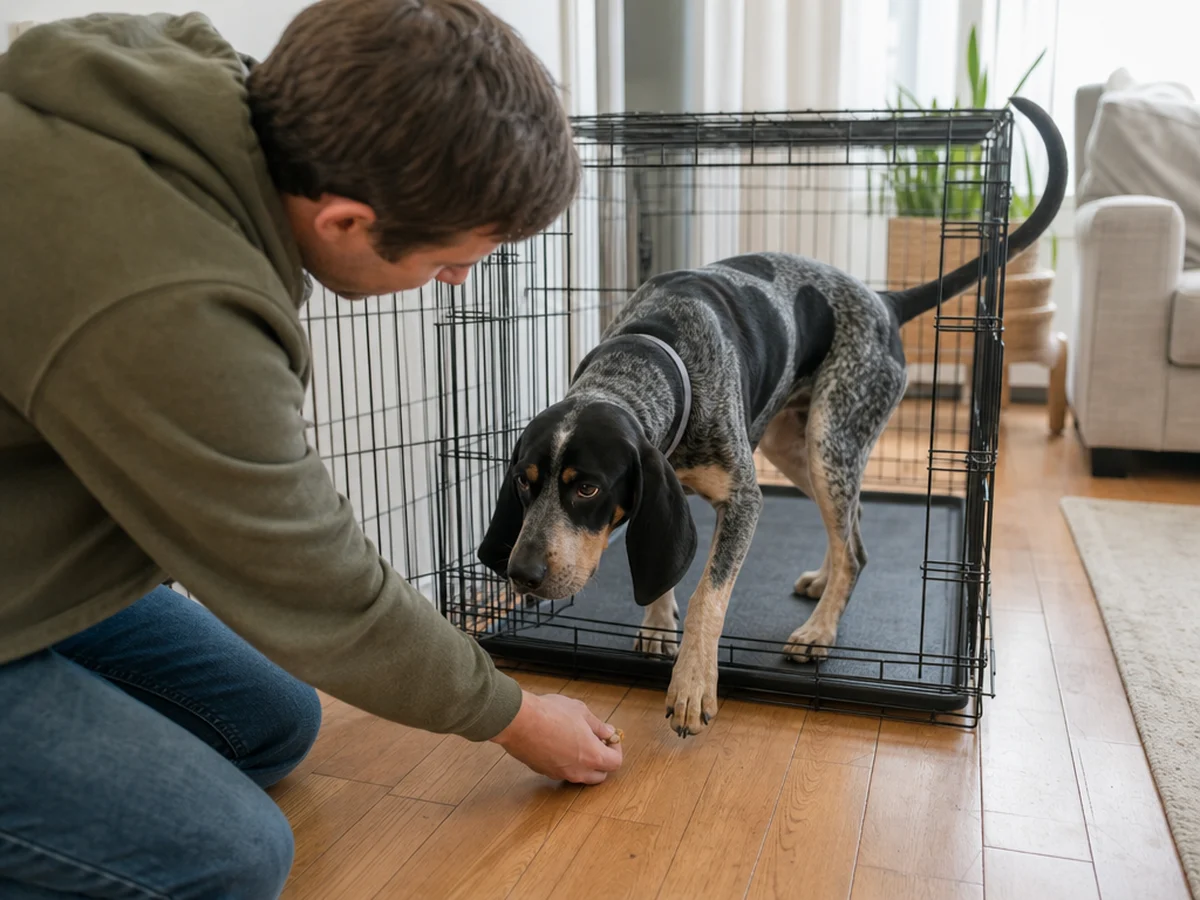
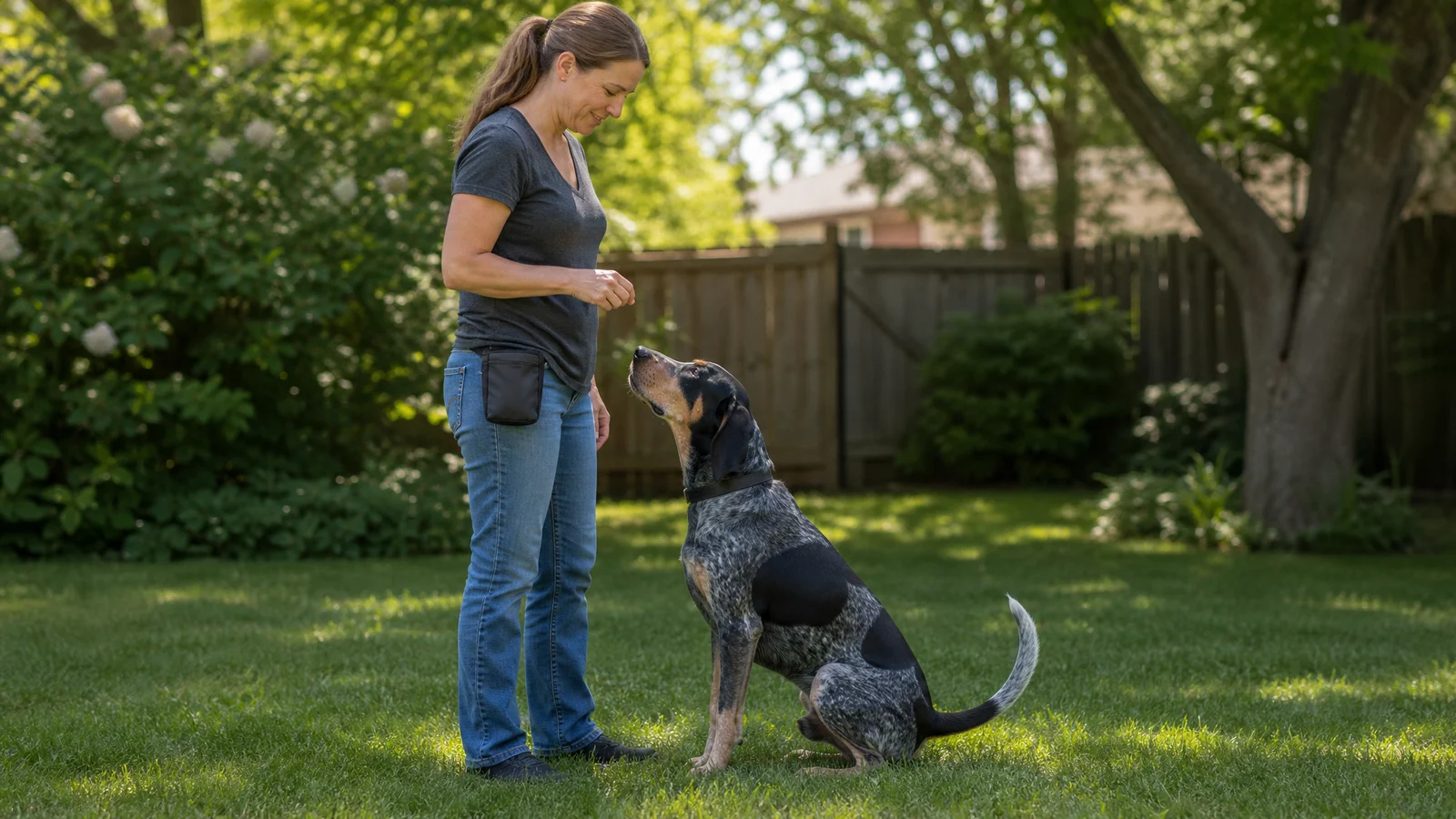
Use a marker word to capture each voluntary approach. Marker training basics support pairing the marker with food before shaping behavior. Once the sound predicts a reward, it can identify a glance, a nose inside or a paw across the threshold.
Shape Voluntary Entry
Toss a treat near the entrance, then wait after the dog eats it. Mark any choice to look or step toward the crate and place the next reward where the dog can reach it comfortably. Reward outside at times too, so entering never means the exit disappears.
Build from one paw to the whole body. When entry is easy, place food farther inside and deliver several small rewards while the dog remains there. Release with a consistent word before they choose to leave, then pause. The release gives the repetition a clear end.
Add the crate cue only after the movement is predictable. Say the cue just before the dog enters, mark the full entry and reward. A cue should describe a behavior the dog understands, not pressure them to solve an unfamiliar problem.
Move the Door in Pieces
Touch the door, reward, and stop. Next, move it slightly and reward while the dog stays loose. Closing and reopening happen only after those motions are ordinary. Keep your body relaxed and remain beside the crate so door learning is not mixed with distance learning.
Watch the dog's whole response. Taking food is useful, but a dog can eat while worried. A lowered body, repeated lip licking, a rush toward the opening or sudden refusal to re-enter means the step was too large. Return to the last easy door movement.
Once the closed door is comfortable, offer a safe food activity or settle reward and open the door before concern appears. We prefer many calm endings over one ambitious repetition. The dog should finish believing the door is predictable and temporary.
Crate Training for Household Separation
Household separation teaches the dog that people can move out of reach without disappearing. A gate, pen or dog-safe room may be easier than the crate because the dog can change position and see more of the home. Use the least restrictive setup that produces genuine calm.
This practice belongs at neutral times, not only when you need privacy. Meet exercise and potty needs first, then begin while the dog is already inclined to rest. The lesson should feel boring and safe, with rewards delivered for remaining settled as ordinary life continues.
Distance While You Stay Home
Start by taking one easy movement away, then returning before the dog rises. Reward on the bed or inside the open crate so the resting location gains value. Change direction and household task gradually instead of marching farther away on every repetition.
A Bluetick's vocal range can make a small concern sound dramatic, but volume does not tell you to ignore the dog. Wait for a natural quiet moment only when the dog remains otherwise comfortable. If the voice escalates with pacing or escape behavior, end the setup calmly and reduce the next demand. The quieter revision should change distance or barrier, not merely offer better food.
Practice with different household sounds after stillness is easy. A cabinet closing, water running or footsteps upstairs can become part of the background. Add one sound at a time and reward relaxed observation, because several new events at once hide which piece caused concern.
Duration Without a Stopwatch Goal
Build duration according to body language rather than chasing a fixed number. The dog should shift position, rest their head or return to a chew without monitoring every movement you make. Those behaviors are better evidence of comfort than simply remaining silent.
Vary easy and slightly harder repetitions so the pattern does not always become more demanding. Follow a longer calm rest with a very easy one. Predictable relief protects confidence and keeps the person from treating every successful session as permission for a large jump.
Household distance is useful, but name it accurately. If someone remains home, the dog has not practiced being alone. This distinction prevents false confidence when a dog handles a closed interior door but reacts to departure cues.
Bluetick Coonhound Absence Practice
Absence practice begins with observation. Set up a secure camera or other safe way to see behavior after you step outside. The goal is to return while the dog remains comfortable, not to wait for distress and then measure how long it lasts.
The crate is optional during this phase. Crate training advice cautions against using a crate to manage separation anxiety without professional guidance. Compare the dog's response in the crate with a safe room or gated area before choosing the setting.
Separate Departure Cues
Keys, shoes and a bag can predict an absence. Handle one cue during ordinary home life, then sit down again. When the dog no longer follows or tenses, combine two cues without leaving. This work changes the prediction before the exterior door becomes part of the lesson.
Keep the repetitions natural. Constantly rattling keys at a worried dog can turn practice into another warning. A few easy exposures woven into the day are enough, followed by normal activity and no emotional performance around leaving.
Leave Below the Distress Point
Step out only for an interval the dog can handle calmly, then return without fanfare. Video matters because silence can hide frozen watching or frantic movement outside the camera's view. Review posture, movement, vocalizing and whether the dog returns to rest.
Increase absence in small, uneven steps and include easier departures. If concern appears, the next practice becomes shorter and the setup changes. Repeated full exposure to panic does not teach safety. It rehearses the emotional response you are trying to prevent.
Keep departures compatible with the dog's current ability while training develops. Family help, a sitter or an adjusted schedule may be necessary management. The Bluetick reward training guide can strengthen settling and marker skills, but it does not replace absence-specific work.
When Crate Training Is the Wrong Tool
A crate is the wrong tool when confinement increases distress. Bent bars, frantic escape efforts, heavy drooling, repeated soiling with other panic signs or injury risk require an immediate change of plan. Move the dog to the safest suitable space and contact the veterinarian.
Use this decision list to choose the next conversation, not to label the dog. Each branch separates the setting from the emotional response. Read the body language before choosing a path:
- If the dog avoids entry but stays calm alone in a safe room, rebuild crate comfort separately and use the room for current absences.
- If the dog rests in the crate while you are home but panics after departure, work on true absence with professional guidance.
- If distress appears behind any barrier while you remain home, reduce household distance and assess the setup before adding departures.
- If behavior changes suddenly, pause training and arrange veterinary guidance before assuming the crate caused the problem.
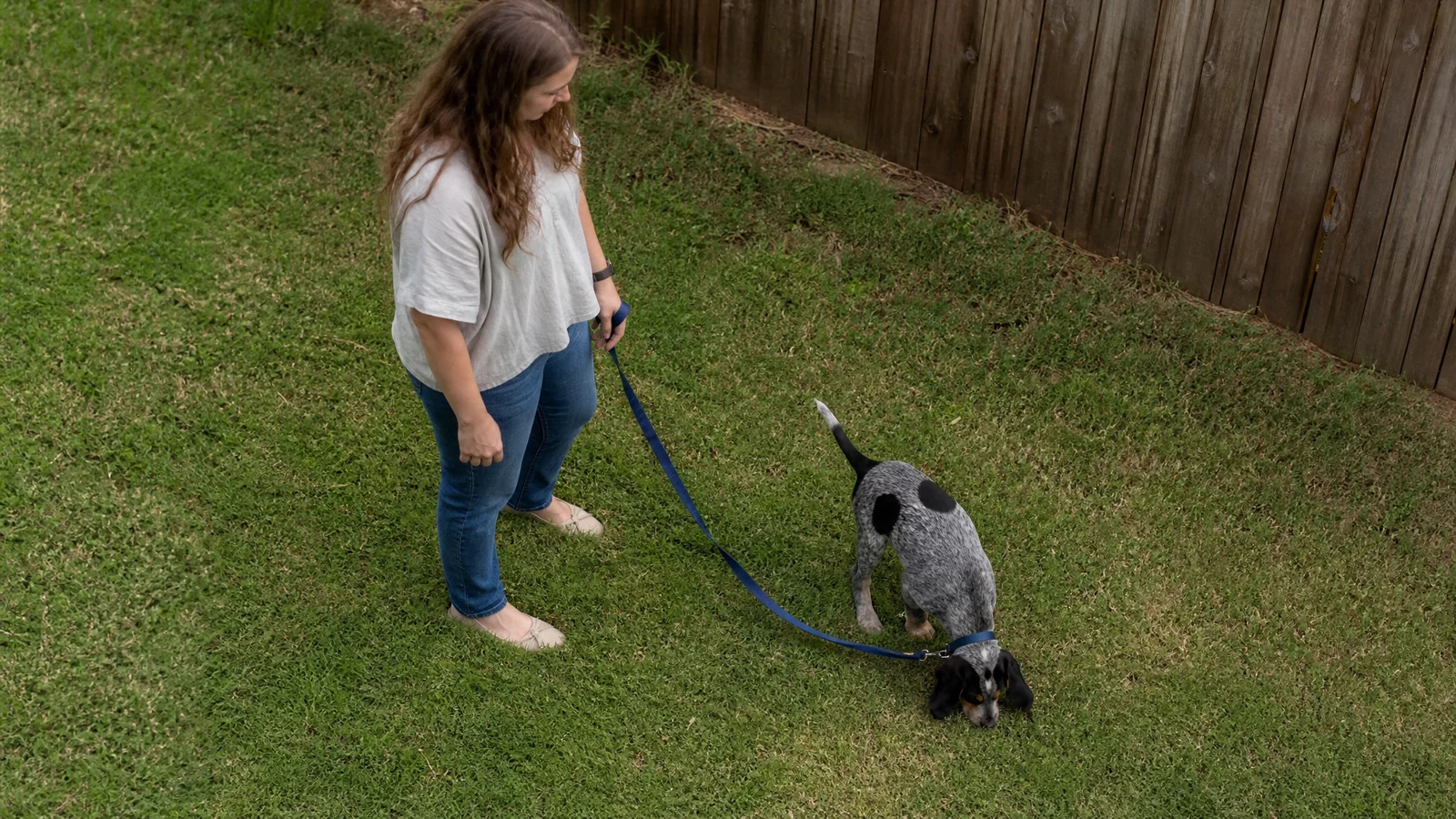
Potty needs can also complicate confinement, especially for a young puppy. Our Bluetick potty training toolkit shows how supervision and scheduled trips work alongside, but separately from, crate comfort.
The humane goal is not a dog who stays inside at any cost. It is a Bluetick who has a genuinely safe resting place and can tolerate only the distance or absence they have been prepared for. Identify the missing skill, protect the dog from panic and let welfare outrank the crate. A safe room is a valid outcome when confinement itself raises concern.
 Exercise and jobsHow Much Exercise Does a Bluetick Coonhound Need? Plus Brain Games
 Training basicsHow to Potty Train a Bluetick Coonhound Puppy
 Training basicsHow to Train a Bluetick Coonhound With Rewards, Step by Step