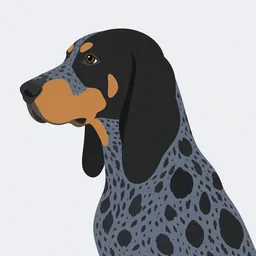
 Bluetick
The easiest mistake is choosing the hardest-looking activity and calling it a job. A Bluetick Coonhound does not need maximum speed or endless repetition. They need an outlet that suits a scent hound, keeps the handler in the picture and leaves the dog able to settle afterward.
Our position is simple: fit matters more than prestige. The breed is active and ambitious in historical working context, yet safe companion outlets should channel those traits without teaching hunting. Reward-based sports let the nose, body and brain work inside clear boundaries.
This guide uses a criteria scorecard for scent fit, teamwork, physical demand, access and recovery. It then compares nose work, tracking-style searches, agility foundations, rally and formal jobs so you can choose a sensible first trial.
Criteria for Bluetick Coonhound Dog Sports
A useful job has to work for the dog in front of you, not for an image of the breed. Start with five questions. Does the activity welcome sniffing, reward check-ins, suit the dog's body, fit your local options and produce calm recovery? A poor answer in one column can outweigh strong marks elsewhere. A local option you can repeat is usually better than an ideal activity you rarely reach.
We use recovery as the deciding criterion because excitement can look like success during class. A good outlet leaves a Bluetick pleasantly engaged and able to drink, rest and move through the household normally. Frantic pacing, persistent vocalizing or hours of agitation suggest the session was too difficult or stimulating. That after-effect belongs on the scorecard beside performance during class.
Scent Fit and Choice
The breed's nose deserves a real role, but scent fit does not mean following wildlife. Safe searches use food, toys or sport odors placed by a person in a known area. The dog gets permission to search, solves the problem, then returns to ordinary life when the game ends.
Choice matters inside that structure. Let the dog work out where odor travels instead of steering their head toward the answer. Mark the find and deliver a reward at the source. The search stays collaborative because you set the space, observe the dog and end while they still want another turn.
Teamwork and Recovery
A sport is a weak fit if the handler becomes baggage. Look for moments when your Bluetick checks in, follows a start cue and can pause between turns. Those behaviors show that instinct and cooperation can share the same activity instead of competing for control.
Recovery begins before the session. Arrive with enough distance from other dogs, use a quiet waiting area and keep rewards ready. Afterward, offer water and an ordinary decompression walk. Regular vet visits also help you match physical activities to your dog's age, health and current conditioning.
Safe Dog Sports for Scent Work
Scent sports score highest for natural fit because searching is the main task rather than a distraction from it. The safest versions happen indoors, in enclosed yards or in organized classes. They use placed targets and known boundaries, never wildlife, game trails or unstructured outdoor drills.
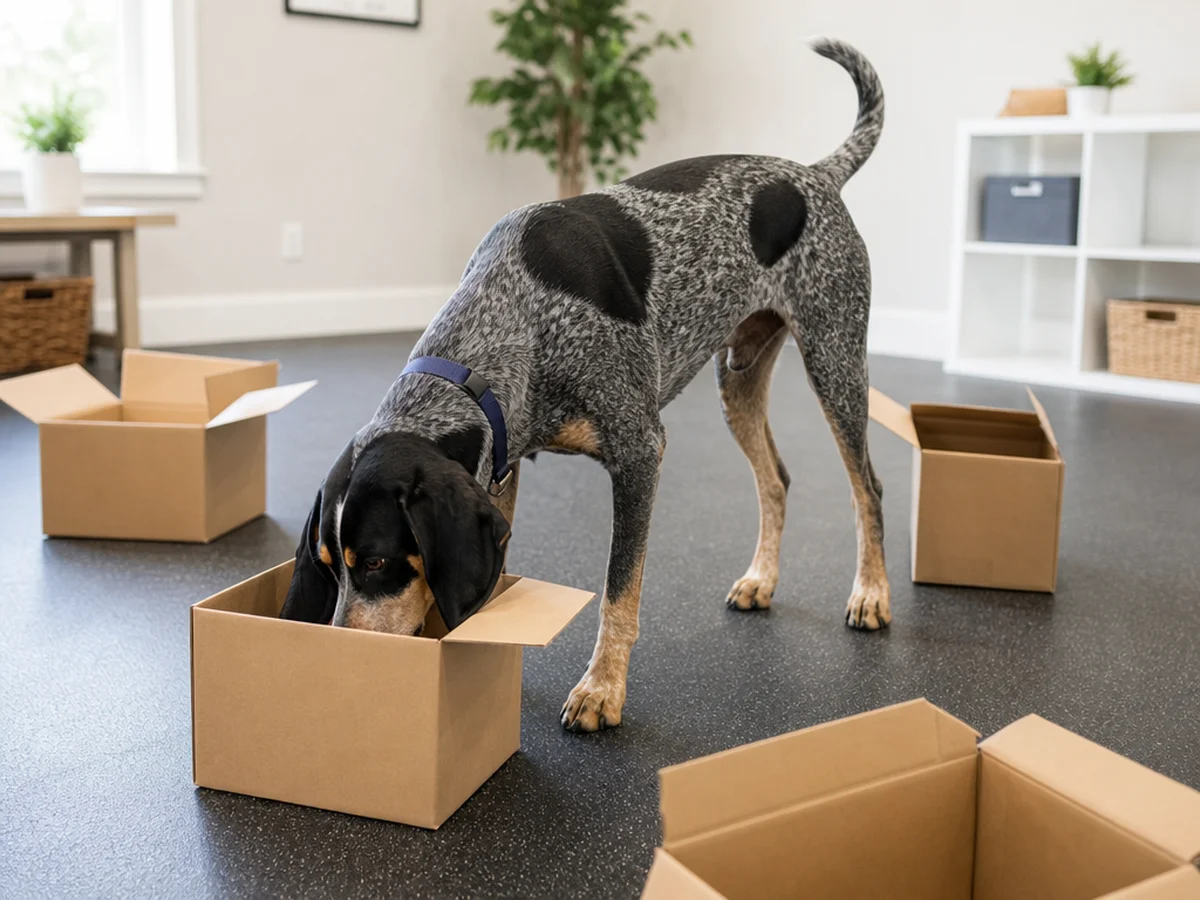
Beginner nose work can start with open boxes and hidden food, which makes the first searches self-rewarding. That setup also lets a handler change difficulty by moving boxes, adding empty choices or using a different room.
Container Nose Work
Place several open boxes on a nonslip floor and put food in more than one at first. Release your dog with a consistent search cue, stay out of the path and quietly praise each discovery. Reset the boxes only after the dog leaves the area so the next turn has a clear beginning. The handler should be able to explain what changed between searches.
Progress by reducing the number of food boxes, not by making the search enormous. If the dog starts grabbing cardboard or racing without sniffing, simplify the layout. Calm, methodical searching is the skill, while speed is only a byproduct and often an unhelpful one.
Tracking-Style Scent Games
A tracking-style home game can follow a short trail of treats laid across a room or securely fenced yard. The target is food or a familiar toy, and the route is planned by you. Keep the line loose, follow behind and reward the final discovery without adding any hunting context.
These adjustments keep the game safe and readable. They also show where to simplify when excitement pulls the dog away from the task. Keep the search easy enough for the dog to think:
- Use a controlled surface with no wildlife visible, and inspect the space before laying the scent path.
- Make the first route easy to follow, with a reward at the end and no pressure to move quickly.
- Stop if the dog leaves the placed trail for an unrelated scent, then reset in an easier indoor location.
- End with a clear finished cue, gather every target and transition to a calm household activity.
Movement Dog Sports for Bluetick Coonhounds
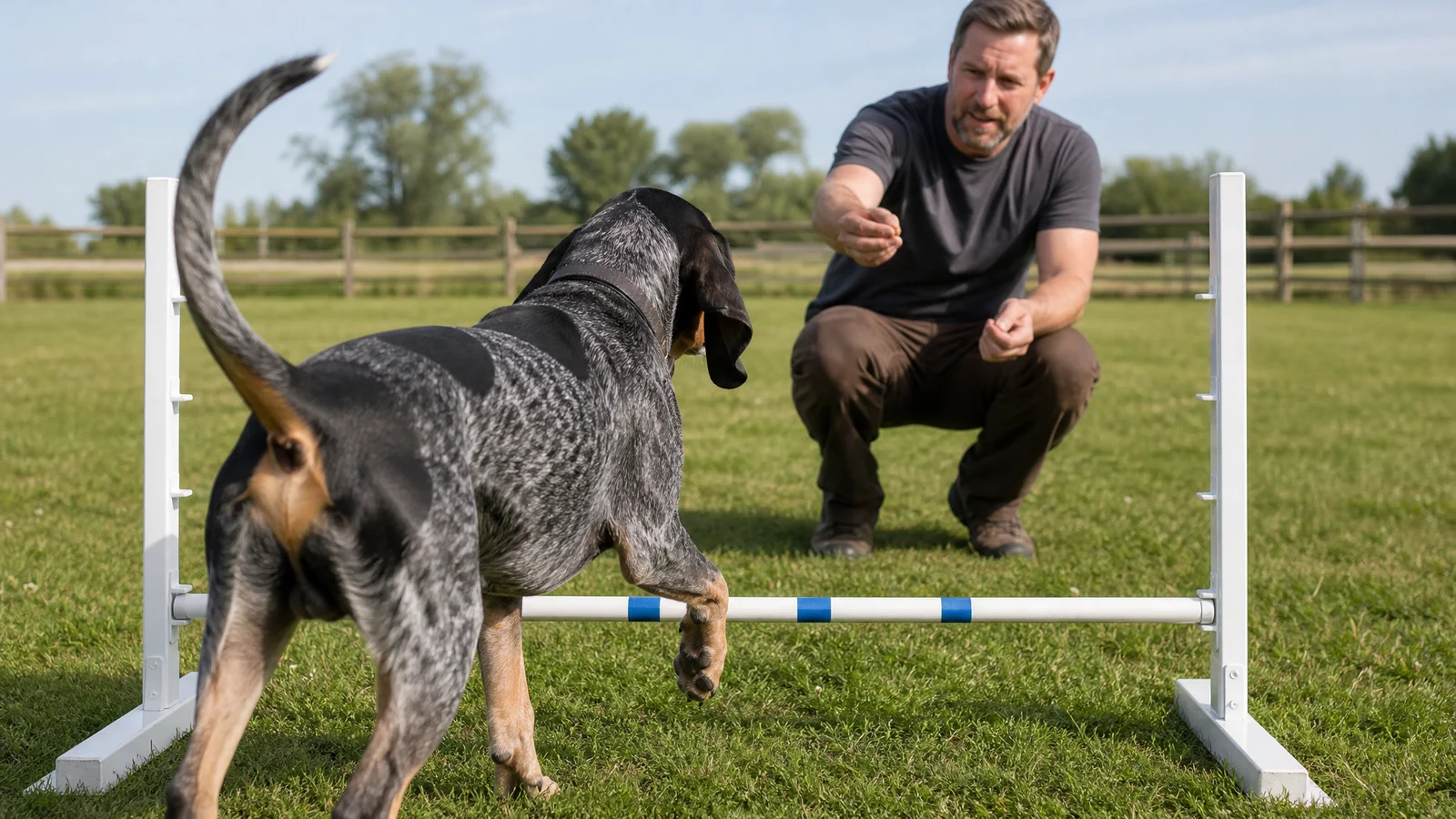
Movement sports can suit an energetic Bluetick, but their score depends heavily on body readiness and class design. Agility is not simply running over equipment. It asks the dog to follow cues around distractions, shift speed and recover between short working turns.
The comparison below treats access and recovery as real costs. A sport that looks ideal on paper may be wrong if the class is crowded, the footing is poor or the dog cannot wait calmly. A lower-intensity option practiced consistently can be the better job.
| Outlet | Strongest Fit | Main Demand | Good First Test |
|---|---|---|---|
| Container nose work | Scent choice | Patient searching | Open boxes indoors |
| Tracking-style game | Following a placed route | Staying with the task | Food trail in an enclosed space |
| Agility foundations | Movement with cues | Body control | Ground poles and wraps |
| Rally | Handler teamwork | Focus near stations | Short sign sequence at home |
Agility Foundations First
Before jumps or complex equipment, teach ground-level skills such as walking over poles, circling a cone and placing front paws on a stable platform. Reward accuracy and confidence. These exercises reveal whether the dog enjoys following movement cues or would rather return to scent work.
Ask your veterinarian about readiness before strenuous activity, and choose a reward-based instructor. Agility class guidance supports discussing nervous or reactive behavior in advance and considering individual instruction. Space can matter more than equipment for a dog who vocalizes or fixates.
Precision Dog Sports and Teamwork
Rally and obedience score lower for free scent choice but higher for cooperation. They suit a Bluetick who enjoys rapid reward feedback and can work in short patterns. The handler moves through clear stations, which gives the session more variety than drilling one cue in place.
Reward-based structure is not permissive. The humane training statement supports teaching wanted behavior with rewards and clear guidelines. In precision sports, that means paying the correct position, giving sniff breaks on cue and lowering difficulty when attention fades.
A Rally Fit Test
Build a tiny course from household objects and written station cards. Ask for a turn, a brief pause and a change of direction, rewarding after each successful piece. The test is not formal accuracy. You are watching whether the dog stays connected and becomes more fluent across repetitions.
A strong prospect returns after each reward and anticipates the next station without becoming frantic. A dog who repeatedly leaves to search the room may need easier stations or a scent game first. The Bluetick training library explains how to strengthen the marker and check-in skills behind this work.
Use the following trial order so enthusiasm does not hide a poor match. Each step changes one demand, which makes the dog’s response easier to interpret. Review the response before raising demand:
- Test the activity at home where distractions are low and the dog's normal recovery is easy to observe.
- Change one variable, such as location or a nearby person, while keeping the task familiar.
- Visit a class without participating and check spacing, waiting areas, footing and instructor methods.
- Join at the easiest appropriate level, then review focus and settling before booking a longer block.
Real Jobs Need More Than Instinct
Detection, search and rescue, and therapy work are real roles with standards beyond breed instinct. A strong nose alone does not make a detection dog. Search roles also require physical soundness, stable behavior in changing environments, reliable control and a trained handler working within an organized program.
Therapy work asks for a different profile. The dog must enjoy appropriate contact, recover easily from unfamiliar sights and sounds, and remain comfortable without being pushed into greetings. A Bluetick who prefers distance can have an excellent life without taking on a public-facing role.
We would not turn a formal job into a home imitation. Use qualified programs to assess candidates and train role-specific tasks. At home, keep the goal honest: enrichment, cooperation and a satisfying routine. Historical scent work explains the breed's persistence, but it does not require a modern companion to perform hunting work. The distinction keeps enrichment safe and the formal role honest.
Formal programs also evaluate the handler. Search teams need instruction, supervision and standards that a casual backyard game cannot reproduce. Therapy organizations assess the partnership in public settings. Respecting those gates protects the dog and the people who depend on the work.
Access belongs on the scorecard before you commit. A distant class, noisy venue or long wait between turns can erase an activity's theoretical advantages. Ask how dogs enter, where they rest and whether the instructor can adjust space. Practical access is part of fit, not an afterthought.
Choose One Sport and Test the Fit
Pick the outlet that best matches your dog's strongest score, not the longest menu. For many Blueticks, a controlled scent search is the cleanest starting point. For a dog who repeatedly chooses the handler over the environment, rally or agility foundations may reveal a stronger teamwork preference.
Run one option for two weeks if that duration fits your schedule, keeping the setup consistent enough to compare sessions. Record whether your dog starts willingly, stays in the task, accepts pauses and settles afterward. Those observations are more useful than speed, ribbons or how tired the dog appears.
Pair the sport with an appropriate daily routine rather than asking it to carry the whole exercise plan. Our guide to Bluetick Coonhound exercise separates physical movement from mental work so both can be adjusted.
The right job gives the nose or body a clear problem while keeping you relevant. When your Bluetick approaches eagerly, works with purpose and returns to ordinary life without lingering agitation, the scorecard has done its job. Keep that outlet, build gradually and let fit outrank spectacle.
 BehaviorBluetick Coonhound Howling: Why They Bay and How to Quiet Them
 Training basicsCrate Training a Bluetick Coonhound and Preventing Separation Anxiety
 Exercise and jobsHow Much Exercise Does a Bluetick Coonhound Need? Plus Brain Games